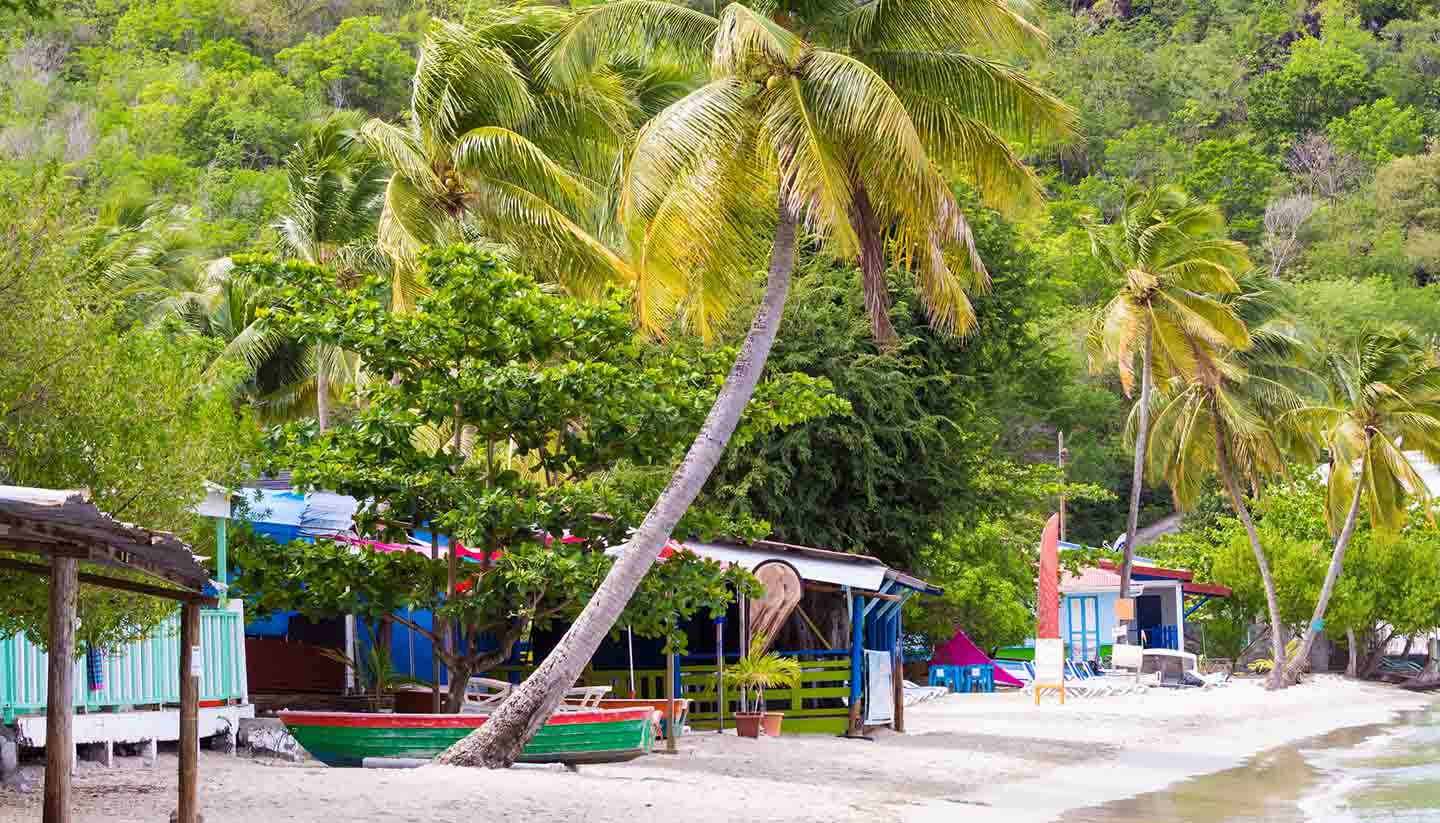

Martinique travel guide
About Martinique
When he discovered Martinique in 1493, Christopher Columbus gushed that it was “the most beautiful country in the world”. Since then this island has lost little of the magic that so captivated the great explorer: it remains one of the most beautiful destinations you are likely to visit.
Originally inhabited by Arawak and Carib Indians, who were swiftly eradicated by the French, the island has been hotly fought over. The British made numerous attempts to occupy Martinique during the 18th and 19th centuries, but it has remained defiantly French since 1635 (along with nearby Guadeloupe).
Tourism represents a major part of the local economy and each year hundreds of thousands of visitors come to enjoy Martinique's picturesque volcanic landscape, luscious rainforests and fine beaches, which are lined with sugar, palm, banana and pineapple plantations.
An accommodating people, most Martinicans are of mixed ancestry, being the descendants of 17th century French settlers and slaves brought from Africa to work on the island's plantations. This French and Creole heritage is infused in local customs, food and languages, which is a joy for travellers.
Do make sure you pack your dancing shoes. It’s impossible to escape zouk, the lively, two-beat local music that is similar to merengue in the Dominican Republic, but is unique to the French West Indies. Martinicans are very proud of their zouk, which will provide the soundtrack to your trip.
If you need a bit of Dutch courage to get on the dance floor, you’re in luck, because Martinique produces fine rum. So exceptional is the liquor, in fact, that it was awarded the prestigious French label appellation d'origine controlee, which was previously only reserved for mainland produce.
Key facts
1,100 sq km (425 sq miles).
396,364 (UN estimate 2016).
343.9 per sq km.
Fort-de-France.
Martinique is an Overseas Department of France and as such is an integral part of the French Republic.
President Emmanuel Macron since 2017, represented by the prefect Étienne Desplanques since 2025.
President of the Executive Council Serge Letchimy since 2021.
Travel Advice
Before you travel
No travel can be guaranteed safe. Read all the advice in this guide. You may also find it helpful to:
- see general advice for women travellers
- read our guide on disability and travel abroad
- see general advice for LGBT+ travellers
- read about safety for solo and independent travel
- see advice on volunteering and adventure travel abroad
Travel insurance
If you choose to travel, research your destinations and get appropriate travel insurance. Insurance should cover your itinerary, planned activities and expenses in an emergency.
About FCDO travel advice
The Foreign, Commonwealth & Development Office (FCDO) provides advice about risks of travel to help you make informed decisions. Find out more about FCDO travel advice.
Get travel advice updates
Sign up to get email notifications when this travel advice is updated.
Follow FCDO:
This information is for people travelling on a full ‘British citizen’ passport from the UK. It is based on the UK government’s understanding of Martinique’s current rules for the most common types of travel.
Martinique is an Overseas Department of France (‘Département d’Outre-Mer’). The authorities in Martinique set and enforce entry rules. If you’re not sure how these requirements apply to you, contact the French Consulate General in the UK.
Passport validity requirements
Your passport must have an ‘expiry date’ at least 3 months after the date you plan to leave Martinique.
Check with your travel provider that your passport and other travel documents meet requirements. Renew your passport if you need to.
You will be denied entry if you do not have a valid travel document or try to use a passport that has been reported lost or stolen.
Dual nationality
When returning to the UK, British citizens must carry a valid British passport or certificate of entitlement. See Dual citizenship.
Visa requirements
Martinique is an Overseas Department of France and so is part of the EU.
You can visit Martinique without a visa for up to 90 days, for tourism or business. To stay longer, to work or study, for business travel or for other reasons, check the visa application process and timelines on the French visa website.
UK residents of Martinique
Carry your residence document, as well as your passport, when entering and exiting Martinique. If you have applied but not yet received your residence document, carry your certificate of application. You will have received this as an email.
Vaccine requirements
To enter Martinique, you must have a certificate to prove you’ve had a yellow fever vaccination if you’re coming from a country listed as a transmission risk.
For full details about medical entry requirements and recommended vaccinations, see TravelHealthPro’s Martinique guide.
Customs rules
There are strict rules about goods you can take into or out of Martinique. You must declare anything that may be prohibited or subject to tax or duty.
Taking food into Martinique
You cannot take meat, milk or products containing them into EU countries. There are some exceptions such as powdered baby milk, baby food and special foods or pet feed required for medical reasons.
Taking money into Martinique
Check what cash and valuables you need to declare to bring them into Martinique.
Terrorism
There is a high threat of terrorist attack globally affecting UK interests and British nationals, including from groups and individuals who view the UK and British nationals as targets. Stay aware of your surroundings at all times.
UK Counter Terrorism Policing has information and advice on staying safe and what to do in the event of a terrorist attack. Find out how to reduce your risk from terrorism while abroad.
Terrorism in Martinique
Although there is no recent history of terrorism in Martinique, attacks cannot be ruled out.
Ongoing Protests
Following the outbreak of protests, since 23 September, authorities have banned the sale and transport of fuels, petroleum, pyrotechnic articles and explosive products. You should remain aware of what is happening around you and avoid areas where protests are taking place. Follow the advice of local authorities.
Due to the ongoing social unrest, further restrictions and curfews have been imposed at short notice. These may be amended at any time. There may be disruption to transport networks, including air travel, and you should check with your operator before leaving your accommodation. Other businesses and shops may also be disrupted. The latest updates can be found here: Préfet of Martinique.
Crime
Protecting yourself and your belongings
Crime levels are low in Martinique, but to reduce your personal risk:
- avoid isolated areas, including beaches, after dark
- do not carry large amounts of cash or wear expensive jewellery
- use hotel safes for passports, credit cards and other valuables when not in use
Outdoor activities and adventure tourism
Swimming safety
See water safety on holiday from the Royal Life Saving Society.
Scuba diving
Diving schools may have limited resources and do not always observe safety and maintenance standards. Always:
- check a dive operator’s credentials
- check the conditions on your insurance policy – some policies require dive instructors to have certain qualifications
- make sure safety equipment is available on the boat, particularly oxygen
- ask about safety precautions, including the ability to transfer divers to a hyperbaric chamber
If you have not had any previous diving experience, check what to do if something goes wrong, including how to call for help while at sea.
Transport risks
Road travel
If you are planning to drive in Martinique, see information on driving abroad and check the rules of the road in the RAC’s France guide as French driving laws apply. The guide lists driving regulations and other legal requirements you need to be aware of.
Check with the local authorities or your car hire company what documents you need. You may need an international driving permit (IDP) as well as your UK driving licence.
Extreme weather and natural disasters
Find out what you can do to prepare for and respond to extreme weather and natural hazards.
Hurricanes
Hurricane season in Martinique is normally from June to November. Monitor local and international weather updates from the World Meteorological Organization and the US National Hurricane Center.
Volcanic eruptions
Montagne Pelée is an active volcano. It is closely monitored. See the Volcanological and Seismological Observatory of Martinique for more information.
Before you travel check that:
- your destination can provide the healthcare you may need
- you have appropriate travel insurance for local treatment or unexpected medical evacuation
This is particularly important if you have a health condition or are pregnant.
Emergency medical number
Call 15 and ask for an ambulance.
Contact your insurance company quickly if you’re referred to a medical facility for treatment.
Vaccine recommendations and health risks
At least 8 weeks before your trip:
- check the latest vaccine recommendations for Martinique
- see where to get vaccines and whether you have to pay on the NHS travel vaccinations page
See what health risks you’ll face in Martinique, including:
- Zika virus
- dengue
- chikungunya
Medication
The legal status and regulation of some medicines prescribed or bought in the UK can be different in other countries.
Read best practice when travelling with medicines on TravelHealthPro.
Healthcare in Martinique
In general the healthcare facilities, including emergency treatment in hospitals and the availability of doctors, are of a similar standard to those in France. Specialist treatment is also available.
Health insurance cards
To get medically necessary state healthcare in Martinique, you need a Global Health Insurance Card (GHIC) or a European Health Insurance Card (EHIC).
The NHS’s getting healthcare abroad webpage has details about:
- how to apply for a GHIC
- how to get temporary cover if you lose your card or it does not arrive in time
- who qualifies for a new EHIC instead of a GHIC
- what treatment counts as medically necessary
A GHIC or EHIC is not an alternative to travel insurance. You may have costs your GHIC or EHIC does not cover, including:
- changes to travel and accommodation bookings
- additional standard costs for treatment
- medical repatriation to the UK
- treatment that is ruled non-urgent
- private healthcare
- private clinics
Healthcare for residents
If you plan to live in Martinique, consult the UK Department for Work and Pensions (DWP) about long-term entitlement to healthcare under the French national system.
DWP Overseas Medical Benefits helpline: +44 (0)191 218 1999
You can also get English-language information about French social security services online or on +33 (0)820 90 42 12. You can get French-language information online about state services in Martinique.
Travel and mental health
Read FCDO guidance on travel and mental health. There is also mental health guidance on TravelHealthPro.
The Foreign, Commonwealth & Development Office (FCDO) cannot provide tailored advice for individual trips. Read this travel advice and carry out your own research before deciding whether to travel.
Emergency services in Martinique
Telephone: 112 (ambulance, fire, police)
or
Ambulance: 15
Fire: 18
Police: 17
Contact your travel provider and insurer
Contact your travel provider and your insurer if you are involved in a serious incident or emergency abroad. They will tell you if they can help and what you need to do.
Refunds and changes to travel
For refunds or changes to travel, contact your travel provider. You may also be able to make a claim through insurance. However, insurers usually require you to talk to your travel provider first.
Find out more about changing or cancelling travel plans, including:
- where to get advice if you are in a dispute with a provider
- how to access previous versions of travel advice to support a claim
Support from FCDO
FCDO has guidance on staying safe and what to do if you need help or support abroad, including:
- getting help if you’re a victim of crime
- what to do if you’re in hospital
- if you’re affected by a crisis, such as a terrorist attack
Contacting FCDO
Help abroad
See how to get help from the UK government abroad including in an emergency.
Help in the UK
You can call FCDO in London if you need urgent help because something has happened to a friend or relative abroad.
Telephone: 020 7008 5000 (24 hours)
Get travel advice updates
Sign up to get email notifications when this travel advice is updated.
Follow FCDO: