
Surinam travel guide
About Surinam
The smallest of the Guyanas (the collective term for Guyana, French Guyana and Surinam), this diminutive destination may only have half a million odd inhabitants, but it’s the liveliest of these onetime colonial backwaters. It’s also often overlooked by travellers, which is their loss because Surinam has much to offer.
The country is culturally fascinating. Languages spoken include Dutch, Creole, Chinese and English, which reflects the vibrant ethnic mix of its people. It’s also extraordinarily beautiful: the capital city is a UNESCO World Heritage Site and its tropical forests are full of wildlife, with an impressive one third of the country protected in nature reserves.
The 17th-century UNESCO capital, Paramaribo, is a good starting point for any trip. Home to a sumptuous collection of wooden colonial buildings, which line the waterfront, the city also lays claim to Central Market, a high-energy bazaar selling everything from quack medicine to fresh fish. At night you can dine on fresh seafood in local restaurants and cut shapes in lively bars, which are far removed from the tranquillity of the rest of the country.
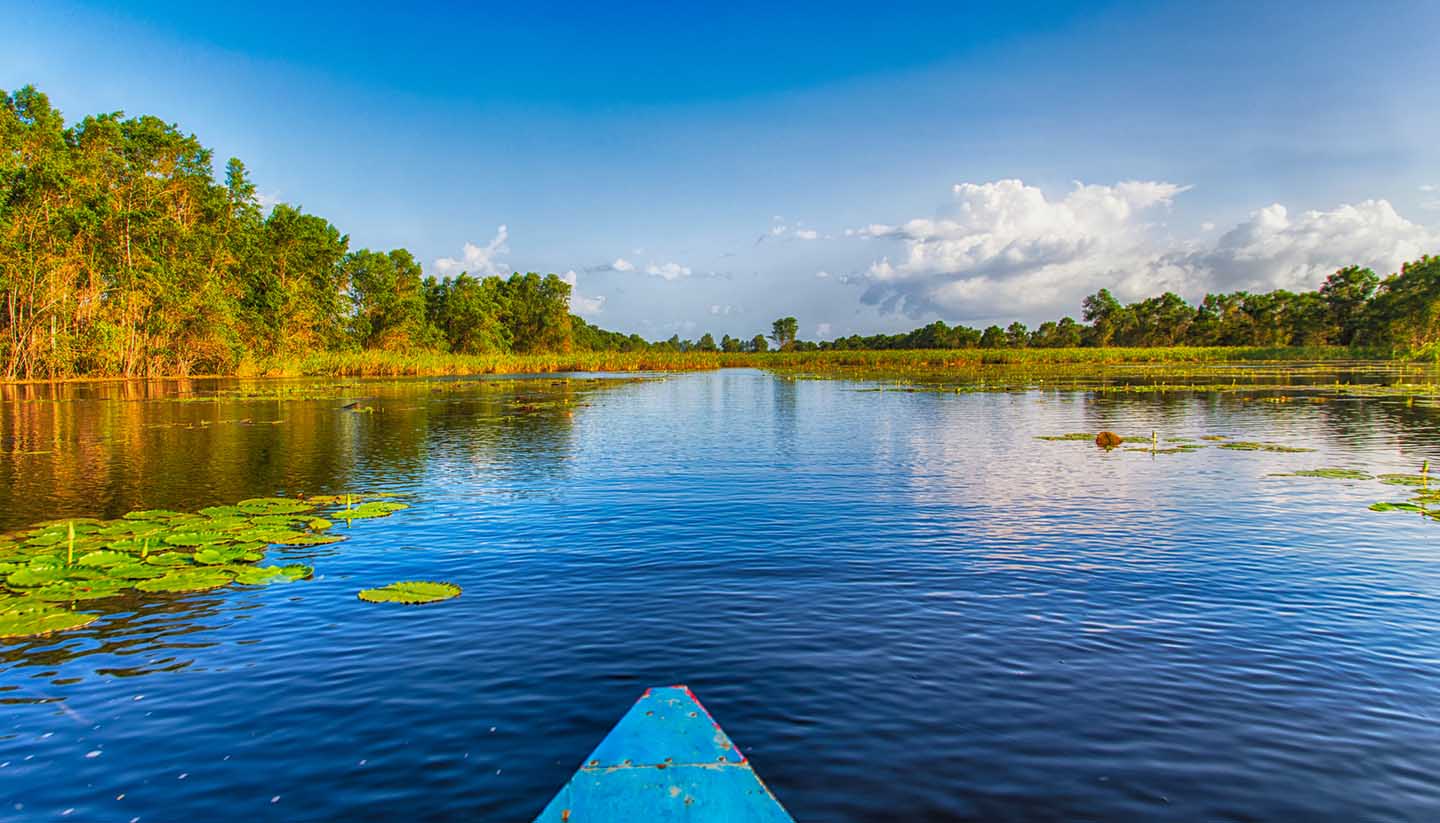
Surinam's main attraction is its tropical rainforest, which covers nearly 80% of the country and harbours a huge variety of wildlife. Ecotourism is well developed here and some of the best lodges in South America can be found in the country’s jungle. With its intricate lattice of rivers, boat is the best way to get around the rainforest and you can take tours to see nesting leatherback turtles or search for other exotic creatures, including Amazon river dolphins, monkeys and, if you’re really lucky, a jaguar.
The country’s diverse cultural roots have also been well preserved: communities of Amerindians and Maroons – descendants of former African slaves – lie deep in the jungle, offering visitors an insight into their lifestyle, harmoniously adapted to their environment. Back in the cities, the busy festival calendar covers an eclectic range of events including jazz jamborees, Easter Carnival and exuberant Christmas parties, which climax on New Year’s Eve with the legendary Surifesta. It’s a wild and wonderful celebration. It’s Surinam in a microcosm.
Key facts
163,265 sq km (63,037 sq miles).
547,610 (UN estimate 2016).
3.6 per sq km.
Paramaribo.
Republic.
President Jennifer Geerlings-Simons since 2025.
President Jennifer Geerlings-Simons since 2025.
Travel Advice
Before you travel
No travel can be guaranteed safe. Read all the advice in this guide. You may also find it helpful to:
- see general advice for women travellers
- read our guide on disability and travel abroad
- see general advice for LGBT+ travellers
- read about safety for solo and independent travel
- see advice on volunteering and adventure travel abroad
Travel insurance
If you choose to travel, research your destinations and get appropriate travel insurance. Insurance should cover your itinerary, planned activities and expenses in an emergency.
About FCDO travel advice
The Foreign, Commonwealth & Development Office (FCDO) provides advice about risks of travel to help you make informed decisions. Find out more about FCDO travel advice.
Get travel advice updates
Sign up to get email notifications when this travel advice is updated.
Follow FCDO:
This information is for people travelling on a full ‘British citizen’ passport from the UK. It is based on the UK government’s understanding of Suriname’s current rules for the most common types of travel.
The authorities in Suriname set and enforce entry rules. If you’re not sure how these requirements apply to you, contact the Surinamese Embassy in Paris, France.
Passport validity requirements
To enter Suriname, your passport must have an ‘expiry date’ at least 6 months after the date you arrive.
Check with your travel provider that your passport and other travel documents meet requirements. Renew your passport if you need to.
You will be denied entry if you do not have a valid travel document or try to use a passport that has been reported lost or stolen.
Arrival Report
All travellers to and from Suriname are required to complete an Immigration and Customs Form [ICF] up to three days before arrival and departure.
Dual nationals
When returning to the UK, British citizens must carry a valid British passport or certificate of entitlement. See Dual citizenship.
Visa requirements
You can visit Suriname without a visa for tourism for up to 90 days. You must pay an entry fee of 54 US dollars before you travel.
To stay longer (to work or study, for business travel or for other reasons), you must get a visa and meet the Suriname government’s entry requirements.
It’s illegal to overstay the entry period or to work without a work permit.
Vaccine requirements
To enter Suriname, you must have a certificate to prove you’ve had a yellow fever vaccination if you’re coming from a country listed as a transmission risk.
For full details about medical entry requirements and recommended vaccinations, see TravelHealthPro’s Suriname guide.
Customs rules
There are strict rules about goods you can take into or out of Suriname. You must declare anything that may be prohibited or subject to tax or duty.
Taking money into Suriname
If you’re bringing currency with you, bring US dollars or euros. You cannot exchange British pounds.
This guide also has safety advice for regions of Suriname.
Terrorism
There is a high threat of terrorist attack globally affecting UK interests and British nationals, including from groups and individuals who view the UK and British nationals as targets. Stay aware of your surroundings at all times.
UK Counter Terrorism Policing has information and advice on staying safe abroad and what to do in the event of a terrorist attack. Find out how to reduce your risk from terrorism while abroad.
Terrorism in Suriname
Although there is no recent history of terrorism in Suriname, attacks cannot be ruled out.
Political situation
Demonstrations can become violent and lead to roadblocks and travel disruption. Be careful when travelling around the country and avoid large crowds. Monitor media and follow the advice of local authorities.
Crime
There have been incidents of burglary, armed robbery and violent crime in the capital, Paramaribo, and surrounding areas.
Criminals could target you in quiet or secluded areas, including in the Palm Garden (‘Palmentuin’) and other parts of Paramaribo.
Pickpocketing and robbery are increasingly common in the major business and shopping areas.
Protecting yourself and your belongings
Keep valuables such as your passport, travel documents, driving licence and credit cards secure and keep photocopies in a separate place.
To reduce your personal risk, avoid wearing expensive jewellery or displaying large amounts of money in public.
Attacks against fishing boats
There have been reports of attacks against fishing boats in and around the waters of Suriname.
Robberies while travelling in Suriname
Tourists have been robbed when travelling in central Suriname, away from the coastal areas. Use a well-established tour company if you intend to travel to these parts of the country.
Laws and cultural differences
Illegal drugs penalties
There are severe penalties for all drug offences. Pack all luggage yourself and do not carry anything through customs for anyone else.
Money
Credit cards are not widely accepted outside major hotels. Check with your hotel whether it accepts credit cards. Some cash machines in Paramaribo will accept international credit and debit cards and dispense Surinamese dollars.
Transport risks
Road travel
If you are planning to drive in Suriname, see information on driving abroad.
You’ll need to have both the correct version of the international driving permit (IDP) and your UK driving licence with you in the car. You cannot buy an IDP outside the UK, so get one before you travel.
Hire car companies often have stricter requirements for their customers, such as a year of driving experience, a higher minimum age and holding an IDP.
Some drivers may have poor road sense, and there may be frequent hazards, inadequate lighting and poor road conditions in some areas. When driving at night, take care to avoid cyclists, pedestrians and animals.
Only use licensed taxis or those on official hotel taxi ranks. Do not hail taxis from the roadside.
Air travel
The UK Air Safety List (ASL) lists all known airlines in Suriname that do not meet international safety standards and are banned from operating commercial air services to, from, and within the UK. Check the UK Air Safety List when considering which airlines to fly with. The list is maintained by the Department for Transport, based on advice from the UK Civil Aviation Authority.
If you’re travelling with a tour operator, check whether they have concerns about airlines in Suriname.
Extreme weather and natural disasters
Find out what you can do to prepare for and respond to extreme weather and natural hazards.
Flooding
Suriname is prone to flooding, particularly in the north and centre of the country, during the rainy season in May to August.
Heatwaves
Severe heat can cause problems, particularly with livestock, the young and elderly. Keep in the shade where possible and remain hydrated.
This section has safety advice for regions of Suriname. It only covers regions where the Foreign, Commonwealth & Development Office (FCDO) has specific advice.
You should also read FCDO’s overall travel advice and safety and security advice.
Suriname-Guyana border
The UN’s International Tribunal on the Law of the Sea in has ruled on the maritime border dispute between Suriname and Guyana. However, Suriname still claims an area of land (the New River Triangle) in south-east Guyana.
Take care when travelling to this area.
Suriname-French Guiana border
Suriname has a border dispute with French Guiana.
Take care when travelling to this area.
Before you travel check that:
- your destination can provide the healthcare you may need
- you have appropriate travel insurance for local treatment or unexpected medical evacuation
This is particularly important if you have a health condition or are pregnant.
Emergency medical number
Call 113 or 115 and ask for an ambulance.
Contact your insurance company quickly if you’re referred to a medical facility for treatment.
Vaccine recommendations and health risks
At least 8 weeks before your trip:
- check the latest vaccine recommendations for Suriname
- see where to get vaccines and whether you have to pay on the NHS travel vaccinations page
See what health risks you’ll face in Suriname, including:
- yellow fever
- Zika virus
- dengue
- schistosomiasis
Medication
The legal status and regulation of some medicines prescribed or bought in the UK can be different in other countries.
Read best practice when travelling with medicines on TravelHealthPro.
Healthcare in Suriname
FCDO has a list of medical providers in Suriname.
Medical facilities are severely limited in Suriname. Make sure you have adequate travel health insurance and accessible funds to cover the cost of any medical treatment abroad and repatriation.
Not all medical facilities accept payment from insurance companies. You may need to pay in advance and claim the cost back from your travel insurance.
Travel and mental health
Read FCDO guidance on travel and mental health. There is also mental health guidance on TravelHealthPro.
The Foreign, Commonwealth & Development Office (FCDO) cannot provide tailored advice for individual trips. Read this travel advice and carry out your own research before deciding whether to travel.
Emergency services in Suriname
Telephone: 115 (ambulance, fire, police)
or
Ambulance: 113
Fire: 110
Contact your travel provider and insurer
Contact your travel provider and your insurer if you are involved in a serious incident or emergency abroad. They will tell you if they can help and what you need to do.
Refunds and changes to travel
For refunds or changes to travel, contact your travel provider. You may also be able to make a claim through insurance. However, insurers usually require you to talk to your travel provider first.
Find out more about changing or cancelling travel plans, including:
- where to get advice if you are in a dispute with a provider
- how to access previous versions of travel advice to support a claim
Support from FCDO
FCDO has guidance on staying safe and what to do if you need help or support abroad, including:
- finding English-speaking lawyers and funeral directors in Suriname
- dealing with a death in Suriname
- being arrested or imprisoned in Suriname
- getting help if you’re a victim of crime
- what to do if you’re in hospital
- if you’re affected by a crisis, such as a terrorist attack
Contacting FCDO
Help abroad
See how to get help from the UK government abroad including in an emergency.
Help in the UK
You can call FCDO in London if you need urgent help because something has happened to a friend or relative abroad.
Telephone: 020 7008 5000 (24 hours)
Get travel advice updates
Sign up to get email notifications when this travel advice is updated.
Follow FCDO:
Risk information for British companies
The Overseas Business Risk service offers information and advice for British companies operating in Suriname on how to manage political, economic, and business security-related risks.