
Equatorial Guinea travel guide
About Equatorial Guinea
Perhaps best known as the inspiration for Frederick Forsyth’s coup-laden thriller The Dogs of War, the political situation of hot and humid Equatorial Guinea leaves a lot to be desired. Corruption, human rights abuses and political violence are frequently recorded, and despite huge oil wealth little has trickled down to the people, where real poverty still exists.
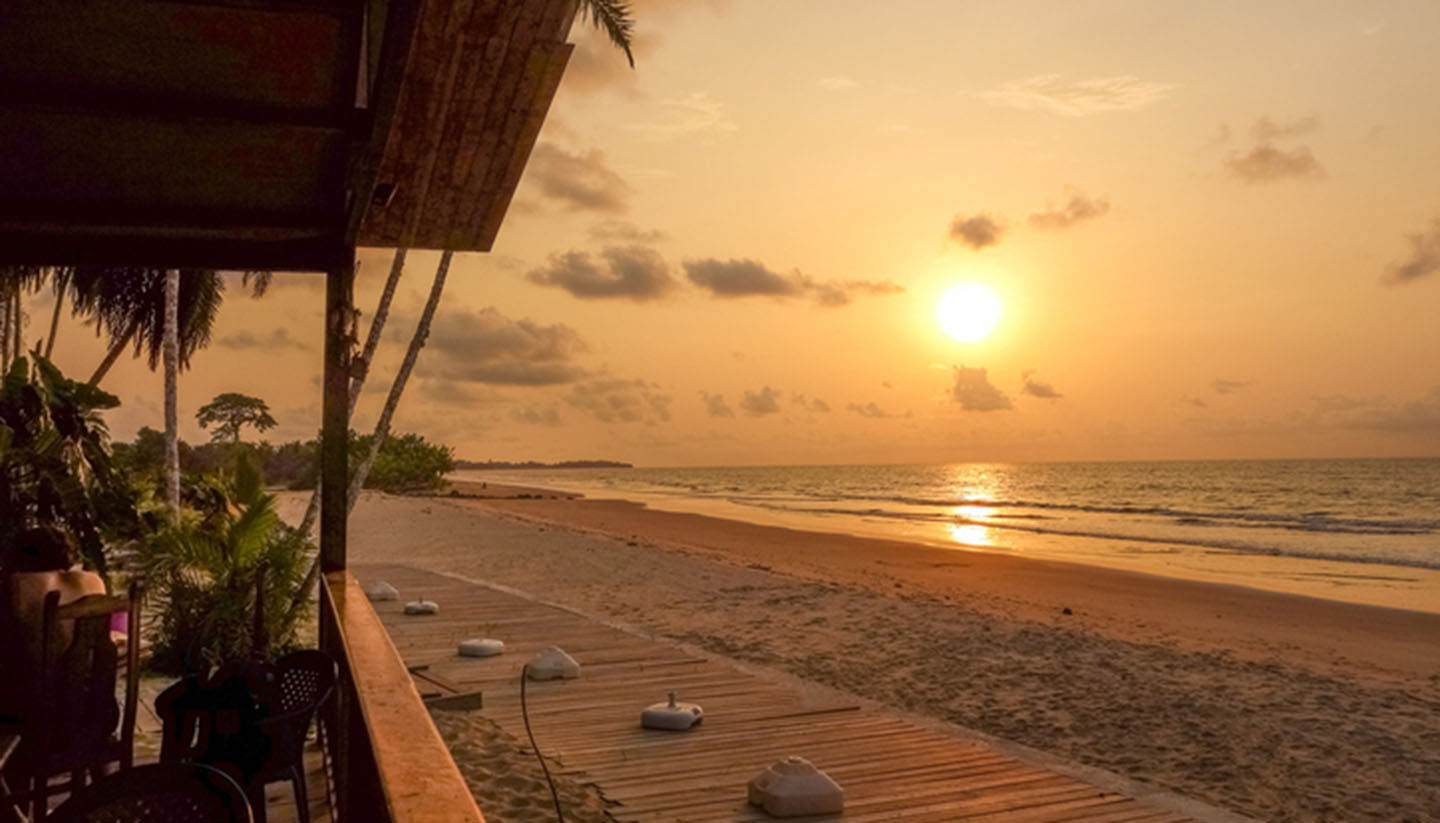
This means the country, which occupies a slice of mainland Africa and five offshore islands, is not set up with tourism in mind. Travel can be hard and hotel rooms both limited in number and expensive compared to neighbouring states. However, Equatorial Guinea offers a rare opportunity to experience central Africa’s colonial history and unspoiled natural beauty.
Large areas of Rio Muni, mainland Equatorial Guinea, have been set aside as protected zones. Noted internationally for their biodiversity and hiking opportunities, the country’s rainforests are the habitat of various endangered primates including mandrills, chimpanzees and gorillas, as well as forest elephants.
The capital, Malabo, lacks the frenetic energy of some cities on the continent, with nothing happening very fast. Its tranquillity and the laidback air of its people perhaps results from lying on the steamy island of Bioko. It’s atmospheric sides streets are the best place in the country to encounter the architectural splendours left by Spain’s colonial regime.
Outside the capital, Bioko Island is also the location of the crater lakes of Lago Lorento and Lago Biao. Idyllic spots for relaxation, even the least interested birdwatcher will suddenly become the most ardent ornithologist: the sheer diversity of avian wildlife is staggering.
Its natural wonders and hospitable inhabitants should have put Equatorial Guinea on the map years ago, but a reputation for political instability means this remains an untapped mine for now.
Key facts
28,051 sq km (10,831 sq miles).
869,587 (UN estimate 2016).
26.4 per sq km.
Malabo.
Republic.
President Teodoro Obiang Nguema Mbasogo since 1979.
Prime Minister Manuel Osa Nsue Nsua since 2024.
Travel Advice
Before you travel
No travel can be guaranteed safe. Read all the advice in this guide. You may also find it helpful to:
- see general advice for women travellers
- read our guide on disability and travel abroad
- see general advice for LGBT+ travellers
- read about safety for solo and independent travel
- see advice on volunteering and adventure travel abroad
Travel insurance
If you choose to travel, research your destinations and get appropriate travel insurance. Insurance should cover your itinerary, planned activities and expenses in an emergency.
About FCDO travel advice
The Foreign, Commonwealth & Development Office (FCDO) provides advice about risks of travel to help you make informed decisions. Find out more about FCDO travel advice.
Get travel advice updates
Sign up to get email notifications when this travel advice is updated.
Follow FCDO:
This information is for people travelling on a full ‘British citizen’ passport from the UK. It is based on the UK government’s understanding of Equatorial Guinea’s current rules for the most common types of travel.
The authorities in Equatorial Guinea set and enforce entry rules. If you’re not sure how these requirements apply to you, contact the Equatorial Guinea Embassy in the UK:
Telephone: +44 7918 289 393
Email: info@embareage-londres.uk
Passport validity requirements
To enter Equatorial Guinea, your passport must have an ‘expiry date’ at least 6 months after the date you arrive.
Check with your travel provider that your passport and other travel documents meet requirements. Renew your passport if you need to.
You will be denied entry if you do not have a valid travel document or try to use a passport that has been reported lost or stolen.
Dual nationals
When returning to the UK, British citizens must carry a valid British passport or certificate of entitlement. See Dual citizenship.
Visa requirements
You must have a visa to visit Equatorial Guinea. Short-term visas are valid for 90 days. For longer stays you must apply at local police stations.
Applying for a visa
Complete the online visa application form and upload the required documents. The processing time is 72 hours. Print out the e-visa letter to present on arrival, and border officials will issue your visa.
You can also apply in person at the embassy and get the visa before you travel.
Make sure you get your passport stamped.
Make sure the border control officer issues your visa and puts a stamp in your passport. Travellers have reported being delayed or threatened with detention because their passports have not been properly processed.
Residence permits
Long-term visitors must get a residence permit of one-year validity from the Ministry of National Security. If you have a residence permit, you will not need a visa.
Vaccine requirements
You must have a certificate to prove you’ve had a yellow fever vaccination, due to a risk of yellow fever transmission.
For full details about medical entry requirements and recommended vaccinations, including yellow fever, see TravelHealthPro’s Equatorial Guinea guide.
Health screening
You may have to fill in a health questionnaire about any recent travel to Ebola-affected countries, including Liberia, Guinea and Sierra Leone.
Customs rules
You must declare anything that may be prohibited or subject to tax or duty.
Terrorism
There is a high threat of terrorist attack globally affecting UK interests and British nationals, including from groups and individuals who view the UK and British nationals as targets. Stay aware of your surroundings at all times.
UK Counter Terrorism Policing has information and advice on staying safe abroad and what to do in the event of a terrorist attack. Find out how to reduce your risk from terrorism while abroad.
Terrorism in Equatorial Guinea
Although there’s no recent history of terrorism in Equatorial Guinea, attacks cannot be ruled out.
Political situation
The political situation has been calm in recent years, but police, military or security forces respond swiftly to any political protests on the streets. Avoid any political rallies, demonstrations or large public gatherings.
Commercial disputes
The authorities can stop you from leaving the country if you’re involved in a commercial dispute. There have been occasions when expatriate staff of foreign companies have been detained or confined to the country for prolonged periods. If you are detained, you could face months or years of imprisonment. Legal processes can be lengthy and complex.
Crime
Protecting yourself and your belongings
Crimes range from petty theft and mugging to carjacking and armed robbery, risks can be greater in remote areas of towns, particularly after dark including around Malabo and Bata. You can reduce your personal risk by:
- staying alert in public places
- not wearing expensive-looking jewellery or watches
- not travelling by road after dark
Taxis
There have been reports of robberies and violent assaults on passengers travelling by taxi in Malabo and Bata, particularly at night. You should:
- use pre-booked taxis or taxi apps
- ask your hotel or travel operator to arrange taxis
- avoid taking taxis with groups or strangers
Laws and cultural differences
Personal ID
Always carry your passport or residence permit (or copies) with you throughout the country. Security checks have increased across the country. Follow all official advice and remain non-confrontational if stopped by authorities. If you fail to show identification documents on request, you could be arrested and detained.
Illegal drugs and prison sentences
Possession of drugs is a serious offence and punishments can be severe, including prison sentences.
Using cameras in secure areas
Photographing government or military buildings or airports is illegal and you could be arrested and detained.
Behaviour in public
Showing affection in public may attract unwanted and negative attention. It is uncommon for opposite or same-sex couples to show affection in public.
LGBT+ travellers
Same-sex relationships are not illegal in Equatorial Guinea, but there is no legal protection against discrimination based on sexual orientation. Society is very conservative and discrimination can be a problem for those open about their sexual identity. Same-sex marriage is not recognised in Equatorial Guinea.
Read more advice for LGBT+ travellers.
Money
You can only pay by credit card at a few major hotels including the Hilton and Sofitel. There are a limited number of ATMs in Malabo and Bata – some accept international bank cards. Local banks will exchange cash euros, British pounds and US dollars.
Transport risks
Road travel
If you are planning to drive in Equatorial Guinea, see information on driving abroad.
Most major roads on Bioko Island and the Rio Muni mainland are now paved. In some isolated rural areas the condition of the roads is likely to be poor.
Public transport facilities, particularly on the mainland, are extremely limited.
Drink-driving is a serious offence in Equatorial Guinea.
Roadblocks
Police and military roadblocks are common. You may be asked to show your passport or vehicle registration documents and explain your reason for being in the area. Failure to comply can lead to detention.
There are regular reports of police and uniformed security forces at roadblocks asking for bribes. If this happens, you can ask for a ticket, detailing alleged offences or violations, which you can pay at a local court.
Air travel
The UK Air Safety List (ASL) lists all known airlines in Equatorial Guinea that do not meet international safety standards and are banned from operating commercial air services to, from, and within the UK. Check the UK Air Safety List when considering which airlines to fly with. The list is maintained by the Department for Transport, based on advice from the UK Civil Aviation Authority.
Sea travel
There have been armed attacks on commercial shipping vessels in the Gulf of Guinea. Take extreme care when sailing in coastal waters.
If you’re travelling by sea, read about the regional risks at sea.
Before you travel check that:
- your destination can provide the healthcare you may need
- you have appropriate travel insurance for local treatment or unexpected medical evacuation
This is particularly important if you have a health condition or are pregnant.
Emergency medical number
Call 3101 and ask for an ambulance.
Contact your insurance company quickly if you’re referred to a medical facility for treatment.
Vaccine recommendations and health risks
At least 8 weeks before your trip:
- check the latest vaccine recommendations for Equatorial Guinea
- see where to get vaccines and whether you have to pay on the NHS travel vaccinations page
See what health risks you’ll face in Equatorial Guinea including:
- malaria and dengue
- Schistosomiasis
- Zika virus
Altitude sickness is a risk in parts of Equatorial Guinea. Read more about altitude sickness on TravelHealthPro.
Marburg virus disease (MVD)
In June 2023, the outbreak of Marburg virus disease was declared over by the World Health Organisation (WHO) and the Equatorial Guinea government. No new cases have been reported.
Check the latest situation with local authorities before travelling. You can find more information on Marburg virus disease from the WHO, and TravelHealthPro.
Medication
The legal status and regulation of some medicines prescribed or bought in the UK can be different in other countries. Pharmacies in Malabo and Bata stock basic medication.
Read best practice when travelling with medicines on TravelHealthPro.
Healthcare in Equatorial Guinea
Medical facilities are generally poor, apart from the La Paz hospital in Malabo. Emergency facilities are extremely limited. For serious medical treatment, evacuation to Europe is likely. Make sure you have adequate travel health insurance and accessible funds to cover the cost of any medical treatment abroad and repatriation.
Travel and mental health
Read FCDO guidance on travel and mental health. There is also mental health guidance on TravelHealthPro.
The Foreign, Commonwealth & Development Office (FCDO) cannot provide tailored advice for individual trips. Read this travel advice and carry out your own research before deciding whether to travel.
Emergency services in Equatorial Guinea
Ambulance: 3101
Police: 666 404040 or 666 303030
Emergency numbers and emergency response are unreliable. Emergency help can be limited in some places that are hard to reach. You may need to get local advice and arrange private transport.
Contact your travel provider and insurer
Contact your travel provider and your insurer if you are involved in a serious incident or emergency abroad. They will tell you if they can help and what you need to do.
Refunds and changes to travel
For refunds or changes to travel, contact your travel provider. You may also be able to make a claim through insurance. However, insurers usually require you to talk to your travel provider first.
Find out more about changing or cancelling travel plans, including:
- where to get advice if you are in a dispute with a provider
- how to access previous versions of travel advice to support a claim
Support from FCDO
FCDO has guidance on staying safe and what to do if you need help or support abroad, including:
- being arrested or imprisoned in Equatorial Guinea
- getting help if you’re a victim of crime
- what to do if you’re in hospital
- if you’re affected by a crisis, such as a terrorist attack
Contacting FCDO
Help abroad
See how to get help from the UK government abroad including in an emergency.
Help in the UK
You can call FCDO in London if you need urgent help because something has happened to a friend or relative abroad.
Telephone: 020 7008 5000 (24 hours)
Get travel advice updates
Sign up to get email notifications when this travel advice is updated.
Follow FCDO: