
Botswana travel guide
About Botswana
Tucked away in the heart of southern Africa, Botswana is a land of staggering natural beauty and unspoilt wilderness. This is a country where elephants outnumber people in some regions, rivers vanish into desert sands, and the rhythms of nature dictate the pace of life. For those seeking an authentic, off-the-beaten-track adventure, Botswana delivers in spades.
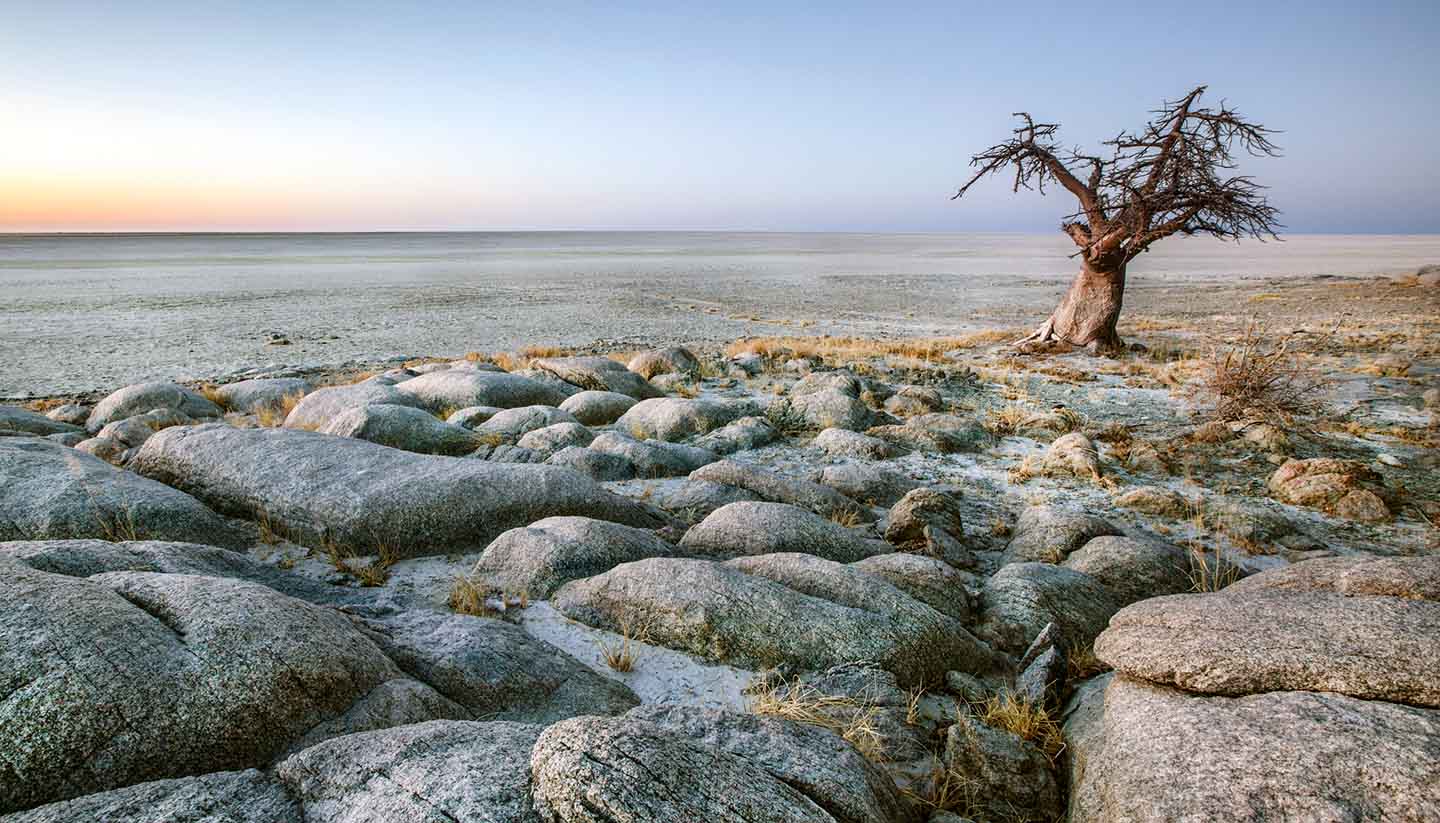
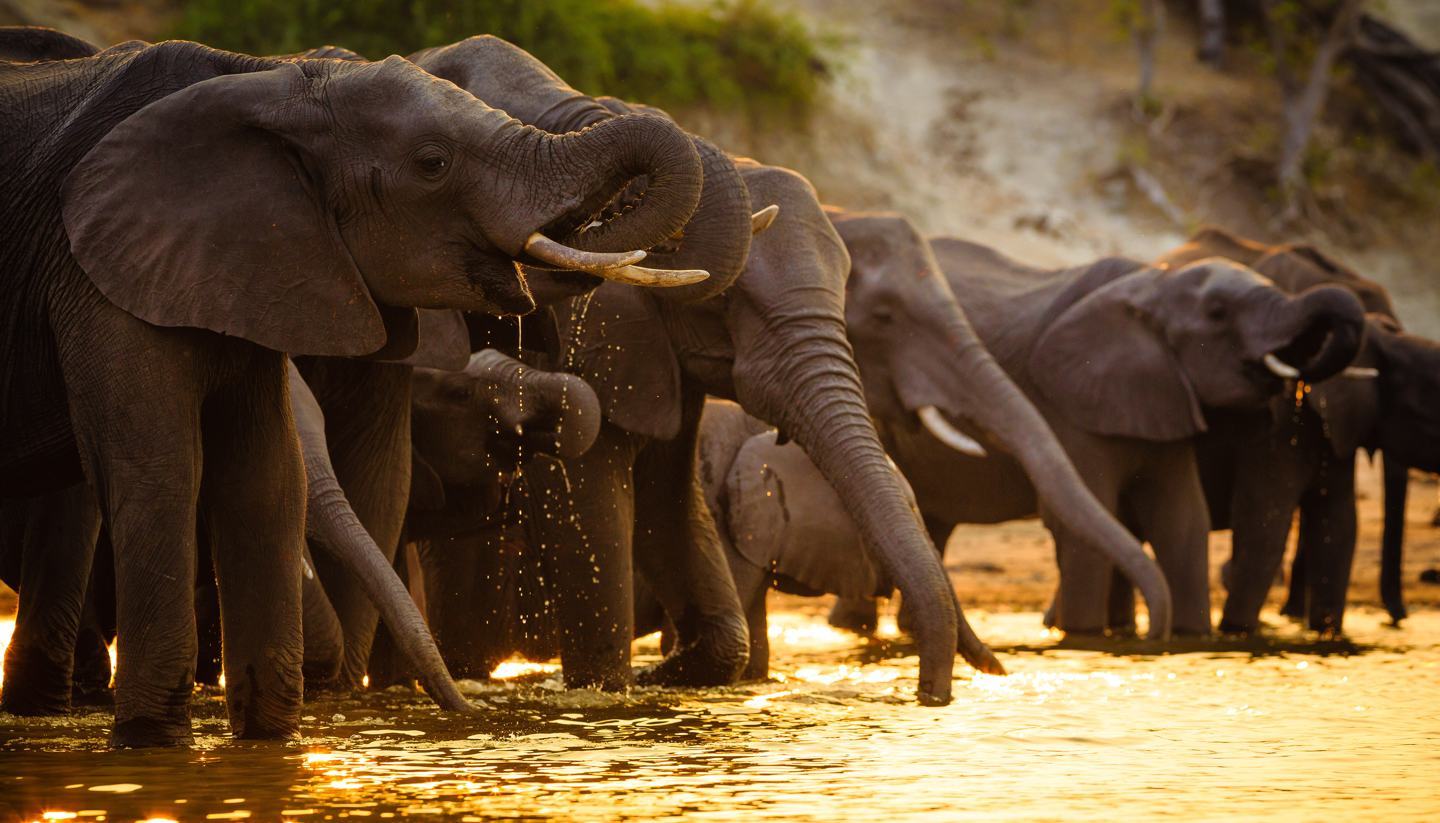
Home to the legendary Okavango Delta—one of the largest inland deltas in the world—Botswana offers a safari experience like no other. Picture gliding silently through papyrus-fringed waterways in a mokoro (dugout canoe), as herds of red lechwe splash through the shallows and fish eagles call from above. Beyond the Delta, the stark and otherworldly landscapes of the Makgadikgadi Pans stretch endlessly towards the horizon, while Chobe National Park promises some of Africa's most thrilling wildlife encounters, especially its famed elephant herds. In fact, nearly 40% of Botswana's land is protected for conservation—an extraordinary commitment that makes it one of the best places on the planet to witness wildlife in its natural state.
Many international visitors begin their journey in Gaborone, Botswana's capital and largest city. Though not the main attraction, the capital offers a gentle introduction to the country: a relaxed and modern city with leafy neighbourhoods, colourful markets, and a growing arts scene. From here, travellers typically continue on to Maun or Kasane—gateways to the Delta and Chobe, respectively—where the real adventure begins.
Yet Botswana is more than its landscapes and game parks. It's a country defined by its calm confidence, political stability, and deep-rooted respect for the natural world. Visitors will also find a culture that values warmth, community, and tradition. Whether you're swapping stories around a campfire, chatting with a guide in a village, or simply being greeted with a friendly "Dumela" (hello), there's a quiet hospitality that makes you feel instantly at ease.
Indeed, Botswana beckons to those who want to feel the pulse of the wild, to sleep under star-smeared skies, and to experience Africa at its most raw, real, and rewarding.
Key facts
581,730 sq km (224,610 sq miles).
2.71 million (2024).
4 per sq km.
Gaborone.
Parliamentary republic.
President Duma Boko since 2024.
Travel Advice
Before you travel
No travel can be guaranteed safe. Read all the advice in this guide. You may also find it helpful to:
- see general advice for women travellers
- read our guide on disability and travel abroad
- see general advice for LGBT+ travellers
- read about safety for solo and independent travel
- see advice on volunteering and adventure travel abroad
Travel insurance
If you choose to travel, research your destinations and get appropriate travel insurance. Insurance should cover your itinerary, planned activities and expenses in an emergency.
About FCDO travel advice
The Foreign, Commonwealth & Development Office (FCDO) provides advice about risks of travel to help you make informed decisions. Find out more about FCDO travel advice.
Get travel advice updates
Sign up to get email notifications when this travel advice is updated.
Follow FCDO:
This information is for people travelling on a full ‘British citizen’ passport from the UK. It is based on the UK government’s understanding of Botswana’s current rules for the most common types of travel.
The authorities in Botswana set and enforce entry rules. If you’re not sure how these requirements apply to you, contact the Botswana High Commission in the UK.
Telephone: 0207 499 0031
Email: bohico@govbw.com
Passport validity requirements
To enter Botswana, your passport must have an ‘expiry date’ at least 6 months after the date you arrive and at least 3 blank pages.
Check with your travel provider that your passport and other travel documents meet requirements. Renew your passport if you need to.
You will be denied entry if you do not have a valid travel document or try to use a passport that has been reported lost or stolen.
Make sure you get your passport stamped.
This will record your date and port of entry. Unstamped passports will raise suspicions of illegal entry.
Dual nationals
Dual nationals must enter Botswana on the same passport they used to exit the previous country.
When returning to the UK, British citizens must carry a valid British passport or certificate of entitlement. See Dual citizenship.
Visa requirements
You can visit Botswana for up to 90 days without a visa.
If you want to work, study or volunteer in Botswana, see the requirements for business, study and employment visas.
Overstaying a visa or a permitted visit can cause a delay to your departure. If you want to extend your stay, contact Botswana’s Department of Immigration.
Travelling with children
You must have an original or certified copy of the full birth certificate of any child aged 17 or under when you enter or leave the country.
Any parent not present must sign an affidavit giving their consent for the child to travel. For more information contact the Botswana High Commission in the UK.
Vaccine requirements
To enter Botswana, you must have a certificate to prove you’ve had a yellow fever vaccination if you’re coming from a country listed as a transmission risk.
For more details about health entry requirements and recommended vaccinations, see TravelHealthPro’s Botswana guide.
Ebola
As a public health measure, Botswana has introduced entry restrictions including health screening for travellers arriving from affected regions. Check entry requirements for the country you’re travelling to or transiting.
The World Health Organisation (WHO) have declared Ebola as a Public Health Emergency of International Concern.
Customs rules
There are strict rules about goods you can take into or out of Botswana. You must declare anything that may be prohibited or subject to tax or duty.
Taking money into Botswana
Declare foreign or local cash currency if the value is 10,000 Botswana pula or more. If you do not, you could be liable to prosecution.
Terrorism
There is a high threat of terrorist attack globally affecting UK interests and British nationals, including from groups and individuals who view the UK and British nationals as targets. Stay aware of your surroundings at all times.
UK Counter Terrorism Policing has information and advice on staying safe abroad and what to do in the event of a terrorist attack. Find out how to reduce your risk from terrorism while abroad.
Terrorism in Botswana
Although there’s no recent history of terrorism in Botswana, attacks cannot be ruled out.
Crime
Attacks on tourists are rare, but violent crime is increasing particularly in the major towns of Gaborone, Francistown and Maun. Criminals have also carried out hold-ups and robberies of restaurants during peak hours.
Protecting yourself and your belongings
Criminals may target cars waiting at traffic lights. To reduce the risk of attack:
- keep doors locked and windows closed
- keep handbags, phones and laptops out of sight
- avoid carrying luggage in your vehicle whenever possible
- do not stop for people at the roadside hitchhiking
House burglaries, often by armed gangs, are common. They do not often target tourists, but there have been isolated room break-ins and theft from lodges in the Chobe area, particularly river-fronting lodges. To reduce the risk of burglary or home invasion:
- lock your room at all times
- speak to your travel operator if your accommodation does not seem secure
- secure valuables in a hotel safe or other safe place
Sexual assault
Botswana has a high number of sexual assaults. While foreign visitors are unlikely to be targeted, women should take care when walking and avoid walking alone at night.
Laws and cultural differences
Personal ID
Always carry some identification. A copy of the photo page in your passport is usually enough as long as you can produce the original if required.
If you send your passport for renewal, make sure you have a certified copy that you can present in its place.
Illegal drugs and prison sentences
Drug taking and trafficking are illegal. If you’re convicted of a drug-related offence, you can get a fine of up to 500,000 pulas (about £30,000) or a prison sentence of up to 25 years, or both. Prison conditions are generally poor.
Using cameras in secure areas
It is illegal to take photographs or use video equipment near military and government installations. Always ask permission before photographing people in Botswana.
LGBT+ travellers
Although same-sex sexual activity is no longer prohibited by law, public attitudes are less tolerant than in the UK and displaying affection in public may attract negative attention.
Read more advice for LGBT+ travellers.
Wildlife, animal products and souvenirs
It’s illegal to buy, sell, kill or capture any protected wild animal or trade its parts. If you’re caught hunting, buying or trafficking these goods you will be prosecuted. If you’re convicted, sentences can be severe.
Outdoor activities and adventure tourism
If you travel to remote areas, make transport and accommodation arrangements in advance and seek local security advice. Take emergency supplies, including water and fuel, and be prepared for off-road driving conditions. In very remote areas, travel in convoy or with a satellite phone in case of breakdown.
On open highways, inside or outside wildlife reserves, there could be dangerous animals roaming that may behave unpredictably. Always follow park regulations and advice from park wardens.
Do not bathe in rivers and lakes. You could be attacked by wild animals and you risk catching water-borne diseases.
Transport risks
Road travel
You can use a UK photocard driving licence to drive in Botswana. If you still have a paper driving licence, you may need to update it to a photocard licence or get the 1949 version of the international driving permit (IDP) as well.
You can drive with a UK driving licence for up to 90 days. If you intend to stay longer than 90 days, apply for a Botswana driving licence.
Hire car companies often have stricter requirements for their customers, such as a year of driving experience, a higher minimum age and holding an IDP.
Driving conditions
Botswana has good tarmac roads covering most of the country, but driving outside the major urban areas can be dangerous due to stray wildlife and livestock. This is a particular risk at night, so take extra care if you’re driving after dark.
The standard of driving is lower than in the UK. Many drivers ignore rules of the road. Speeding and drink-driving, or driving on drugs, cause frequent and often fatal accidents.
Taxis
To reduce risk of crime when using taxis, look for licensed taxis with blue plate numbers. Cabs run by a recognised taxi company will usually have branding and can be pre-booked.
Extreme weather and natural disasters
Find out what you can do to prepare for and respond to extreme weather and natural hazards.
Flooding
Botswana’s rainy season, runs from November to March, bringing heavy rainfalls and risk of flash flooding. Road conditions throughout the country may be unsafe. Follow the advice of Botswana’s Meteorological Services and from the local authorities at Ministry of Environment and Tourism.
Floodings may also impact border crossings with closure at short notice. Follow the advice of Botswana’s Unified Revenue Services for latest updates on road accessibility and border opening and closure status.
Before you travel check that:
- your destination can provide the healthcare you may need
- you have appropriate travel insurance for local treatment or unexpected medical evacuation
This is particularly important if you have a health condition or are pregnant.
Emergency medical number
Call 997 and ask for an ambulance.
Contact your insurance company quickly if you’re referred to a medical facility for treatment.
Vaccine recommendations and health risks
At least 8 weeks before your trip:
- check the latest vaccine recommendations for Botswana
- see where to get vaccines and whether you have to pay on the NHS travel vaccinations page
See what health risks you’ll face in Botswana including:
- malaria, which is reported in April 2025 to have spread to areas where it is not usually present
- schistosomiasis
There are occasional outbreaks of anthrax among wild animals. Do not touch dead animals or carcases. If you suspect that you have come into contact with anthrax, seek urgent medical advice.
If you intend to camp or walk in the bush, take precautions to avoid tick bites, as they can cause several dangerous diseases.
Medication
The legal status and regulation of some medicines prescribed or bought in the UK can be different in other countries.
Read best practice when travelling with medicines on TravelHealthPro.
Healthcare in Botswana
The State of Public Health Emergency is now over. Despite this, medicine and medical supply shortages remain widespread across public health facilities nationwide. Private healthcare remains largely unaffected.
Healthcare in Botswana is usually good in major towns, but medical facilities and communications are limited in rural areas. For serious medical treatment, medical evacuation to the UK or South Africa may be necessary.
Private hospitals will not treat you unless you can pay, and the cost may be high. Public hospitals will only take you as an emergency patient if you have full insurance. For outpatient treatment, you will need to pay up front.
Make sure you have adequate travel health insurance and accessible funds to cover the cost of any medical treatment abroad and repatriation.
FCDO has a list of medical providers in Botswana.
Travel and mental health
Read FCDO guidance on travel and mental health. There is also mental health guidance on TravelHealthPro.
The Foreign, Commonwealth & Development Office (FCDO) cannot provide tailored advice for individual trips. Read this travel advice and carry out your own research before deciding whether to travel.
Emergency services in Botswana
Ambulance: 997
Fire: 998
Police: 999
Contact your travel provider and insurer
Contact your travel provider and your insurer if you are involved in a serious incident or emergency abroad. They will tell you if they can help and what you need to do.
Refunds and changes to travel
For refunds or changes to travel, contact your travel provider. You may also be able to make a claim through insurance. However, insurers usually require you to talk to your travel provider first.
Find out more about changing or cancelling travel plans, including:
- where to get advice if you are in a dispute with a provider
- how to access previous versions of travel advice to support a claim
Support from FCDO
FCDO has guidance on staying safe and what to do if you need help or support abroad, including:
- finding lawyers in Botswana
- dealing with a death in Botswana
- being arrested or imprisoned in Botswana
- getting help if you’re a victim of crime
- what to do if you’re in hospital
- if you’re affected by a crisis, such as a terrorist attack
Contacting FCDO
Help abroad
See how to get help from the UK government abroad including in an emergency.
Help in the UK
You can call FCDO in London if you need urgent help because something has happened to a friend or relative abroad.
Telephone: 020 7008 5000 (24 hours)
Get travel advice updates
Sign up to get email notifications when this travel advice is updated.
Follow FCDO: