Mauritania travel guide
About Mauritania
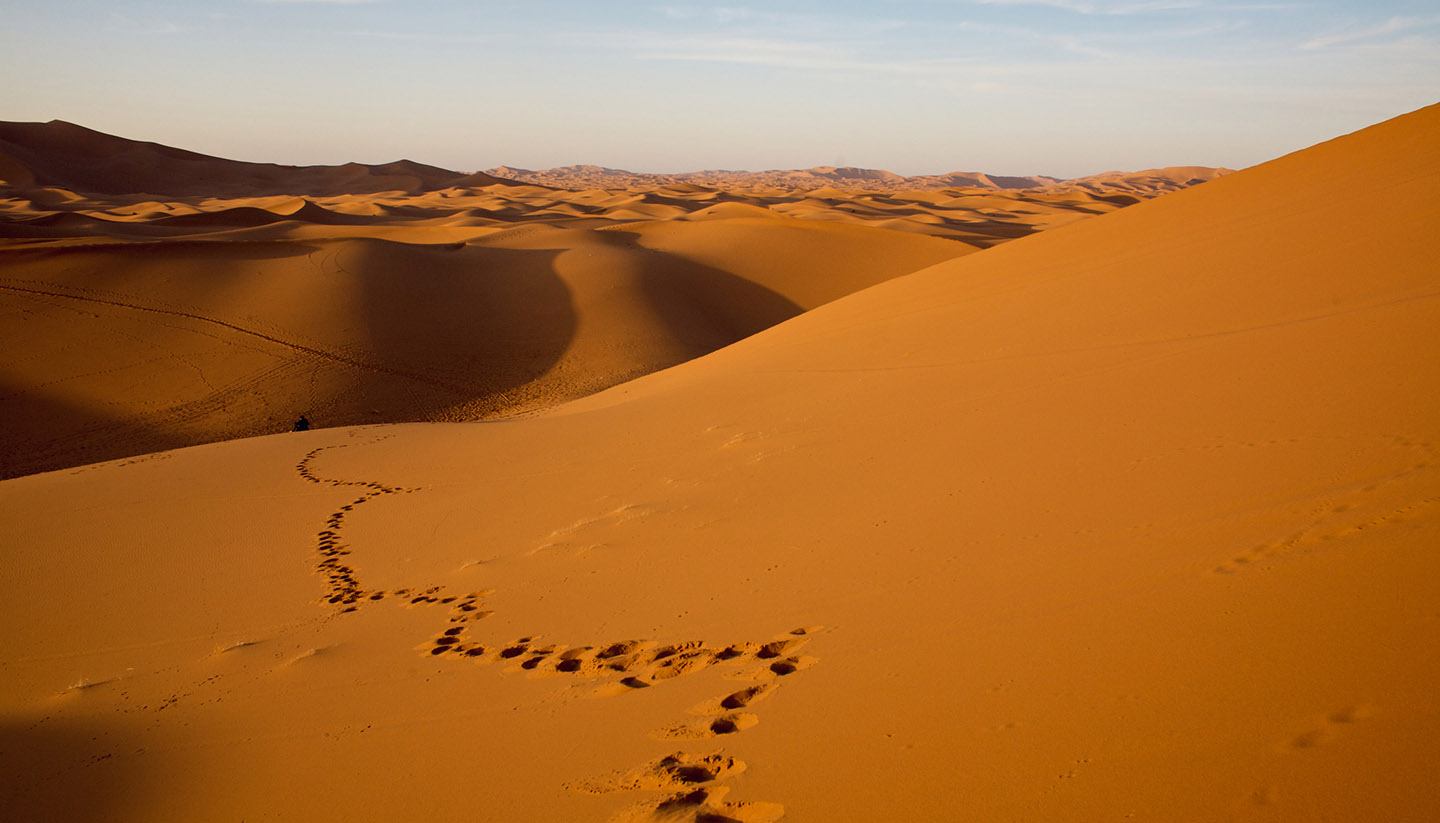
Mauritania’s is a lonely beauty. A land of endless deserts, empty coastlines and spectacular birdlife, it is lays claim to some of the most spectacular scenery in Africa and a fascinating population comprised of Arab-Berbers and black Africans.
Arguably the jewel in Mauritania’s crown is the Banc d’Arguin, where the Sahara Desert slips silently into the Atlantic Ocean. This is nirvana for twitchers, particularly during the European winter, when more than two million migratory birds descend on the national park. The Banc d’Arguin is also home to the Imraguen fishermen, who catch their quarry with a little help from local dolphins.
The Mauritanian coastline is a bleak and beautiful place, an empty shore littered with the occasional shipwreck or whale skeleton. Miraculously, one of the last remaining Mediterranean monk seal colonies can be found living around Cap Blanc, where there is a small nature reserve dedicated to protecting this endangered species.
Inland lies the oasis settlement of Ouadâne. Concealed by coloured sand dunes, this ghost town was once a centre for intellectual thinking and its private libraries contain thousands of ancient scholarly manuscripts. It’s also home to the crumbling remains of a 14th century mosque, which dominates this UNESCO-listed town. Nearby Chinguetti, the seventh holiest city of Islam, is also worth a visit.
Nouakchott, the capital, is hot and dusty and doesn’t have very much to recommend it besides a few French restaurants and bustling markets. The best thing to do in town is to watch local fishermen land their catch at Port de Peche, where every evening a colourful mass of people haul nets, carry fish and drag brightly painted boats out of the waves, singing songs as they go. It’s one of Mauritania’s many simple pleasures.
Key facts
1,030,700 sq km (397,955 sq miles).
4,166,463 (UN estimate 2016).
3.5 per sq km.
Nouakchott.
Islamic Republic.
President Mohamed Ould Cheikh El Ghazouani since 2024.
Prime Minister Moctar Ould Diay since 2024.
Travel Advice
Your travel insurance could be invalidated if you travel against Foreign, Commonwealth & Development Office (FCDO) advice.
Areas where FCDO advises against travel
Eastern Mauritania
FCDO advises against all travel to areas east of a line drawn between but excluding the towns of Kankossa, Akhreijit, Ghallaouia, Zouerat, Fderîck and onwards west to the border with Western Sahara.
Mauritania-Mali border
FCDO advises against all travel to areas within 25km of the Malian border in the south, including Khabou.
Mauritania-Western Sahara border
FCDO advises against all but essential travel to areas within 25km of the Western Sahara border, excluding the section of the Nouakchott-Nouadhibou road and the city of Nouadhibou.
Tiris Zemmour, Adrar, Tagant, Hodh el Gharbi, Assaba, Gorgol and Guidimaka provinces
FCDO advises against all but essential travel to the rest of the province of Tiris Zemmour, Assaba, Hodh el Gharbi, Gorgol and Guidimaka, and areas of Adrar and Tagant provinces, west of a line drawn between the towns of Ghallaouia, Akhreijit and Kankossa. This excludes:
-
the areas west of a line running between Choum, Ouadane and where the 10th Meridian West meets latitude 18° 40°
-
the town of Ouadane
-
the Tidjikja-Tichit road
-
the Aleg to Tidjikja road via Moudjeria and all areas of Tagant west of that road
-
the Bogue to Kaedi road via Bababe
Find out more about why FCDO advises against travel.
UK government support
The British Embassy in Nouakchott cannot provide consular services in person. British nationals in Mauritania should contact the British Embassy in Dakar, Senegal, for support.
Protests
There have been periodic protests in Mauritania relating to developments in the Middle East. Demonstrations can take place with little or no warning.
You should:
-
avoid all demonstrations and larger gatherings
-
monitor local media for updates
-
follow the advice of local authorities
Before you travel
No travel can be guaranteed safe. Read all the advice in this guide. You may also find it helpful to:
- see general advice for women travellers
- read our guide on disability and travel abroad
- see general advice for LGBT+ travellers
- read about safety for solo and independent travel
- see advice on volunteering and adventure travel abroad
Travel insurance
If you choose to travel, research your destinations and get appropriate travel insurance. Insurance should cover your itinerary, planned activities and expenses in an emergency.
About FCDO travel advice
FCDO provides advice about risks of travel to help you make informed decisions. Find out more about FCDO travel advice.
Get travel advice updates
Sign up to get email notifications when this travel advice is updated.
Follow FCDO:
This information is for people travelling on a full ‘British citizen’ passport from the UK, who choose to travel despite FCDO advice. It is based on the UK government’s understanding of Mauritania’s current rules for the most common types of travel.
The authorities in Mauritania set and enforce entry rules. If you’re not sure how these requirements apply to you, contact the Mauritanian Embassy in the UK.
Passport validity requirements
To enter Mauritania, your passport must have an ‘expiry date’ at least 6 months after the date you arrive.
Check with your travel provider that your passport and other travel documents meet requirements. Renew your passport if you need to.
You will be denied entry if you do not have a valid travel document or try to use a passport that has been reported lost or stolen.
Dual nationals
When returning to the UK, British citizens must carry a valid British passport or certificate of entitlement. See Dual citizenship.
Visa requirements
From 5 January 2025, it is no longer possible to obtain a visa on arrival in Mauritania. Before you travel, you must apply for an e-visa online via the website of the Mauritanian National Agency for the Population Register and Secure Titles (Agence Nationale du Registre des Populations et des Titres Sécurisés), who can be contacted via email (contact@anrpts.gov.mr) if you face any technical difficulties with your application.
E-visa fees must be paid on arrival in Mauritania in exact cash in Euros or US dollars. Change and receipts are not given. You should also print a copy of the e-visa and be ready to provide a copy on arrival in country. For information on visa lengths and fees, read guidance on the Mauritanian government’s website (in French).
You should apply for an e-visa well in advance of your anticipated travel date to ensure that it is issued on time by the Mauritanian authorities.
The Mauritanian Embassy in London does not issue visas.
Vaccine requirements
To enter Mauritania, you must have a certificate to prove you’ve had a yellow fever vaccination if you’re coming from a country listed as a transmission risk.
For more details about health entry requirements and recommended vaccinations, including yellow fever, see TravelHealthPro’s Mauritania guide.
Customs rules
There are strict rules about goods you can take into or out of Mauritania. You must declare anything that may be prohibited or subject to tax or duty.
Terrorism
There is a high threat of terrorist attack globally affecting UK interests and British nationals, including from groups and individuals who view the UK and British nationals as targets. Stay aware of your surroundings at all times.
UK Counter Terrorism Policing has information and advice on staying safe abroad and what to do in the event of a terrorist attack. Find out how to reduce your risk from terrorism while abroad.
Terrorism in Mauritania
Terrorist attacks in Mauritania cannot be ruled out.
Terrorist attacks could be indiscriminate, including in places visited by foreign nationals. Stay aware of your surroundings, keep up to date with local media reports and follow the advice of local authorities.
Political situation
Demonstrations can happen at any time in Nouakchott. You should avoid political gatherings and demonstrations and follow the advice of local authorities and security forces. Maintain adequate stocks of non-perishable food and water.
Crime
Crime levels are moderate but steadily increasing.
There have been burglaries in areas where foreign nationals live and robberies during daylight.
There have been thefts and robberies at knifepoint during the day and night on the unlit and isolated beaches in Nouakchott and in the ‘Le Cinquième’, ‘Dar Naim’ and Citè Plage districts. Be particularly careful in these places.
Report crime to the police by dialling 117 or visiting a police station.
Laws and cultural differences
Personal ID
You should always carry copies of your photo ID, especially outside Nouakchott where there are police checkpoints. Follow any directions from the police or other Mauritanian security forces.
Religion
Mauritania recognises Islam as the only religion of its citizens and the state. It is illegal to participate in non-Islamic gatherings and activities that have not been authorised by the Mauritanian authorities. Attempting to convert people to other religions is illegal – those caught doing this can be arrested or deported. Blasphemy is a criminal offence and the maximum penalty is death. Respect local traditions, customs, laws and religion at all times and be aware of your actions to ensure they don’t offend, especially during the holy month of Ramadan or when visiting religious sites.
Ramadan
Ramadan is a holy month for Muslims. The dates vary by year and country. During this time, do not eat, drink, smoke or chew gum in public in the daytime, including in your car.
Get more advice when you arrive from your tour guide, hotel or business contacts.
You should also:
- check opening hours of shops and restaurants
- follow local dress codes – clothing that does not meet local dress codes may cause more offence at this time
- be aware that driving may be more erratic, particularly when people are trying to get home at dusk
Alcohol and pork products ban
It is illegal for Muslims and non-Muslims to import or consume alcohol and pork products in Mauritania. The Mauritanian authorities scan all baggage on arrival at Nouakchott International Airport and may search vehicles at land borders. They will confiscate alcohol or pork products and arrest or fine people found carrying them.
Illegal drugs and prison sentences
Drug laws in Mauritania are severe. The penalties for possessing illegal drugs include imprisonment.
Dress code
You should dress modestly when not on the beach. Women should cover their shoulders and not wear short skirts. Men should not wear sleeveless tops or shorts.
Using cameras
Police and members of the public can object to photography or filming if you do not get their permission. Do not photograph or film government and military sites or members of the security forces.
LGBT+ travellers
There are no laws in Mauritania to protect LGBT+ people from discrimination.
Under Mauritanian law, the maximum penalty for sexual activity between men is death. Penalties for women include a prison sentence ranging from 3 months to 2 years and a fine.
Read more advice for LGBT+ travellers.
Accessing money
It is illegal to take Mauritanian currency (ougiyas) out of the country. The Mauritanian authorities may confiscate money from people trying to do so.
You can exchange US dollars and euros for Mauritanian ouguiyas at banks, some hotels and official bureau de change. You can exchange British pounds at some official bureau de change, but the exchange rate is very poor.
Mauritania is mainly a cash-based society. A few hotels in Nouakchott and Nouadhibou accept credit cards – some hotels only accept Visa cards. Some ATMs accept foreign credit or debit cards.
Transport risks
Road travel
If you are planning to drive in Mauritania, see information on driving abroad.
You can use a UK photocard driving licence to drive in Mauritania. If you still have a paper driving licence, you may need to update it to a photocard licence.
Driving standards
Driving standards can be poor in Mauritania, traffic rules are rarely respected and paved roads are generally in poor condition.
Overland travel is difficult, and you should use a 4-wheel-drive vehicle and avoid travelling at night. Check the tide times on coastal roads and travel in convoy if possible. Carry out a maintenance check before you travel and make sure you have enough water and fuel on long journeys.
You should travel in a convoy with an experienced guide if leaving urban areas, including to the tourist sites of Chinguetti and Tichit. You should carry sufficient supplies and inform family or friends of your travel plans.
Public transport vehicles are poorly maintained, especially in the interior of the country.
Crossing borders
Crossing the border into Mauritania can be time-consuming, and officials may ask for payments before they allow you to cross. Check local advice before travelling to neighbouring countries in case border crossings are closed or congested.
This section has safety advice for regions of Mauritania. It only covers regions where FCDO has specific advice.
You should also read FCDO’s overall travel advice and safety and security advice.
Eastern Mauritania
FCDO advises against all travel to areas east of a line drawn between but excluding the towns of Kankossa, Akhreijit, Ghallaouia, Zouerat, Fderîck and onwards west to the border with Western Sahara.
FCDO advises against all travel because of designated “military zones” by the Mauritanian military. These areas are off-limits to foreign nationals and most civilians. The Mauritanian Ministry of Defence warned that individuals entering these areas would be treated as a military target. The boundaries of such zones frequently change and authorisation from authorities is needed for access.
These zones are due to the deterioration of the security situation in Mali leading to increased risks of incursions by terrorist groups based in Mali into Mauritanian territory, including Jama’a Nusrat ul-Islam wa al-Muslimin (JNIM). Serious organised crime groups operate in eastern Mauritania.
Mauritania-Mali border
FCDO advises against all travel to areas within 25km of the Malian border in the south of Mauritania, including Khabou. There is increased terrorist and serious organised crime activity across the border in Kayes Region in Mali.
Mauritania-Western Sahara border
FCDO advises against all but essential travel to areas within 25km of the Western Sahara border, excluding the section of the Nouakchott-Nouadhibou road and the city of Nouadhibou.
Unexploded landmines remain on the border with Western Sahara. Landmines can shift location due to weather conditions. You should check local advice before travelling.
Tiris Zemmour, Adrar, Tagant, Hodh el Gharbi, Assaba and Guidimaka provinces
FCDO advises against all but essential travel to the rest of the province of Tiris Zemmour, Assaba, Hodh el Gharbi, Gorgol and Guidimaka, and areas of Adrar and Tagant provinces, west of a line drawn between the towns of Ghallaouia, Akhreijit and Kankossa. This excludes:
-
the areas west of a line running between Choum, Ouadane and where the 10th Meridian West meets latitude 18° 40°
-
the town of Ouadane
-
the Tidjikja-Tichit road
-
the Aleg to Tidjikja road via Moudjeria and all areas of Tagant west of that road
-
the Bogue to Kaedi road via Bababe
This is due to risks of instability extending from eastern Mauritania as a result of the conflict in Mali, including from organised crime.
Before you travel check that:
- your destination can provide the healthcare you may need
- you have appropriate travel insurance for local treatment or unexpected medical evacuation
This is particularly important if you have a health condition or are pregnant.
Emergency medical number
Call 101 and ask for an ambulance.
The Mauritania authorities may not answer calls to this number.
Contact your insurance company quickly if you’re referred to a medical facility for treatment.
Vaccine recommendations and health risks
At least 8 weeks before your trip:
- check the latest vaccine recommendations for Mauritania
- see where to get vaccines and whether you have to pay on the NHS travel vaccinations page
See what health risks you’ll face in Mauritania, including:
- dengue
- yellow fever
- biting insects
- Rift Valley fever
Medication
Many medicines may be fake or hard to find in Mauritania. Carry enough of your prescription medication for your stay. The legal status and regulation of some medicines prescribed or bought in the UK can be different in other countries.
Read best practice when travelling with medicines on TravelHealthPro.
Healthcare in Mauritania
Medical facilities are extremely limited in Mauritania, particularly outside Nouakchott and Nouadhibou, where lack of communications makes dealing with an emergency very difficult.
Clinics in Nouakchott and Nouadhibou charge for medical care (sometimes in euros or US dollars) and may not accept foreign insurance cards. Make sure you have adequate travel health insurance and accessible funds to cover the cost of any medical treatment abroad and repatriation.
FCDO has a list of medical providers in Mauritania where some staff will speak English.
Travel and mental health
Read FCDO guidance on travel and mental health. There is also mental health guidance on TravelHealthPro.
The Foreign, Commonwealth & Development Office (FCDO) cannot provide tailored advice for individual trips. Read this travel advice and carry out your own research before deciding whether to travel.
Emergency services in Mauritania
Ambulance: 101
Fire: 118
Police: 117
The Mauritania authorities may not answer calls to these numbers.
Contact your travel provider and insurer
Contact your travel provider and your insurer if you are involved in a serious incident or emergency abroad. They will tell you if they can help and what you need to do.
Refunds and changes to travel
For refunds or changes to travel, contact your travel provider. You may also be able to make a claim through insurance. However, insurers usually require you to talk to your travel provider first.
Find out more about changing or cancelling travel plans, including:
- where to get advice if you are in a dispute with a provider
- how to access previous versions of travel advice to support a claim
Support from FCDO
FCDO has guidance on staying safe and what to do if you need help or support abroad, including:
- finding English-speaking lawyers in Mauritania
- being arrested or imprisoned in Mauritania
- getting help if you’re a victim of crime
- what to do if you’re in hospital
- if you’re affected by a crisis, such as a terrorist attack
Contacting FCDO
Help abroad
See how to get help from the UK government abroad including in an emergency.
Help in the UK
You can call FCDO in London if you need urgent help because something has happened to a friend or relative abroad.
Telephone: 020 7008 5000 (24 hours)
Get travel advice updates
Sign up to get email notifications when this travel advice is updated.
Follow FCDO: