
Latvia History, Language and Culture
History of Latvia
Latvia has, like neighbouring Estonia and Lithuania, been an important trading centre and strategic pawn in the Baltic region. The various Latvian tribes were self-governing until the end of the 13th century when Teutonic knights conquered the territory. Latvia was then subject to sporadic invasions by the Poles and the Swedes until the 18th century when Russia, under Peter the Great, emerged as a major European power.
The entire territory of modern Latvia was under Russian control from 1795 until 1918, when the Latvian National Council proclaimed it a free state. That freedom didn’t last long though, and in 1940 the country was invaded by the Soviets. Nazi forces displaced them the following year before the Red Army invaded once again in 1944 when Latvia was incorporated into the Soviet Union.
Protests against Soviet control and the campaign for democracy and independence began in 1986 and gathered pace with the formation of the Popular Front of Latvia in 1988. The Latvian parliament declared independence on 4 May 1990, a day still marked as a national holiday. Full independence was finally achieved following a referendum in 1991, with Latvia being admitted into the UN in September 1991.
Latvia joined NATO in 2004 and was admitted into the EU – along with nine other states, including Estonia and Lithuania – later the same year. The Lat, Latvia’s currency since 1993, was then replaced by the Euro in January 2014.
The suppression of the Latvian language and culture during the Soviet era has left a legacy of hostility – in some areas the ethnic Russian minority are subject to discrimination and, although there has been no serious conflict between the communities, it remains a delicate issue.
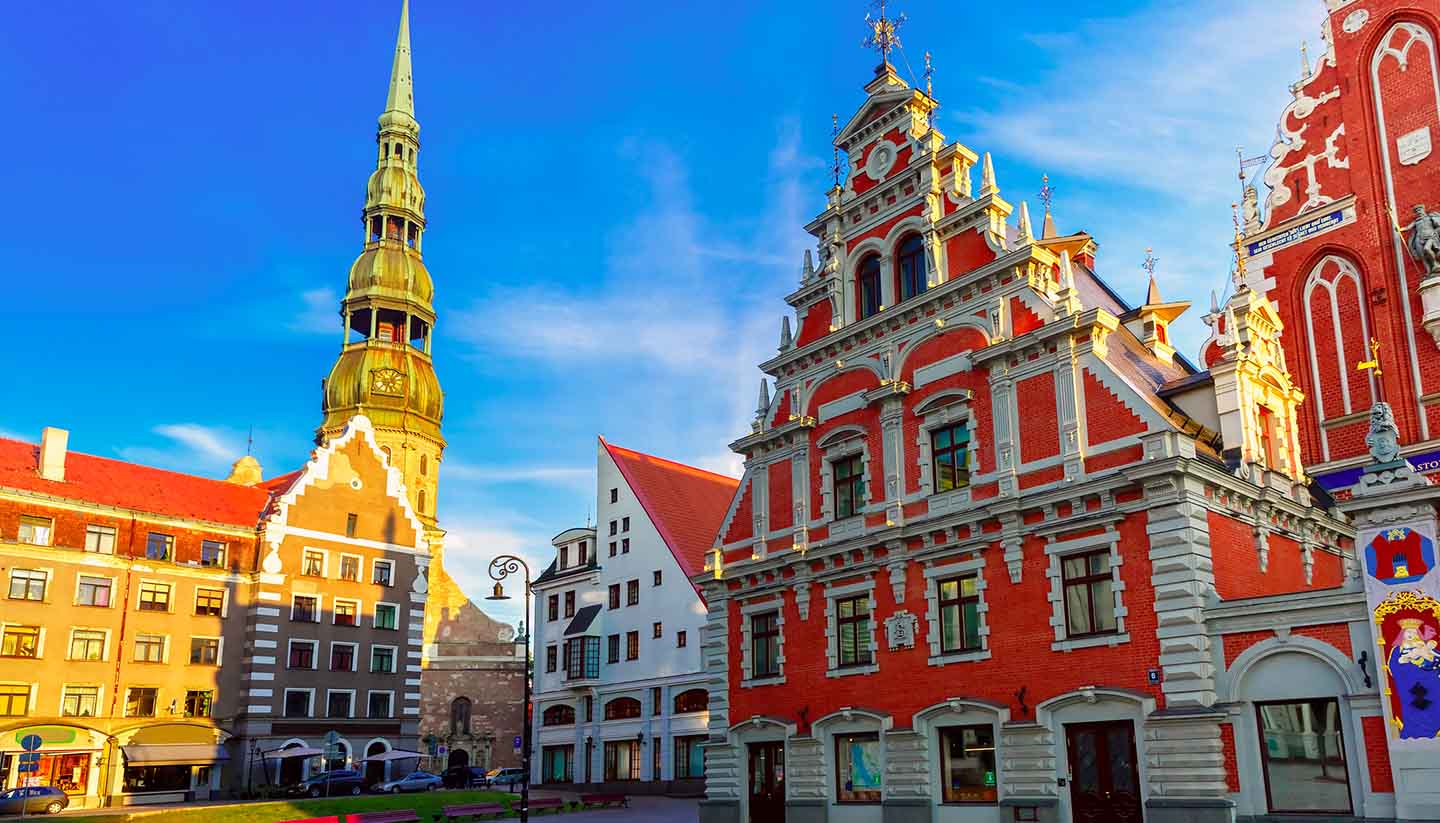
The capital, Riga, was founded as a trading post in 1201 and has preserved many aspects of its long history, with architectural styles spanning eight centuries and a historic old town that was declared a UNESCO World Heritage Site in 1997. Riga was named European Capital of Culture in 2014 and remains an enticing destination for tourists.
Latvia Culture
Religion in Latvia
Majority Lutheran and Catholic, with a sizeable Russian Orthodox minority.
Social Conventions in Latvia
Handshaking is customary when meeting someone for the first time. Latvians can be reserved and formal, but nevertheless very hospitable. They can also be quite direct, but do not generally mean to cause offence. Latvians are proud of their culture, and visitors should respect this strong sense of national identity.
Language in Latvia
Latvian is the official language. Russian, English and German are widely spoken. Latvian belongs to the Baltic language group, part of the Indo-European language family. The language has three main dialects, with the Latgallian dialect, spoken in the eastern part of Latvia, especially distinctive.