Getting Around Serbia
Air
Domestic air travel within Serbia is limited and primarily connects Belgrade (BEG) with Niš Constantine the Great Airport (INI) and Morava Airport (KVO) near Kraljevo.
Road
Serbia's motorway network is good, particularly along the north-south Corridor X route linking Hungary with North Macedonia and Greece. Motorways connect Belgrade with Novi Sad, Niš and much of central Serbia, while additional sections continue to expand towards Montenegro and Bosnia and Herzegovina. Outside the motorways, Serbia's road network consists of a mixture of national roads, regional routes and rural mountain roads.
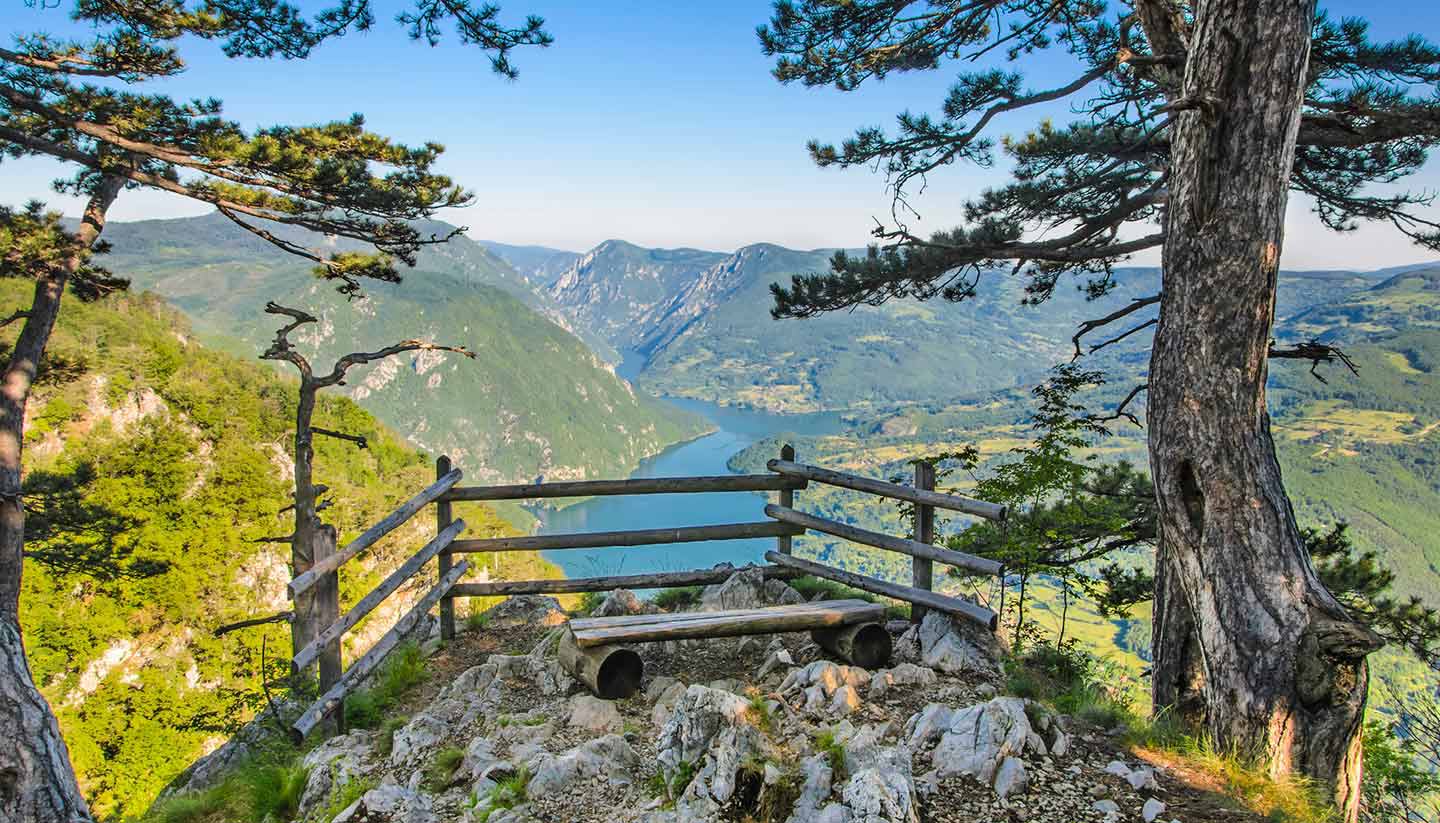
The drive between Belgrade and Novi Sad takes around one hour via motorway, while the journey from Belgrade to Niš takes approximately two-and-a-half to three hours. Western Serbia, including Zlatibor, Tara National Park and Mokra Gora, is more mountainous and scenic, with slower roads passing through valleys and forested hills. In winter, snow and ice can affect higher-altitude routes, particularly in the southwest and around ski resorts such as Kopaonik.
Petrol stations are widespread on major highways and in towns, with fuel quality generally good throughout the country. Toll roads operate on most motorways, with payment accepted in Serbian dinars, euros and by major credit cards at larger toll plazas.
Side of the road
RightRoad Quality
Road quality in Serbia is generally good on the main motorway network and principal intercity routes. The motorways linking Belgrade with Novi Sad, Niš and the Hungarian border are well-maintained and form the backbone of long-distance travel through the country. Roads connecting major towns and cities are usually paved and in reasonable condition, though surfaces can vary outside the principal corridors.
Secondary and rural roads are more variable. In mountainous regions, roads may be narrow, winding and occasionally affected by potholes or limited lighting. Extra caution is advisable when driving at night, particularly in rural areas where livestock, tractors and slow-moving vehicles are common. Winter weather can affect higher-altitude routes in western and southern Serbia, especially during periods of snow and ice.
Road Classification
Serbia's road network is divided into several categories. Motorways (autoput) form the highest standard of roads and carry the designation "A", such as the A1 motorway linking Hungary, Belgrade, Niš and North Macedonia. These are controlled-access toll roads designed for high-speed long-distance travel and form part of the wider European Corridor X network.
State roads of Class I connect major cities, regional centres and border crossings. These roads are generally paved and in reasonable condition, though they may pass directly through towns and villages. State roads of Class II serve smaller towns and rural areas and vary more in quality, particularly in mountainous regions.
Local and municipal roads provide access to villages and remote communities. In rural areas, some smaller roads may be narrow, poorly lit or affected by winter weather. Road signs use both the Latin and Cyrillic alphabets throughout Serbia.
Car Hire
Car hire is widely available in Serbia, particularly in Belgrade, where most international and local rental companies operate from Belgrade Nikola Tesla Airport and the city centre. Vehicles can also be hired in Novi Sad, Niš and several other larger towns, though choice may be more limited outside the capital.
Hiring a car is a practical way to explore rural and mountainous parts of Serbia, including Tara National Park, Zlatibor, Kopaonik and the wine regions of Vojvodina, where public transport connections can be slower and less frequent. Road signage is generally good on major routes, and navigation apps function reliably across most of the country.
Drivers must normally be at least 21 years old, though some companies require drivers to be 23 or older for certain vehicle categories. A valid national driving licence is accepted for most visitors, though an International Driving Permit is recommended if the licence is not written in the Latin alphabet.
Before hiring a vehicle, travellers should confirm insurance coverage, excess charges and whether cross-border travel is permitted, as additional documentation and fees are often required for taking rental cars into neighbouring Balkan countries.
Taxi
Taxis are widely available in Belgrade, Novi Sad, Niš and other Serbian cities. Licensed taxis generally operate with roof signs and meters, though vehicle colour schemes vary between companies. In Belgrade, taxis can usually be hailed on the street, found at designated taxi ranks or booked by phone or mobile app.
Using registered taxi companies is strongly recommended, particularly at Belgrade Nikola Tesla Airport and major railway or bus stations, where unofficial drivers sometimes approach arriving passengers. At the airport, travellers should obtain a fixed-price taxi voucher from the official desk inside the arrivals hall before leaving the terminal. This helps avoid overcharging and fare disputes.
Fares in Serbia are relatively inexpensive by Western European standards. Most licensed taxis use meters, though it's advisable to confirm that the meter is running at the start of the journey. Late-night, weekend and holiday surcharges may apply.
Ride-hailing apps operate widely in Belgrade and some other larger cities. Yandex Go and CarGo are among the best-known services, while traditional taxi companies also operate their own booking apps. Ride-hailing has become increasingly popular in Belgrade due to ease of payment, route tracking and fare transparency.
Bike
The Danube Cycle Route (EuroVelo 6), which runs from the Atlantic to the Black Sea, passes through northern Serbia and is the country's best-developed long-distance cycling route. The Serbian section follows the Danube through Vojvodina, Novi Sad, Belgrade and the dramatic Iron Gates gorge near the Romanian border, offering a mixture of riverside scenery, historic towns and rural landscapes.
Belgrade has some cycle lanes and riverside cycling paths, particularly along the Sava and Danube embankments, though traffic elsewhere in the city can be heavy and challenging for less experienced cyclists. Novi Sad is generally considered more cycle-friendly, with flatter terrain and a growing network of dedicated paths.
Mountain biking is popular in parts of western and southern Serbia, including Zlatibor, Tara National Park and Kopaonik, where forest trails and mountain terrain attract outdoor enthusiasts. Cyclists should be prepared for variable road surfaces, limited shoulder space on rural roads and occasionally aggressive driving behaviour from motorists.
Coach
Coach travel is one of the most widely used and practical ways of travelling around Serbia. Long-distance buses connect Belgrade with all major towns and cities, including Novi Sad, Niš, Subotica, Kragujevac, Zlatibor and Kopaonik, as well as many smaller communities that are less well served by rail.
Services are generally frequent, affordable and often faster than trains on many routes. Coaches range from basic regional buses to more comfortable long-distance vehicles with air conditioning and luggage compartments. Journey times can vary depending on traffic and road conditions, particularly during weekends and holiday periods.
Belgrade's central bus station is the country's main coach hub, with extensive domestic and international connections. Novi Sad and Niš also have significant regional bus terminals. Tickets can usually be purchased at stations shortly before departure, though reserving seats in advance is advisable during summer holidays, weekends and major festivals such as EXIT in Novi Sad.
Regulations
Traffic in Serbia drives on the right-hand side of the road. Speed limits are generally 50km/h (31mph) in built-up areas, 80km/h (50mph) on secondary roads, 100km/h (62mph) on express roads and 130km/h (81mph) on motorways, unless otherwise indicated by signs.
Seat belts are compulsory for all passengers, and children under 12 years old are generally not permitted to travel in the front seat. The use of mobile phones while driving is prohibited unless using a hands-free system. Dipped headlights must be used at all times, both day and night, throughout the year.
The legal blood alcohol limit is 0.02%, making Serbia one of the stricter European countries regarding drink-driving. For professional drivers and novice drivers, a zero-alcohol limit applies. Police checks are common, particularly during weekends and holiday periods, and on-the-spot fines may be issued for traffic offences.
Drivers are required to carry a valid driving licence, vehicle registration documents and proof of insurance at all times. Warning triangles, reflective jackets and first-aid kits are mandatory equipment in vehicles. Winter tyres are compulsory in snowy or icy conditions between November and April.
Breakdown services
Roadside assistance services are available throughout Serbia, particularly on major motorways and around larger cities. The Automobile and Motorcycle Association of Serbia (AMSS) provides nationwide breakdown assistance, towing services, roadside repairs and travel information.
For drivers using hire cars, the rental company should be contacted first in the event of a breakdown or accident, as most rental agreements include some form of roadside assistance. Travellers should confirm emergency contact numbers and coverage details before starting longer journeys.
Response times are generally reasonable on main roads and motorways but may be slower in remote mountainous areas, particularly during severe winter weather. Carrying water, warm clothing and a charged mobile phone is advisable when driving in rural parts of western and southern Serbia during colder months.
Documentation
Foreign drivers may use a valid national driving licence in Serbia for short visits. An International Driving Permit (IDP) is recommended, particularly for travellers whose licences are not written in the Latin alphabet or who intend to hire a vehicle.
Drivers must carry their passport or another form of identification, vehicle registration documents and proof of insurance at all times while driving. Visitors using their own vehicle should also carry a Green Card or other internationally recognised proof of motor insurance valid for Serbia.
Rental vehicles must carry the rental agreement and any documentation authorising cross-border travel if the vehicle is taken into neighbouring countries. Police traffic checks are relatively common, and drivers should be prepared to present documents when requested.
Urban travel
Belgrade's urban transport system consists of buses, trams and trolleybuses operated by a mixture of public and private companies. Buses form the backbone of the network and reach most parts of the city, while trams are particularly useful in the older central districts and parts of New Belgrade. Traffic congestion can be heavy during peak hours, especially on routes crossing the Sava and Danube rivers.
Tickets for buses, trams and trolleybuses can be purchased via mobile apps, kiosks and onboard in some cases, though systems and payment methods occasionally change as the city continues to modernise its fare network. Inspectors regularly check tickets, and fines can be issued for travelling without a valid ticket.
Belgrade does not currently have a metro system, though long-discussed construction projects remain underway. In practice, most visitors rely on buses, taxis and ride-hailing apps to get around the city. Walking is practical in central districts such as Dorćol, Stari Grad and Vračar, though distances between neighbourhoods can be greater than they initially appear.
Novi Sad has a smaller and more manageable public transport network based mainly around buses. The city centre is relatively compact and easy to explore on foot, while cycling is increasingly popular due to the flatter terrain and growing network of cycle paths. In Niš and other smaller Serbian cities, buses and taxis provide the main forms of urban transport.
Rail
Trains are operated by Srbija Voz, the national passenger railway company, and connect Belgrade with Novi Sad, Niš, Subotica, Užice and a number of other regional centres.
The country's best rail service is the high-speed line between Belgrade and Novi Sad. The route forms part of the wider Belgrade–Budapest rail corridor and represents a major improvement over traditional Balkan rail travel.
Elsewhere in Serbia, train services are generally slower but can still be a scenic and comfortable way to travel, particularly through mountainous western regions. The Belgrade–Bar railway towards Montenegro is especially noted for its dramatic scenery, crossing deep valleys, high bridges and forested mountains.
Trains are usually inexpensive, and tickets can be purchased at stations or online for selected routes.
Water
Domestic passenger travel by water in Serbia is used mainly for tourism and recreation rather than everyday transport. Belgrade offers a range of sightseeing boat cruises on the Danube and Sava rivers, especially during the warmer months. These include short river excursions, dinner cruises and seasonal services linking popular riverside districts. Novi Sad also has recreational boat services along the Danube.