
Things to see and do in Serbia
Attractions in Serbia
Belgrade
Serbia's capital sits at the meeting point of the Danube and Sava rivers and combines centuries of history with one of Europe's most energetic nightlife scenes. Kalemegdan Fortress overlooks the confluence, while districts such as Dorćol, Vračar and Skadarlija are filled with cafés, bars, restaurants and historic architecture. Floating river clubs known as splavovi are a defining feature of Belgrade after dark.
Devil's Town (Đavolja Varoš)
Đavolja Varoš is a striking geological formation in southern Serbia consisting of unusual stone pillars shaped by centuries of erosion. Local legends long associated the site with supernatural forces, giving rise to the name "Devil's Town". The surrounding landscape adds to the area's unusual atmosphere.
Drvengrad
Drvengrad, also known as Küstendorf, is a traditional-style wooden village built by film director Emir Kusturica in the mountains near Mokra Gora. Originally constructed as a film set, it has since become a cultural attraction hosting film and music festivals. The village combines rustic architecture with mountain scenery and an eccentric artistic atmosphere.
Fruška Gora and wine tourism
Fruška Gora, in the Vojvodina region north of Belgrade, has become one of Serbia's leading wine tourism destinations, known for its vineyards, wineries and gentle forested hills. The region is also often referred to as the "holy mountain" of Serbia due to its concentration of historic Serbian Orthodox monasteries dating back centuries. Wine tastings, rural guesthouses and scenic drives through the countryside have helped make the area increasingly popular with both domestic and international visitors.
Kopaonik National Park
Kopaonik is Serbia's largest ski resort and one of the country's main mountain destinations. In winter, its slopes attract skiers from across the Balkans, while summer brings hiking, mountain biking and cooler temperatures. The national park surrounding the resort contains forests, alpine meadows and panoramic viewpoints.
Mokra Gora and the Šargan Eight Railway
Mokra Gora is a small mountain village in western Serbia best known for the restored Šargan Eight narrow-gauge railway. The heritage train winds through mountains, tunnels and viaducts on one of the most scenic rail journeys in the Balkans. The nearby wooden village of Drvengrad has also become a popular attraction.
Niš
Niš is one of the oldest cities in the Balkans and the birthplace of the Roman Emperor Constantine the Great. The city contains a mixture of Roman, Ottoman and Serbian historical sites, including Niš Fortress and the unusual Skull Tower, built by the Ottomans using the skulls of Serbian rebels killed during the early nineteenth century.
Novi Sad and Petrovaradin Fortress
Novi Sad, Serbia's second-largest city, has a noticeably more Central European atmosphere than Belgrade, reflecting its long Habsburg history. The city is known for its relaxed cafés, elegant squares and riverside setting on the Danube. Petrovaradin Fortress rises above the city and hosts the internationally famous EXIT music festival each summer.
Sremski Karlovci
Sremski Karlovci is a small baroque town on the Danube near Novi Sad with a long cultural and religious history. Elegant architecture, Orthodox churches and wine cellars give the town a distinctly Central European character. It is particularly associated with Bermet, a traditional Serbian dessert wine once reportedly served on the Titanic.
Studenica Monastery
Studenica Monastery, a UNESCO World Heritage Site in central Serbia, is regarded as one of the most important Serbian Orthodox monasteries. Founded in the 12th century, it is known for its white marble churches, medieval frescoes and peaceful mountain setting. The monastery played a major role in the development of medieval Serbian culture and religion.
Subotica
Near the Hungarian border, Subotica is known for its striking Art Nouveau architecture and multicultural atmosphere shaped by Serbian, Hungarian and Croatian influences. The city's colourful town hall and synagogue are among the finest examples of Hungarian Secessionist architecture in the region.
Tara National Park
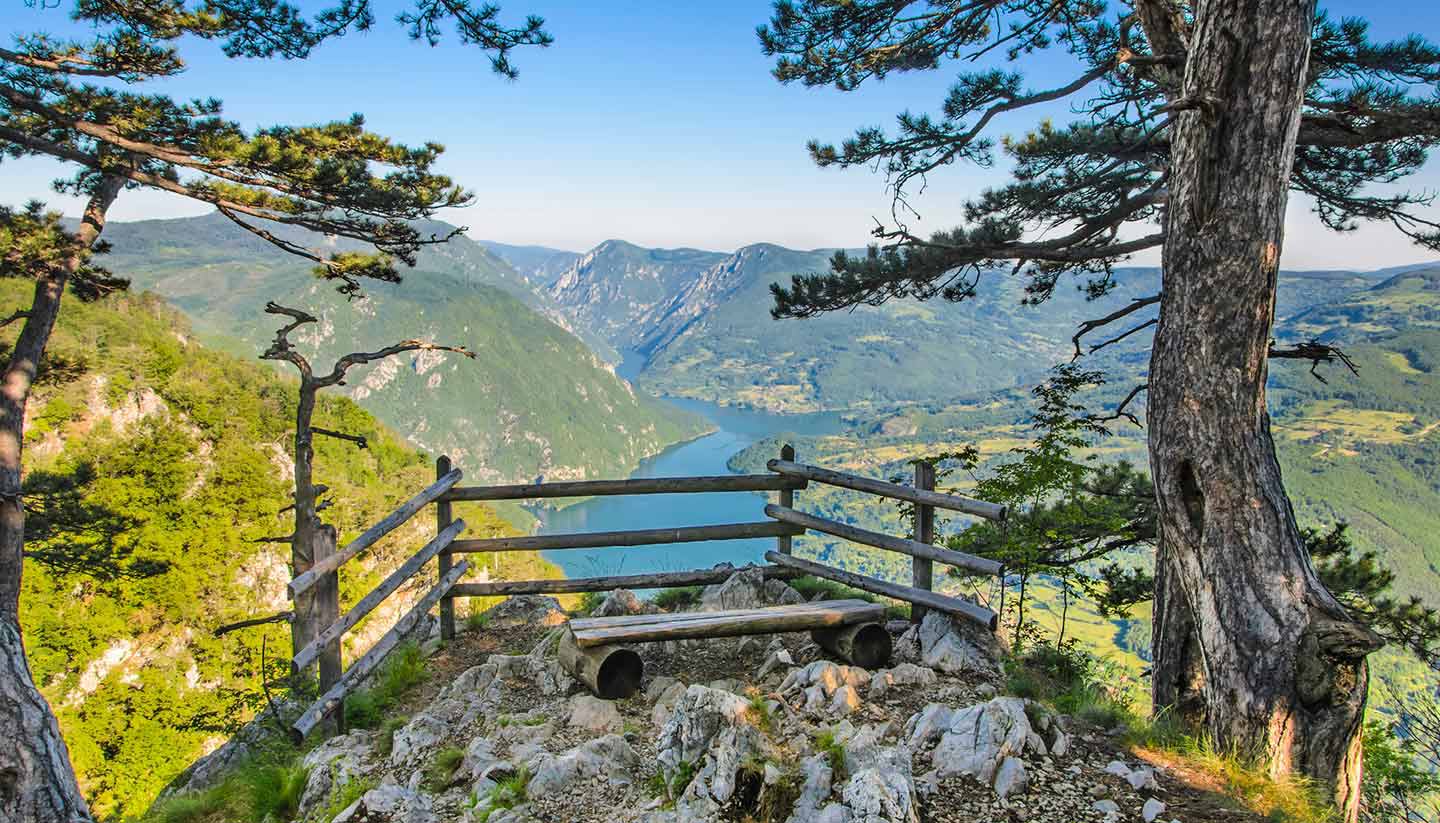
Tara National Park, in western Serbia near the border with Bosnia and Herzegovina, is one of the country's most scenic mountain regions. Dense forests, deep river gorges and viewpoints overlooking the Drina River attract hikers, photographers and nature lovers. The park is also home to brown bears and the rare Pančić spruce, a tree species native to the Balkans.
Uvac Canyon
The Uvac Canyon, in southwestern Serbia, is famous for its dramatic meanders and limestone cliffs. Boat trips through the canyon offer views of caves, turquoise water and colonies of griffon vultures, which have been successfully reintroduced to the region. The viewpoints above the river are among the most photographed landscapes in Serbia.
Zlatibor
Zlatibor is one of Serbia's best-known mountain resorts, popular throughout the year for hiking, skiing and countryside tourism. Rolling hills, pine forests and traditional villages surround the main town, while nearby attractions include the Šargan Eight heritage railway and the wooden village of Drvengrad created by filmmaker Emir Kusturica.
Đerdap National Park and the Iron Gates
Đerdap National Park follows the Danube along the border with Romania and contains the Iron Gates, one of Europe's most dramatic river gorges. Steep cliffs rise above the river, while archaeological sites, forests and scenic viewpoints line the route. Boat trips and drives along the Danube are among the highlights of the region.