
Bolivia travel guide
About Bolivia
Bolivia is a landlocked country in the heart of South America, with landscapes ranging from the high peaks and plateaus of the Andes to the tropical lowlands of the Amazon basin. It shares borders with Peru, Brazil, Paraguay, Argentina and Chile. Much of its best-known scenery lies on the Altiplano, a vast high-altitude plateau framed by snow-capped mountains, volcanoes and stark expanses of open land.
La Paz, the seat of government, occupies a dramatic valley beneath the snow-covered peak of Illimani, with neighbourhoods climbing steeply up the surrounding slopes. At more than 3,600m (11,800ft) above sea level, it is one of the world's highest major cities. Nearby, El Alto spreads across the Altiplano, while Sucre, Bolivia's constitutional capital, has a much gentler character, with whitewashed colonial buildings, churches and courtyards forming a UNESCO-listed historic centre.
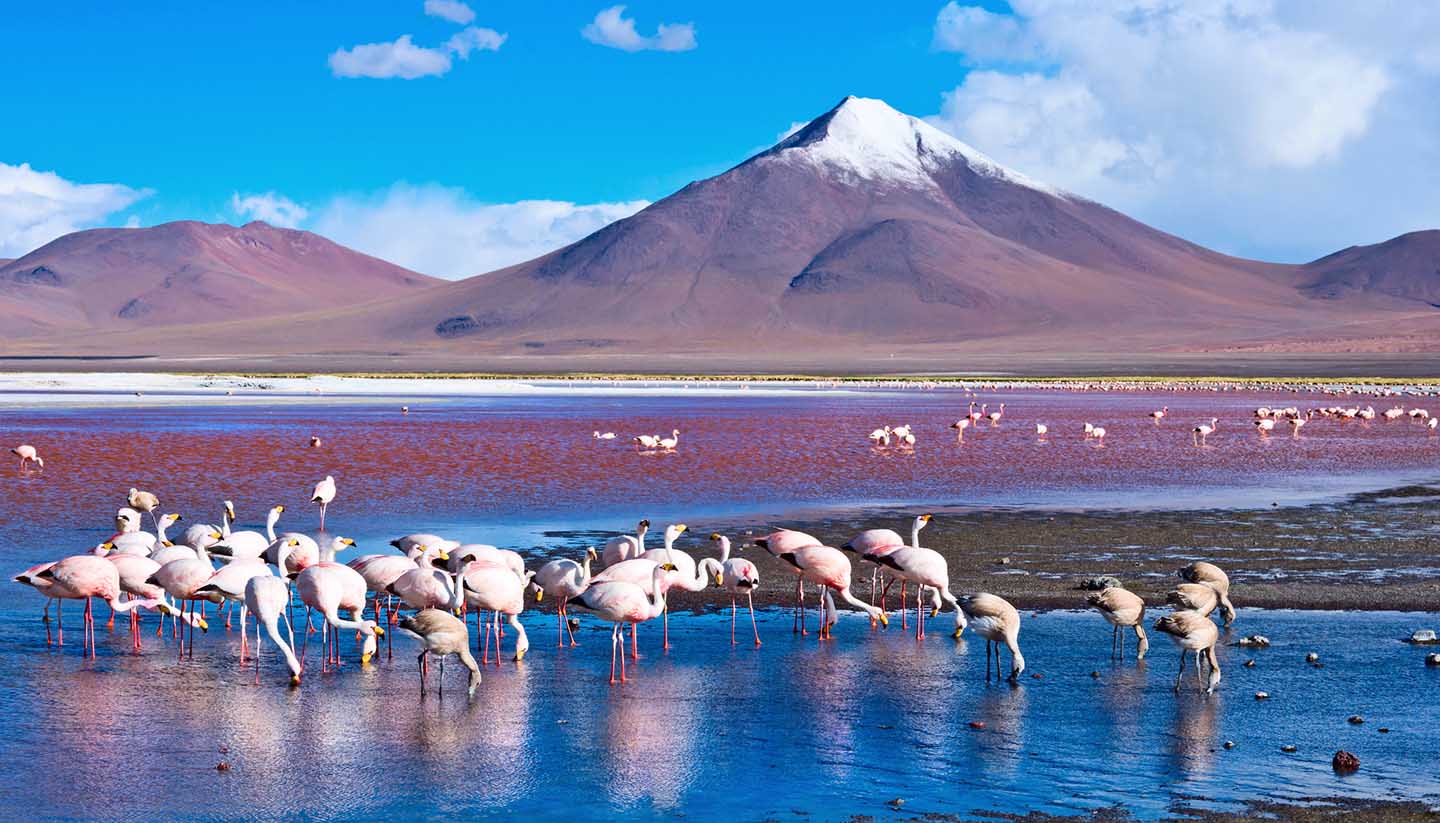
Beyond the cities, Bolivia contains some of South America's most extraordinary landscapes. Salar de Uyuni, the world's largest salt flat, extends across more than 10,000 sq km (3,860 sq miles) of the southwestern Altiplano. Further west and south are volcanoes, geothermal fields and vividly coloured lagoons inhabited by flamingos, while Lake Titicaca, shared with Peru, lies high in the Andes and has long held cultural and spiritual importance for the peoples of the region.
Eastern Bolivia presents a striking contrast to the highlands. Tropical forests, wetlands and savannahs extend towards Brazil and Paraguay, encompassing parts of the Amazon basin and the wildlife-rich plains of the Llanos de Moxos. Santa Cruz de la Sierra, the country's largest city, is the economic centre of these warmer lowlands and a gateway to national parks, Jesuit mission towns and the forests and grasslands of eastern Bolivia.
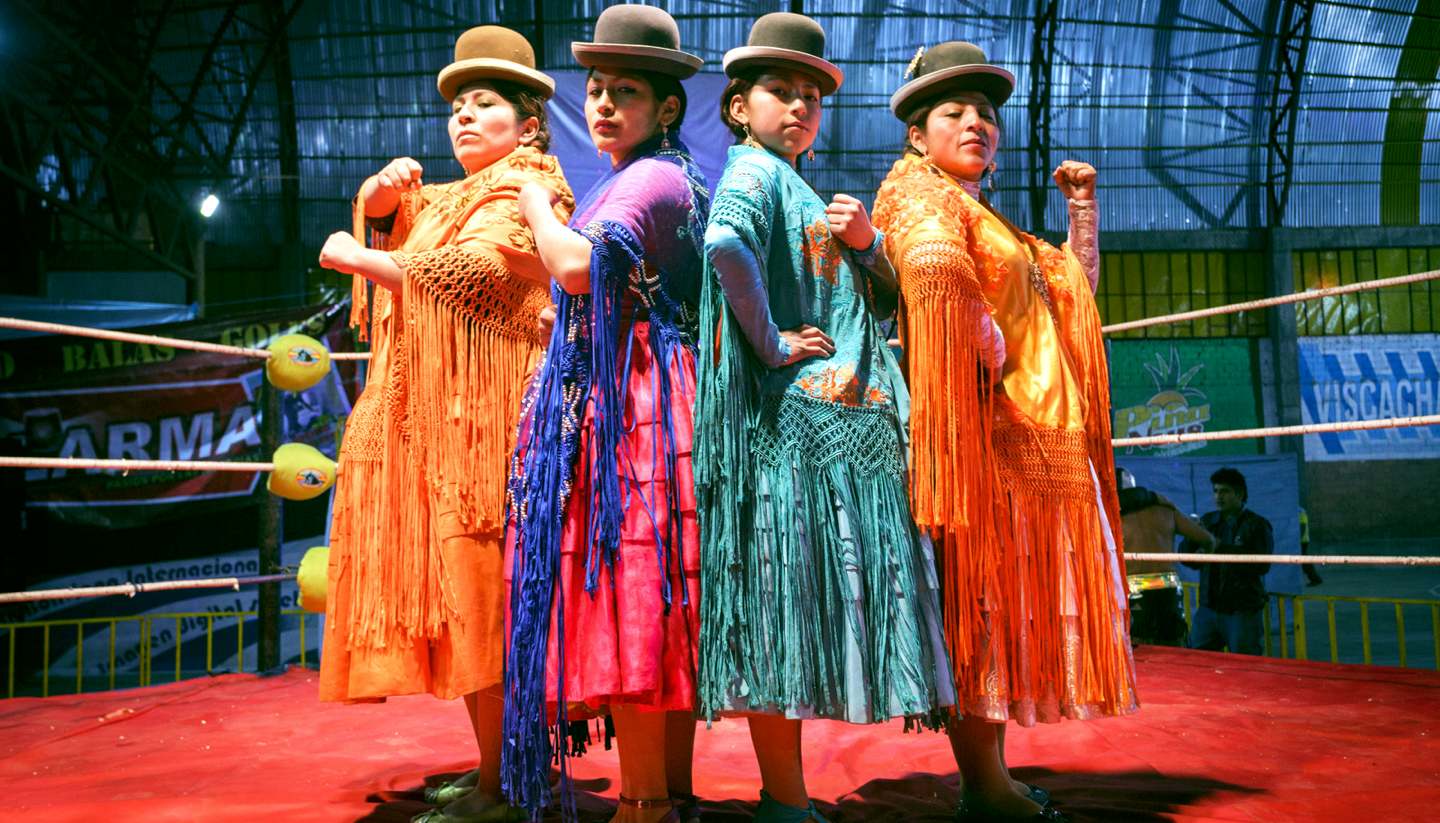
Bolivia has one of the largest Indigenous populations in South America, and Aymara, Quechua and numerous other Indigenous traditions remain central to national life. This heritage is visible in languages, clothing, markets, religious festivals, music and food, often interwoven with customs introduced during the Spanish colonial period. From the highland markets and fiestas of the Andes to the distinctive cultures of the tropical lowlands, Bolivia retains a strong regional diversity that is as striking as its landscapes.
Key facts
1,098,581 sq km (424,164 sq miles).
12.78 million (2026).
12 per sq km.
Sucre (constitutional and judicial) and La Paz (administrative).
Unitary presidential constitutional republic.
President Rodrigo Paz Pereira.
President Rodrigo Paz Pereira.
Travel Advice
Your travel insurance could be invalidated if you travel against advice from the Foreign, Commonwealth & Development Office (FCDO).
Areas where FCDO advises against travel
FCDO advises against all but essential travel to the Chapare region of Cochabamba Department including Villa Tunari and highway routes 4 and 24 that pass through Chapare.
Find out more about why FCDO advises against travel.
State of Emergency
A State of Emergency has been declared in Bolivia, giving police and armed forces powers to remove roadblocks, disrupt protests and detain those not complying with the new measures for up to 8 hours without charge. Follow the advice of local authorities, be wary of unverified or unofficial information, stay alert and keep away from protests and roadblocks.
Protests and roadblocks
Do not try to cross roadblocks. The situation has the potential to deteriorate without warning. Allow extra time to reach your destination and make sure you are ready to change your plans quickly if needed.
Any British national who requires urgent consular assistance, should contact us by phone on +44 (0)20 7008 5000, selecting the option: ‘Consular services for British nationals’. If you are in Bolivia and using a phone with a local SIM, please call 2-2010020.
Travel by Road
Check road status updates from the Bolivian road authority (available inside Bolivia only) to see which roads are blocked.
If you purchase a bus ticket ‘condicionado’ it means the bus company may not be able to guarantee arrival to your destination.
Before you travel
No travel can be guaranteed safe. Read all the advice in this guide. You may also find it helpful to:
- see general advice for women travellers
- read our guide on disability and travel abroad
- see general advice for LGBT+ travellers
- read about safety for solo and independent travel
- see advice on volunteering and adventure travel abroad
Travel insurance
If you choose to travel, research your destinations and get appropriate travel insurance. Insurance should cover your itinerary, planned activities and expenses in an emergency.
About FCDO travel advice
The Foreign, Commonwealth & Development Office (FCDO) provides advice about risks of travel to help you make informed decisions. Find out more about FCDO travel advice. Get travel advice updates
Sign up to get email notifications when this travel advice is updated.
Follow FCDO:
This information is for people travelling on a full ‘British citizen’ passport from the UK. It is based on the UK government’s understanding of Bolivia’s current rules for the most common types of travel.
The authorities in Bolivia set and enforce entry rules. If you’re not sure how these requirements apply to you, contact the Bolivian Embassy in the UK (in Spanish).
Passport validity requirements
To enter Bolivia, your passport should have an ‘expiry date’ at least 6 months after the date you arrive and at least two blank pages.
Check with your travel provider that your passport and other travel documents meet requirements. Renew your passport if you need to.
You will be denied entry if you do not have a valid travel document or try to use a passport that has been reported lost or stolen.
Dual nationals
When returning to the UK, British citizens must carry a valid British passport or certificate of entitlement. See Dual Citizenship.
Checks at border control
You may need to show proof of your accommodation, for example, a hotel or hostel booking and its address, at least for your first night in Bolivia.
Make sure you get your passport stamped.
Make sure you get an entry stamp when you arrive in Bolivia, otherwise you’ll have to pay a fine when you leave.
If you enter Bolivia overland, make sure you get your passport stamped on both sides of the border, with an exit stamp from the country you are leaving and an entry stamp on the Bolivian side.
Bolivia no longer stamps passports on the border with Argentina, but you must register your exit with Argentina’s immigration authorities (in Spanish) who pass the information to Bolivian immigration.
The British Embassy cannot intervene in immigration issues.
Visa requirements
You can visit Bolivia for up to 90 days without a visa. Border officials issue 30-day stamps, but you can stay for 90 days without any new stamp.
As a tourist, you get 90 days of visa-free travel in a one-year period. If you want to stay longer, check with the Bolivian Embassy in the UK (in Spanish) or the Department of Immigration (in Spanish).
To work or study, for business travel or for other reasons, you must meet the Bolivian government’s entry requirements (in Spanish). Requirements include a police criminal record certificate from the UK, which you can get from the ACRO Criminal Records Office. If you need any documents from the UK, get them translated into Spanish and legalised by the Legalisation Office.
Travelling with children
If only one parent or legal guardian is travelling with a child, you cannot visit Bolivia for longer than 90 days. If you stay for more than 90 days, the child will need a judicial permit to leave Bolivia with only one parent.
Vaccine requirements
To enter Bolivia, you must have a certificate to prove you’ve had a yellow fever vaccination if you’re coming from a country listed as a transmission risk.
For full details about medical entry requirements and recommended vaccinations, see TravelHealthPro’s Bolivia guide.
Customs rules
There are strict rules about goods you can take into or out of Bolivia (in Spanish). You must declare anything that may be prohibited or subject to tax or duty. You should declare through Bolivia’s 250 declaration form (link only works in Bolivia).
Terrorism
There is a high threat of terrorist attack globally affecting UK interests and British nationals, including from groups and individuals who view the UK and British nationals as targets. Stay aware of your surroundings at all times.
UK Counter Terrorism Policing has information and advice on staying safe abroad and what to do in the event of a terrorist attack. Find out how to reduce your risk from terrorism while abroad.
Terrorism in Bolivia
Although there’s no recent history of terrorism in Bolivia, terrorist attacks cannot be ruled out.
Crime
Protecting your belongings
Bolivia is experiencing an economic crisis and dollar shortage which has led to an increase in crime rates. Petty crime is common in central La Paz, in other popular tourist destinations, on buses and in crowded areas. Do not leave your bag or other belongings unattended. Always keep your passport, money and other valuable items in a safe place. On night buses, use a money belt under your clothes for important documents and credit cards; theft can occur when you are asleep.
Criminals impersonating Police Officers
Thieves can impersonate police officers. They have used fake police ID cards, uniforms and even police stations to fool victims. They may ask to check your documents and your bags and take your belongings.
You should not get into an unmarked police car under any circumstances. The police cannot stop or search you on the street without a written order from a state prosecutor.
Violent crime
There has been an increase in robberies from people taking taxis in Santa Cruz, La Paz and Rurrenabaque. If you use a taxi:
- seek local advice and use established companies
- order the taxi by phone – ‘radio taxis’ have the telephone number and the name of the taxi company on the roof
- check for a sticker on the windscreen or windows – registered taxis should display one
- do not get into a taxi already carrying other passengers
Ignore anyone offering help at taxi stands and bus terminals and watch your belongings. Thieves work in teams to distract their victims.
Political Situation
Protests, marches and demonstrations can occur with little prior notice. If they occur, you should move away from the area and remain in a safe place. Stay alert to developments and pay attention to instructions from local authorities.
Protestors may block roads. Do not attempt to cross blockades in a motor vehicle or on a motorbike. Recent blockades have led to fuel and fresh food shortages in some areas.
To reduce any risk:
- avoid large gatherings and protests
- stay alert and monitor local media
- take the advice of local authorities
- be wary of unverified, unofficial information
- allow extra time to reach your destination
Criminal Kidnap
Tourists, especially those travelling alone, are at risk of ‘express kidnapping’ in Bolivia. These are short-term, opportunistic abductions aimed at extracting cash from the victim. Victims may be held hostage for up to several days while criminals use stolen bank or credit cards.
Foreign visitors are particularly vulnerable when entering Bolivia at overland border points with Peru, Chile and Argentina. If you’re travelling from the town of Copacabana to La Paz, try to use a direct bus.
There have been several incidents at the Cementerio General and the Sopocachi areas of La Paz.
Express kidnappers sometimes impersonate police officers to target foreigners. They have used fake police ID cards, uniforms and even police stations to fool victims.
The police cannot stop or search you on the street without a written order from a state prosecutor.
Be aware of your surroundings and always let someone you trust know your whereabouts, especially after dark. If you are a victim of kidnapping, follow the kidnapper’s instructions.
Sexual assault
There have been rape and sexual assault incidents at clubs and hostels. Be cautious if you’re approached by strangers. Lock your room when you return to your hotel or hostel.
See advice for women travelling abroad.
Prison tours
Avoid prison tours. They’re illegal and unsafe. There are no guarantees for your safety inside prisons.
Laws and cultural differences
Personal ID
Police and immigration officials sometimes carry out ID checks. Carry copies of the photo page from your passport and the Bolivian entry stamps. Leave the original document in a safe place.
Illegal bars
There are illegal bars in Bolivia. If the police find you at one, you may be detained for questioning, particularly if drugs are found at the premises. Legal bars close at 3am.
Illegal drugs and prison sentences
Bolivia is the world’s third largest producer of cocaine. There are harsh penalties for those caught trafficking or in possession of drugs. The minimum sentence is 8 years and prison conditions are very poor. Never leave luggage unattended when departing the country and avoid any contact with illegal drugs. Under Bolivian law carrying any amount of illegal drugs or substances is considered drug trafficking.
All passengers on departing international flights from Bolivia will have their hold and hand baggage searched by the Police Narcotics Division, and this will include a search of your person and your bags by a sniffer dog.
Ayahuasca ceremonies
Ayahuasca is a traditional plant used in ‘spiritual cleansing’ ceremonies by indigenous communities in Bolivia, primarily in the Amazon region, but also near La Paz. At these ceremonies people consume a brew containing dimethyltryptamine (DMT), a hallucinogenic drug that is a class A substance in the UK. It is not illegal to consume this brew, but its interaction with existing medical conditions is not well understood. People have suffered serious illnesses and in some cases death after consuming it. Some Ayahuasca retreats are in remote areas, making it difficult to get medical help.
Using cameras and binoculars in remote areas
Be careful travelling with cameras and binoculars in remote areas, particularly in coca-growing areas such as the Chapare and the Yungas, where people can be suspicious of anyone taking photographs.
Check before taking photographs of local people.
LGBT+ travellers
Same-sex sexual activity is not illegal. However, same-sex relationships are frowned on by many Bolivians, more so in the Altiplano than in Santa Cruz, where attitudes tend to be more liberal.
Read more advice for LGBT+ travellers.
Outdoor activities and adventure tourism
Adventure activities in Bolivia include mountain biking, salt flat tours and jungle expeditions. There are no official minimum standards for tour operators. Get local advice and only use reputable companies. Check your travel insurance policy covers you for the activities you’re planning.
If you’re mountain biking on the so-called ‘Death Road’, from La Paz to Coroico through the Yungas Valley, make sure the bikes are in good condition. Check your guide is carrying safety equipment and first-aid kit.
Transport risks
Road travel
There are regular petrol and diesel shortages across the country with long queues forming at service stations in anticipation of deliveries. Bus services between cities may be affected due to lack of fuel and there may be less available public transport in La Paz and other major cities.
If you are planning to drive in Bolivia, take these fuel shortages into account. They can make long distance travel difficult and strand those traveling by car for several days while waiting for fuel deliveries, see information on driving abroad.
You’ll need to have both a 1949 international driving permit (IDP) and your UK driving licence with you in the car to drive in Bolivia. You cannot buy an IDP outside the UK, so get one before you travel.
Driving standards
Road travel can be dangerous due to poor road conditions and low driving standards. Serious accidents can happen on the main tourist routes. Some of Bolivia’s main highways are paved but most roads are unpaved rough tracks.
During the rainy season (November to March) there is a risk of landslides and roads can be blocked. Check road status updates from the Bolivian road authority (in Spanish/accessible only from within Bolivia) and get local advice before you set out.
Vehicles are often not well maintained. Four-wheel drive vehicles are often needed, especially during the rainy season. Broken-down vehicles with no warning lights are a frequent hazard on roads at night.
Buses and taxis
Accidents involving public transport, especially long-distance buses, are common and have affected British nationals. Bus drivers drive for longer than would be permitted under UK laws.
Many taxis and most bus companies do not meet UK standards and rarely have seatbelts.
Safety standards for bus transportation around Bolivia vary greatly between providers. Please keep safety in mind when booking your transportation. Some bus companies which cater specifically for the tourist market, although they may be more expensive, tend to have better safety standards, including seatbelts and better trained drivers. You should research the type of bus you will be taking carefully before travelling.
Road blockades
A State of Emergency was declared in Bolivia on 21 June to restrict protests and blockades. Protest groups often use road blockades as a form of protest, without warning. Avoid large crowds and demonstrations, and do not attempt to cross blockades. Blockades can disrupt public transport at very short notice. Protests or demonstrations may result in widespread road blockades, including on roads to and from airports. Check road status updates from the Bolivian road authority (in Spanish) to see which roads are blocked.
Air travel
Many of Bolivia’s airports lack safety and rescue capability. Airports outside the departmental capitals are less likely to possess fire and rescue equipment.
Lake and river travel
The boat trips on Lake Titicaca offer boats that are often very basic. The same is true of boats used for river excursions in jungle areas. Check life jackets are provided.
Extreme weather and natural disasters
Find out what you can do to prepare for and respond to extreme weather and natural hazards.
Forest fires
Forest fires are common during the dry season (May to October) and affect some parts of Southern and Eastern Bolivia. This can impact air quality in the areas most affected by the fires but also in other parts of the country, including La Paz. It is advisable to wear a face mask if the air quality is particularly bad, or to stay inside.
Flooding, landslides and snowfall
Floods and landslides are common, particularly in mountainous areas during the rainy season (November to March), although weather can be unpredictable throughout the year. Roads can become impassable for days at a time. Travellers may become stranded in high, remote areas. Take food, water and warm clothing with you in case of delays or bad weather.
Earthquakes.
Earthquakes
Earthquakes can happen in Bolivia, although serious earthquakes are rare. Many buildings, particularly older buildings and those outside major cities, may not be built to withstand earthquakes.
If you’re affected by an earthquake:
- follow the advice of local authorities
- if you’re indoors, stay inside and take cover under a sturdy piece of furniture or against an interior wall, away from windows
- if you’re outdoors, move away from buildings, trees and power lines
- be aware of the risk of aftershocks
You should familiarise yourself with general earthquake safety advice before travelling.
This section has safety advice for regions of Bolivia. It only covers regions where FCDO has specific advice.
You should also read FCDO’s overall travel advice and safety and security advice.
Chapare Region of Cochabamba Department
FCDO advises against all but essential travel to the Chapare region of Cochabamba Department. This includes Villa Tunari and highway routes 4 and 24 that pass through Chapare. This is due to a high level of gang-related violent crime predominantly linked to the production and trafficking of illegal drugs.
It is difficult for the British Embassy to provide in-person emergency or consular support in these areas. Local authorities may also be very limited in the help they can provide.
Before you travel check that:
- your destination can provide the healthcare you may need
- you have appropriate travel insurance for local treatment or unexpected medical evacuation
This is particularly important if you have a health condition or are pregnant.
Emergency medical number
Call 118 and ask for an ambulance.
Contact your insurance company quickly if you’re referred to a medical facility for treatment.
Public healthcare in Bolivia can be inconsistent in response times and quality of service throughout the country. In remote areas the provision of emergency medical assistance is limited. Consider private alternatives if they are available.
Vaccine recommendations and health risks
At least 8 weeks before your trip:
- check the latest vaccination recommendations for Bolivia
- see where to get vaccines and whether you have to pay on the NHS travel vaccinations page
See what health risks you’ll face in Bolivia, including:
- Oropouche virus disease
- Zika virus
Altitude sickness is a risk in parts of Bolivia, including in La Paz and the Salar de Uyuni salt flats. Read more about altitude sickness on TravelHealthPro.
Medication
Some medications are currently in short supply in Bolivia. If you take prescription medicine, please ensure you have enough medicine to cover your stay in Bolivia. You must bring your prescription with you.
The legal status and regulation of some medicines prescribed or bought in the UK can be different in other countries.
Read best practice when travelling with medicines on TravelHealthPro.
Healthcare in Bolivia
The public healthcare system does not meet the same standards as the UK, and you may not be able to access the public health system as it is already overstretched. Bolivia is also prone to shortages in medical supplies and pharmaceuticals. There are private clinics in all main cities that work with international insurance. It is very important to have travel insurance and access to funds, as you will need to pay up front to receive treatment.
FCDO has a list of medical providers in Bolivia where some staff will speak English.
Travel and mental health
Read FCDO guidance on travel and mental health. There is also mental health guidance on TravelHealthPro.
The Foreign, Commonwealth & Development Office (FCDO) cannot provide tailored advice for individual trips. Read this travel advice and carry out your own research before deciding whether to travel.
Emergency services in Bolivia
Ambulance: 118
Police: 110
Fire: 119
Contact your travel provider and insurer
Contact your travel provider and your insurer if you are involved in a serious incident or emergency abroad. They will tell you if they can help and what you need to do.
Refunds and changes to travel
For refunds or changes to travel, contact your travel provider. You may also be able to make a claim through insurance. However, insurers usually require you to talk to your travel provider first.
Find out more about changing or cancelling travel plans, including:
- where to get advice if you are in a dispute with a provider
- how to access previous versions of travel advice to support a claim
Support from FCDO
FCDO has guidance on staying safe and what to do if you need help or support abroad, including:
- finding English-speaking lawyers, funeral directors and translators and interpreters in Bolivia
- dealing with a death in Bolivia
- being arrested or imprisoned in Bolivia
- getting help if you’re a victim of crime
- what to do if you’re in hospital
- if you’re affected by a crisis, such as a terrorist attack
Contacting FCDO
Help abroad
See how to get help from the UK government abroad including in an emergency.
Help in the UK
You can call FCDO in London if you need urgent help because something has happened to a friend or relative abroad.
Telephone: 020 7008 5000 (24 hours)
Get travel advice updates
Sign up to get email notifications when this travel advice is updated.
Follow FCDO:
Risk information for British companies
The Overseas Business Risk service offers information and advice for British companies operating in Bolivia on how to manage political, economic, and business security-related risks.