
Estonia travel guide
About Estonia
From reluctant Soviet state to one of the European Union's brightest young stars, Estonia has undergone something of a transformation in recent decades – and finally the world has woken up to its many charms.
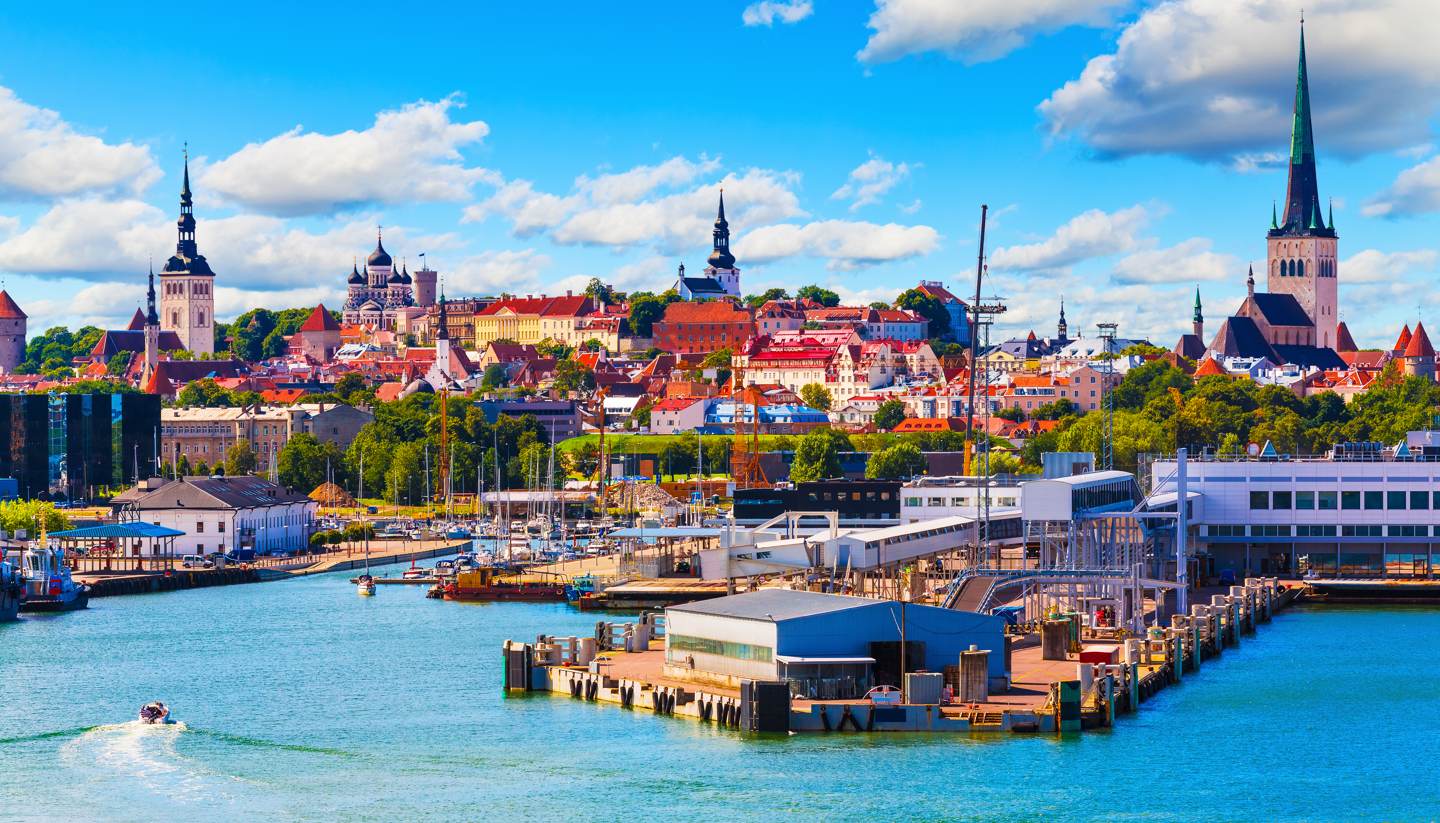
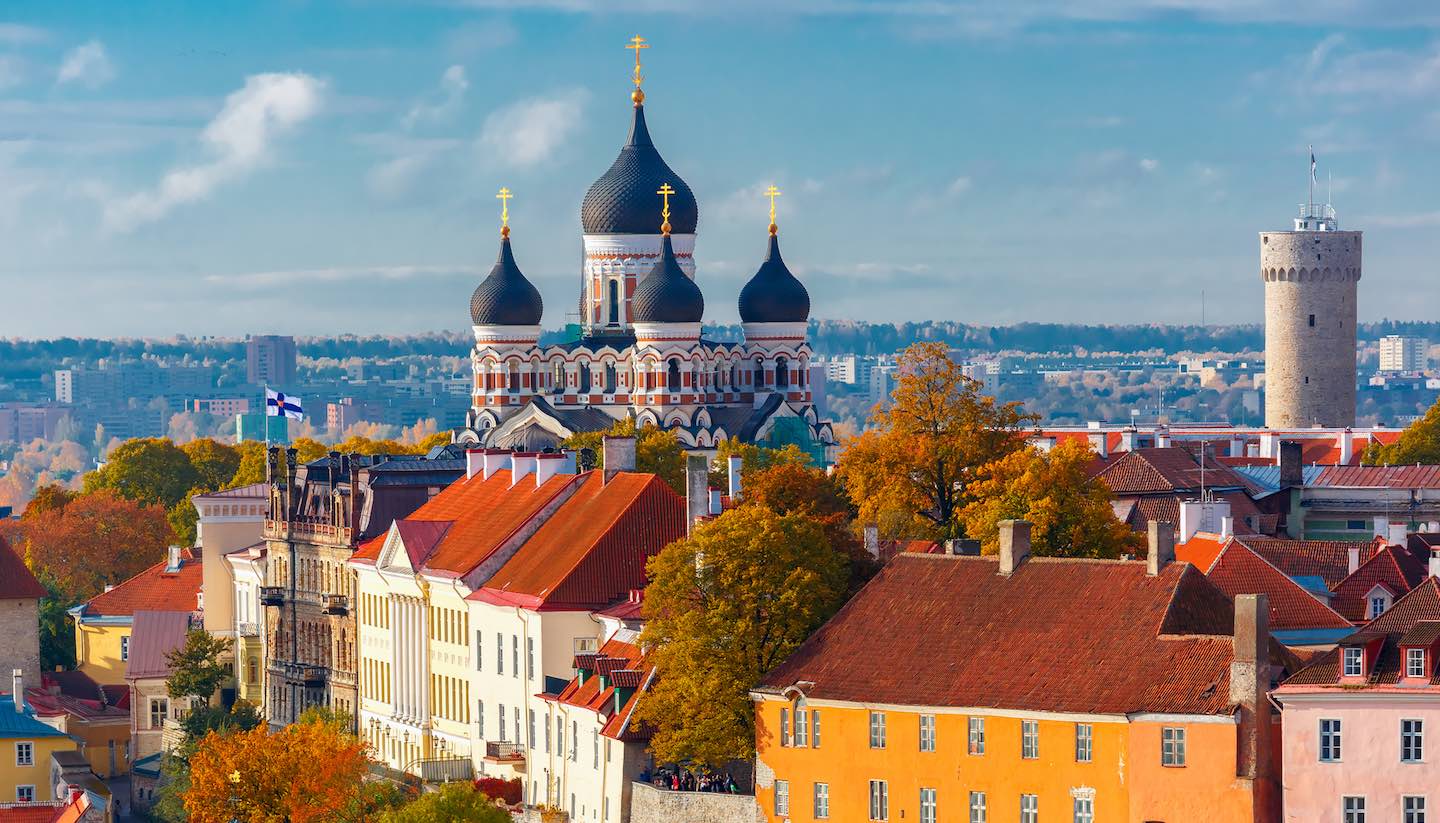
The smallest and arguably most scenic of the three Baltic states (which also includes Latvia and Lithuania), Estonia is a wildly beautiful land of pristine forests, biodiverse wetlands and remote offshore islands; its natural assets offer a spectacular contrast to the brooding, gothic aesthetic of its medieval capital, Tallinn.
In Tallinn, the cobbled streets are peppered with historic churches, monuments and cosy cafés, not to mention a burgeoning restaurant scene that pays homage to the country's Baltic and Nordic heritage. The nightlife is pretty lively too, which has made it a popular destination for stag parties, although not everybody has welcomed that.
Most adventure travellers escape the city and make for the primeval forests and lakes of rural Estonia. And who can blame them? These areas offer landscapes and ecosystems which have, for the most part, been lost in much of Europe. More than 1,000 lakes shimmer in the Estonian countryside, while bogs and swamplands cover an astounding one-fifth of the country. These habitats are a haven for birds and birdwatchers.
Estonia's natural wonders are on impressive display in its national parks; most notably, Soomaa, in the heart of the country, and Lahemaa, on the northern coast, which rewards visitors with challenging hikes and impressive views of the Baltic Klint, a 1,200km-long (745 mile) ridge of limestone cliffs that stretches from Sweden to Russia. Elusive wolves, bears and lynxes can also be spotted in these parts.
Estonia's history, like that of its Baltic neighbours, has been almost singly devoted to maintaining independence from its powerful neighbours, most notably Russia. Annexed by Stalin in 1944, Estonia never entirely became the Soviet republic it might have done, retaining its language and culture far more strongly than other members of the USSR. This plucky, independent spirit endures in Estonia today.
Key facts
45,228 sq km (17,462 sq miles).
1,251,171 (UN estimate 2017).
30 per sq km.
Tallinn.
Republic.
President Alar Karis since 2021.
Prime Minister Kristen Michal since 2024.
Travel Advice
Before you travel
No travel can be guaranteed safe. Read all the advice in this guide. You may also find it helpful to:
- see general advice for women travellers
- read our guide on disability and travel abroad
- see general advice for LGBT+ travellers
- read about safety for solo and independent travel
- see advice on volunteering and adventure travel abroad
Travel insurance
If you choose to travel, research your destinations and get appropriate travel insurance. Insurance should cover your itinerary, planned activities and expenses in an emergency.
About FCDO travel advice
The Foreign, Commonwealth & Development Office (FCDO) provides advice about risks of travel to help you make informed decisions. Find out more about FCDO travel advice.
Get travel advice updates
Sign up to get email notifications when this advice is updated.
Follow FCDO:
This information is for people travelling on a full ‘British citizen’ passport from the UK. It is based on the UK government’s understanding of the current rules for the most common types of travel.
The authorities in Estonia set and enforce entry rules. If you’re not sure how these requirements apply to you, contact the Estonian Embassy in London.
Passport validity requirements
Estonia follows Schengen area rules. Your passport must:
- have a ‘date of issue’ less than 10 years before the date you arrive – if you renewed your passport before 1 October 2018, it might have a date of issue that is more than 10 years ago, making it invalid for entry to the Schengen area
- have an ‘expiry date’ at least 3 months after the day you plan to leave the Schengen area (the expiry date does not need to be within 10 years of the date of issue)
Check with your travel provider that your passport and other travel documents meet requirements. Renew your passport if you need to.
You will be denied entry if you do not have a valid travel document or try to use a passport that has been reported lost or stolen.
Dual nationals
When returning to the UK, British citizens must carry a valid British passport or certificate of entitlement. See Dual citizenship.
Visa requirements
You can travel without a visa to the Schengen area, which includes Estonia, for up to 90 days in any 180-day period without a visa. This applies if you travel:
- as a tourist
- to visit family or friends
- to attend business meetings, cultural or sports events
- for short-term studies or training
The requirements for working in Estonia are different.
If you’re travelling to other Schengen countries as well, make sure your whole visit is within the 90-day visa-free limit. Visits to Schengen countries within the previous 180 days before you travel count towards your 90 days. If you overstay the 90-day visa-free limit, you may be banned from entering Schengen countries for up to 3 years.
At Estonian border control, you may also need to:
- show a return or onward ticket
- prove that you have enough money for your stay – the amount varies depending on your accommodation
Staying longer than 90 days in a 180-day period
To stay longer than 90 days, check the Estonian government’s entry requirements.
If you’re in Estonia with a residence permit or long-stay visa, this does not count towards your 90-day visa-free limit.
Read about entry processes if you live in Estonia.
New Schengen entry requirements
The European Union’s (EU) new Entry/Exit System (EES) is now being implemented across the Schengen area.
This means that when you travel into the Schengen area for short stays, you may need to register your biometric details, such as fingerprints and a photo. There is no cost for EES registration.
On your first visit into a Schengen country, you may be asked to register your details at a special booth before proceeding to the immigration desk. Follow directions from your travel operator or the staff at your port of entry. You may also need to provide either your fingerprint or photo when you leave the Schengen area. Children aged 11 or younger will not have their fingerprints scanned but can be required to have their photo taken.
You do not need to take any action before you arrive at the border on entry to the Schengen area, but EES may take each passenger extra time to complete so be prepared to wait longer than usual at the border and to allow more time for immigration controls when you depart the Schengen area. If you are departing the Schengen area by plane, allow extra time to reach your departure gate as EES checks may take place before boarding.
EES is replacing the previous system of manually stamping passports when visitors arrive in the Schengen area for short stays. You may be asked to input biometric details every time you enter or exit.
If you enter the Schengen area through the Port of Dover, Eurotunnel at Folkestone or Eurostar at St Pancras International, any information will be taken at the border before you leave the UK.
Your digital EES record is valid for 3 years.
Read more information on the EU Entry/Exit System and to understand which countries are in the Schengen area.
If you are long-term resident in a Schengen country, you are exempt from EES in all Schengen countries. The full list of EES exemptions is on the EU’s official Travel Europe website.
If you believe you have been incorrectly entered into EES or your record of time spent in the Schengen area is incorrect, approach border officials when you next cross the Schengen border and request a correction. If you are exempt, carry documentation confirming your status. If you believe your time spent in the Schengen area has been recorded incorrectly, raise this with border officials and be prepared to provide supporting evidence if requested.
Travel from Ukraine, Russia and Belarus
If you are arriving in Estonia from Ukraine, Russia or Belarus, check the Estonian government crisis website.
Travel from Russia
You can reserve crossings and check the real-time level of traffic at border crossing points from Russia on Estonia’s ‘Go Swift’ website.
Vaccine requirements
For details about medical entry requirements and recommended vaccinations, see TravelHealthPro’s Estonia guide.
Customs rules
There are strict rules about goods you can take into or out of Estonia. You must declare anything that may be prohibited or subject to tax or duty.
Taking food and drink into Estonia
You cannot take meat, milk or products containing them into EU countries. There are some exceptions such as powdered baby milk, baby food and special foods or pet feed required for medical reasons.
Restrictions on Russian vehicles
There are restrictions on vehicles with Russian licence plates in Estonia. See the Estonian Ministry of the Interior’s website for more information.
Terrorism
There is a high threat of terrorist attack globally affecting UK interests and British nationals, including from groups and individuals who view the UK and British nationals as targets. Stay aware of your surroundings at all times.
UK Counter Terrorism Policing has information and advice on staying safe abroad and what to do in the event of a terrorist attack. Find out how to reduce your risk from terrorism while abroad.
Terrorism in Estonia
Although there’s no recent history of terrorism in Estonia, attacks cannot be ruled out.
Attacks could be indiscriminate including in places visited by foreign nationals. Stay aware of your surroundings, keep up to date with local media reports and follow the advice of local authorities.
Crime
Pickpockets can be a problem in bars and nightclubs in Tallinn’s Old Town.
Drink spiking, alcohol and sexual assault
Attacks or assault, including sexual assaults, are rare but do occur. The risk is highest late at night around popular nightlife locations. To reduce your personal risk:
- save the location of your accommodation on your maps app, so it’s easier to find at the end of the night
- set up a WhatsApp group to keep in touch with others in your group
- keep an eye on each other’s drinks to make sure they do not get spiked
- do not let a friend walk back to their hotel alone
- do not give a drunk person more alcohol
Alcohol and drugs can reduce your vigilance, making you less in control. If you drink, know your limit. Drinks served in bars in Estonia are often stronger than those in the UK.
Report anything that does not feel right to local authorities or hotel or club management.
Taxi safety
Always use pre-arranged taxis or official taxis with ‘TAKSO’ signage. Do not accept lifts from unmarked vehicles or with strangers.
If you use an app, check that the car details match the car assigned to you. See ‘transport risks’ for more details.
Bank card skimming
Keep cards in sight when paying in shops and restaurants. Read more about how to avoid card skimming.
Laws and cultural differences
Illegal drugs
Illegal drugs, including cannabis, are strictly prohibited, even in very small quantities. Severe penalties apply for possessing, using, buying, or smuggling illegal drugs, including when transiting through airports. You should expect long jail sentences of up to 10 years and heavy fines.
Airports in Estonia have excellent technology and security for detecting illegal items. This is also used to scan the baggage of transiting passengers.
LGBT+ travellers
Same-sex sexual activity is legal in Estonia, and same-sex marriages have been recognised since 1 January 2024.
Read more advice for LGBT+ travellers.
Transport risks
Road travel
If you are planning to drive in Estonia, see information on driving abroad and check the rules of the road in the RAC’s Estonia guide. The guide lists driving regulations and other legal requirements you need to be aware of.
You can drive in Estonia with a UK driving licence. You must have the original V5C vehicle registration document with you. Check for more details on the Estonian state portal.
Check if you need a UK sticker to drive your car outside the UK.
If you are visiting Estonia, you may be able to use your Blue Badge in some circumstances. Check local parking rules.
Hire car companies often have stricter requirements for their customers, such as a year of driving experience or a higher minimum age.
Do not drink and drive. If you are tested and found to have more than a quarter of England’s legal limit of alcohol in your body, you may get a fine and possible imprisonment.
Taxis
Do not hail unmarked taxis – they’re illegal. Make sure the taxi has:
- a price list on the back window
- the driver’s licence in a visible place
- a working meter
- ‘TAKSO’ signage (for taxis at taxi ranks)
You can also use taxi apps like Bolt, Forus and Uber.
Drone incidents
Some Ukrainian drones aimed at Russia have crossed into Estonian airspace. Follow official guidance as necessary.
Before you travel check that:
- your destination can provide the healthcare you may need
- you have appropriate travel insurance for local treatment or unexpected medical evacuation
This is particularly important if you have a health condition or are pregnant.
Emergency medical number
Dial 112 and ask for an ambulance.
Contact your insurance or medical assistance company quickly if you’re referred to a medical facility for treatment.
Vaccine recommendations and health risks
At least 8 weeks before your trip:
- check the latest vaccine recommendations for Estonia
- see where to get vaccines and whether you have to pay on the NHS travel vaccinations page
See what health risks you’ll face in Estonia, including biting insects and ticks.
Medication
The legal status and regulation of some medicines prescribed or bought in the UK can be different in other countries. If you need advice about what you can take into Estonia, contact the Estonian Medicine Agency.
Read best practice when travelling with medicines on TravelHealthPro.
Healthcare in Estonia
FCDO has a list of medical providers in Estonia where some staff will speak English.
Health insurance cards
To get medically necessary state healthcare in Estonia, you need a Global Health Insurance Card (GHIC) or a European Health Insurance Card (EHIC).
The NHS’s getting healthcare abroad webpage has details about:
- how to apply for a GHIC
- how to get temporary cover if you lose your card or it does not arrive in time
- who qualifies for a new EHIC instead of a GHIC
- what treatment counts as medically necessary
A GHIC or EHIC is not an alternative to travel insurance. You may have costs your GHIC or EHIC does not cover, including:
- changes to travel and accommodation bookings
- additional standard costs for treatment
- medical repatriation to the UK
- treatment that is ruled non-urgent
- private healthcare
- private clinics
There is also guidance on healthcare if you’re living in Estonia.
Travel and mental health
Read FCDO guidance on travel and mental health. There is also mental health guidance on TravelHealthPro.
The Foreign, Commonwealth & Development Office (FCDO) cannot provide tailored advice for individual trips. Read this travel advice and carry out your own research before deciding whether to travel.
Emergency services in Estonia
Telephone: 112 (ambulance, fire, police)
Contact your travel provider and insurer
Contact your travel provider and your insurer if you are involved in a serious incident or emergency abroad. They will tell you if they can help and what you need to do.
Refunds and changes to travel
For refunds or changes to travel, contact your travel provider. You may also be able to make a claim through insurance. However, insurers usually require you to talk to your travel provider first.
Find out more about changing or cancelling travel plans, including:
- where to get advice if you are in a dispute with a provider
- how to access previous versions of travel advice to support a claim
Support from FCDO
FCDO has guidance on staying safe and what to do if you need help or support abroad, including:
- finding English-speaking lawyers, funeral directors and translators and interpreters in Estonia
- dealing with a death in Estonia
- being arrested in Estonia
- getting help if you’re a victim of crime
- what to do if you’re in hospital
- if you’re affected by a crisis, such as a terrorist attack
Contacting FCDO
Help abroad
See how to get help from the UK government abroad including in an emergency.
Help in the UK
You can call FCDO in London if you need urgent help because something has happened to a friend or relative abroad.
Telephone: 020 7008 5000 (24 hours)
Get travel advice updates
Sign up to get email notifications when this travel advice is updated.
Follow FCDO:
Risk information for British companies
The Overseas Business Risk service offers information and advice for British companies operating in Estonia on how to manage political, economic, and business security-related risks.