
Hungary travel guide
About Hungary
Culturally and linguistically distinct from all of its immediate neighbours, Hungary is very much the ‘odd one out’ in Central Europe, but for all the most honourable reasons.
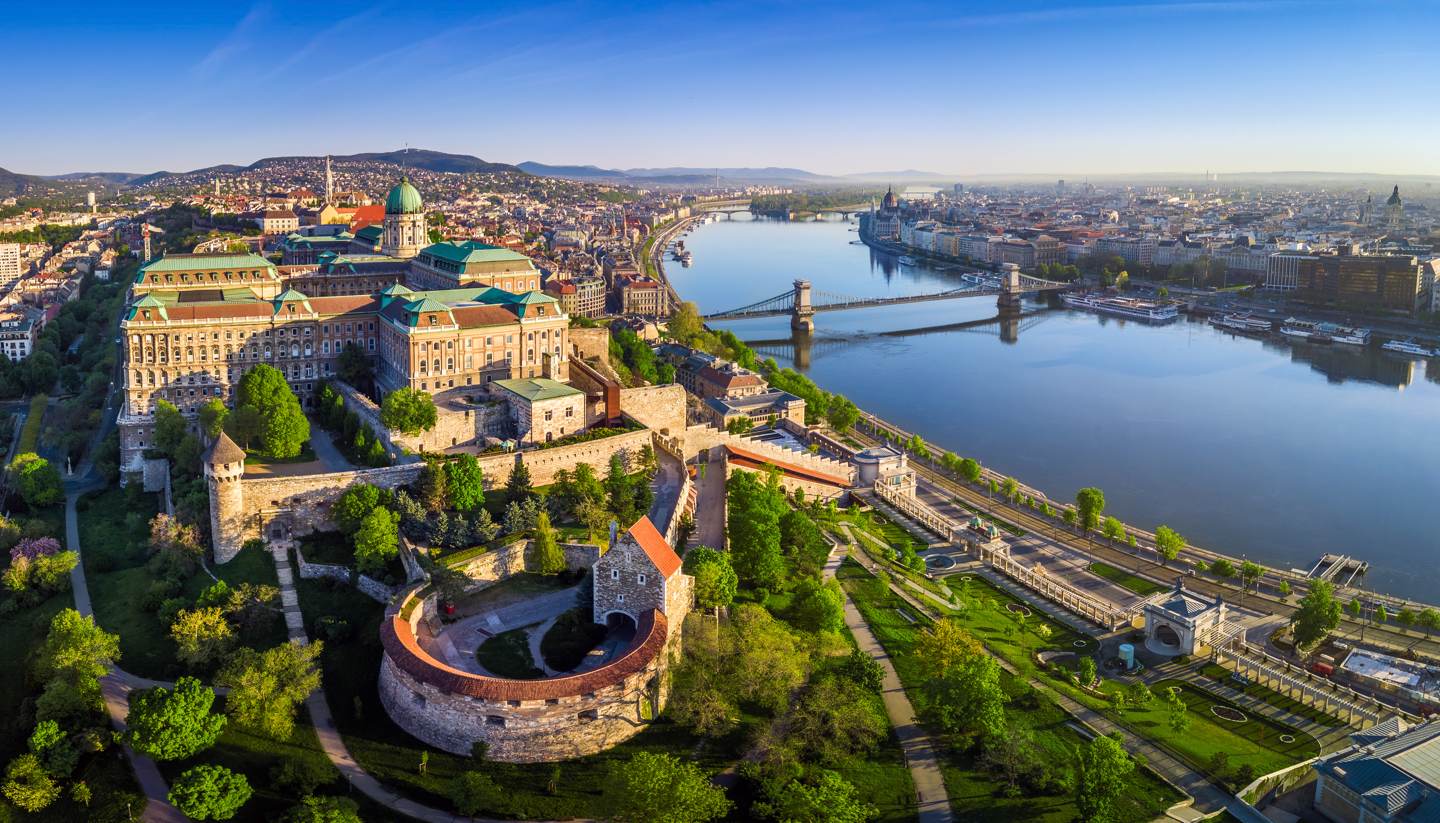
This is a nation whose capital, Budapest, can hold up a mirror to classical Vienna; it’s a world of well-preserved castles, seductively good wines and quiet stoic pride; a landscape of low-lying mountains, oak forests and thermal springs.
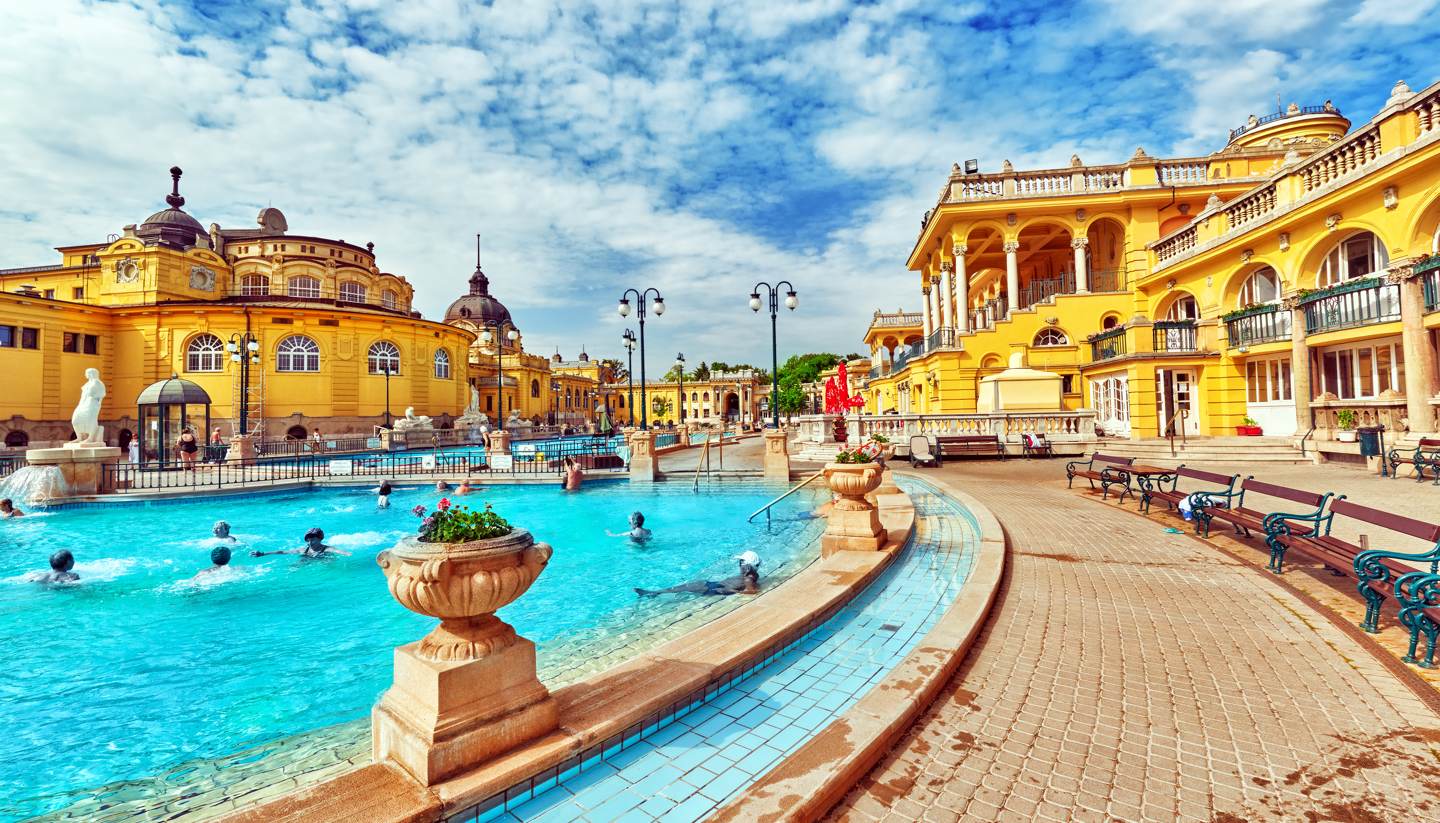
The Romans were the first to make use of the hot waters, originally for medicinal purposes. Today, the pursuit is relaxation and over time the bathhouses have grown into splendid architectural affairs, most notably in Budapest.
The capital is an elegant, stylish and lively city made up of two separate settlements clustered on either side of the Danube River: hilly Buda has a wealth of graceful Habsburg and neoclassical buildings, while sprawling Pest is its commercial centre with a generous scattering of art nouveau architecture and an ad-hoc party scene.
The city has long been the focus of Hungary’s artistic, musical and literary community and is by far the best place in the country for a choice of bars, restaurants and nightclubs.
Smaller cities are equally architecturally fascinating and deserving of a visit in their own right: Pécs for its museums; Eger for it’s fortifications and infamous Bull’s Blood Wine; and Györ whose grand Basilica houses the golden herm of László.
Beyond these urban centres, Hungary’s bathes in natural delights. South west of Budapest is Lake Balaton, Central Europe’s largest body of freshwater, where locals spend hot summers cooling off in waters that average 20°C (68°F).
In winter, Hungary freezes, and thrill seekers head north to the Bakony Hills for the chance to ski through the forests before unwinding with a dip in the thermal spa.
It may be landlocked, but Hungary is a country content on ploughing its own furrow no matter what seeds its neighbours are sewing and is all the better for it.
Key facts
93,028 sq km (35,918 sq miles).
9,821,318 (UN estimate 2016).
106.4 per sq km.
Budapest.
Parliamentary Republic.
President Ágnes Forsthoffer.
Prime Minister Péter Magyar.
Travel Advice
Before you travel
No travel can be guaranteed safe. Read all the advice in this guide. You may also find it helpful to:
- see general advice for women travellers
- read our guide on disability and travel abroad
- see general advice for LGBT+ travellers
- read about safety for solo and independent travel
- see advice on volunteering and adventure travel abroad
Travel insurance
If you choose to travel, research your destinations and get appropriate travel insurance. Insurance should cover your itinerary, planned activities and expenses in an emergency.
About FCDO travel advice
The Foreign, Commonwealth & Development Office (FCDO) provides advice about risks of travel to help you make informed decisions. Find out more about FCDO travel advice.
Get travel advice updates
Sign up to get email notifications when this advice is updated.
Follow FCDO:
This information is for people travelling on a full ‘British citizen’ passport from the UK. It is based on the UK government’s understanding of the current rules for the most common types of travel.
The authorities in Hungary set and enforce entry rules. If you’re not sure how these requirements apply to you, contact the Hungarian Embassy in the UK.
Passport validity requirements
Hungary follows Schengen area rules. Your passport must:
- have a ‘date of issue’ less than 10 years before the date you arrive – if you renewed your passport before 1 October 2018, it might have a date of issue that is more than 10 years ago, making it invalid for entry to the Schengen area
- have an ‘expiry date’ at least 3 months after the day you plan to leave the Schengen area (the expiry date does not need to be within 10 years of the date of issue)
Check with your travel provider that your passport and other travel documents meet requirements. Renew your passport if you need to.
You will be denied entry if you do not have a valid travel document or try to use a passport that has been reported lost or stolen.
Dual nationals
When returning to the UK, British citizens must carry a valid British passport or certificate of entitlement. See Dual citizenship.
Visa requirements
You can travel without a visa to the Schengen area, which includes Hungary, for up to 90 days in any 180-day period. This applies if you travel:
- as a tourist
- to visit family or friends
- to attend business meetings, cultural or sports events
- for short-term studies or training
The requirements for working in Hungary are different.
If you’re travelling to other Schengen countries as well, make sure your whole visit is within the 90-day visa-free limit. Visits to Schengen countries in the 180 days before you travel count towards your 90 days. If you overstay the 90-day visa-free limit, you may be banned from entering Schengen countries for up to 3 years.
At Hungarian border control, you may also need to:
- show a return or onward ticket
- prove you have enough money for your stay
- show proof of accommodation, for example, a hotel booking
Staying longer than 90 days in a 180-day period
To stay longer, check which type of visa or work permit you need with the Hungarian Embassy in the UK.
For residence permits, see the National Directorate-General for Aliens Policing.
If you’re in Hungary with a residence permit or long-stay visa, this does not count towards your 90-day visa-free limit.
Read about entry processes if you live in Hungary.
New Schengen entry requirements
The European Union’s (EU) new Entry/Exit System (EES) is now being implemented across the Schengen area.
This means that when you travel into the Schengen area for short stays, you may need to register your biometric details, such as fingerprints and a photo. There is no cost for EES registration.
On your first visit into a Schengen country, you may be asked to register your details at a special booth before proceeding to the immigration desk. Follow directions from your travel operator or the staff at your port of entry. You may also need to provide either your fingerprint or photo when you leave the Schengen area. Children aged 11 or younger will not have their fingerprints scanned but can be required to have their photo taken.
You do not need to take any action before you arrive at the border on entry to the Schengen area, but EES may take each passenger extra time to complete so be prepared to wait longer than usual at the border and to allow more time for immigration controls when you depart the Schengen area. If you are departing the Schengen area by plane, allow extra time to reach your departure gate as EES checks may take place before boarding.
EES is replacing the previous system of manually stamping passports when visitors arrive in the Schengen area for short stays. You may be asked to input biometric details every time you enter or exit.
If you enter the Schengen area through the Port of Dover, Eurotunnel at Folkestone or Eurostar at St Pancras International, any information will be taken at the border before you leave the UK.
Your digital EES record is valid for 3 years.
Read more information on the EU Entry/Exit System and to understand which countries are in the Schengen area.
If you are long-term resident in a Schengen country, you are exempt from EES in all Schengen countries. The full list of EES exemptions is on the EU’s official Travel Europe website.
If you believe you have been incorrectly entered into EES or your record of time spent in the Schengen area is incorrect, approach border officials when you next cross the Schengen border and request a correction. If you are exempt, carry documentation confirming your status. If you believe your time spent in the Schengen area has been recorded incorrectly, raise this with border officials and be prepared to provide supporting evidence if requested.
Customs rules
There are strict rules about goods you can take into and out of Hungary, including pets, hunting weapons, alcohol and tobacco products and some medicines. You must declare anything that may be prohibited or subject to tax or duty.
Taking food and drink into Hungary
You cannot take meat, milk or products containing them into EU countries. There are some exceptions such as powdered baby milk, baby food and special foods or pet feed required for medical reasons.
Taking money into Hungary
Declare cash or travellers cheques if the value is 10,000 euros or more. You will get a certified declaration to show you brought it in with you. If you do not, your money could be seized when you leave.
There is a high threat of terrorist attack globally affecting UK interests and British nationals, including from groups and individuals who view the UK and British nationals as targets. Stay aware of your surroundings at all times.
UK Counter Terrorism Policing has information and advice on staying safe abroad and what to do in the event of a terrorist attack. Find out how to reduce your risk from terrorism while abroad.
Terrorism in Hungary
Terrorist attacks in Hungary cannot be ruled out.
Political situation
Political demonstrations can be held in Budapest and across Hungary. Rallies often take place on important national holidays, such as 15 March (anniversary of 1848 Revolution) and 23 October (anniversary of 1956 anti-Soviet Uprising). Peaceful demonstrations have sometimes turned violent. Move away from large crowds and monitor local media to help you avoid organised demonstrations.
Crime
Protecting yourself and your belongings
Tourists can be targets for petty crime. Bag-snatching and pickpocketing are common, especially in Budapest and other cities.
Street crime is more likely:
- on busy public transport
- in train stations
- at markets
- in places with high numbers of tourists
When travelling by train keep a close watch on your baggage, especially as the train pulls into a station.
Leave your car or motorbike in a secure location if possible to reduce the risk of it being stolen. Theft from parked vehicles is common, so always put bags out of sight and do not store valuable items in your car.
Scams when paying bills
Some bars, clubs and restaurants might charge high amounts for food and drink. Tourists have been taken to cashpoints with demands for the money to pay the bill. Always ask to see the menu and price list before ordering food and check your bill carefully before paying. Be wary of establishments where menus do not properly display prices. Report any incidents to the police.
Some taxi drivers are part of these frauds. They may receive a commission to recommend certain bars, clubs and restaurants to passengers. If a taxi driver offers to take you to a bar or club, or you are approached on the street with an invitation, be cautious. Use taxis from a reputable local company.
Bank card fraud
Use official ATMs or banks. Do not change money on the street.
Fraudsters can steal your card details without you noticing. Use ATMs inside banks if possible, and check ATMs on the street for signs of tampering. Keep cards in sight when paying in shops and restaurants. Read more about how to avoid bank card fraud.
Drink spiking
There have been reports of drinks being spiked, particularly in Budapest’s bars. If your drink is spiked it can make you vulnerable – for example to assault or robbery. Buy your own drinks and keep sight of them.
Laws and cultural differences
Personal ID
Always carry your passport. You must show ID if the police ask for it, and a copy is not acceptable.
Illegal drugs
Illegal drugs, including cannabis, carry severe penalties. You should expect a long jail sentence and heavy fines for possessing, using or smuggling illegal drugs, including when transiting through the airport.
Airports in Hungary have excellent technology and security for detecting illegal items. This is also used to scan the baggage of transiting passengers.
LGBT+ travellers
Same-sex sexual activity is legal in Hungary. Budapest is generally tolerant and open. Outside of Budapest, showing affection in public may receive unwanted attention. Read more advice for LGBT+ travellers.
Hungary has passed legislation allowing the banning of rallies and marches that depict or promote LGBT+ identities to minors. Participants could be identified by facial recognition technology and face fines of up to 200,000 Hungarian Forints. The Hungarian government classified Budapest Pride 2025 as illegal under this legislation.
Outdoor activities and adventure tourism
Festivals
If you are going to a summer music festival in Hungary, see FCDO’s travel checklist for festivals in Europe.
Transport risks
Public transport
On the Metro, you must validate your ticket at the entrance to the station. On buses, trams or trolley buses, you must validate your ticket immediately after boarding. Remember to:
- keep your ticket until the end of your journey, as ticket inspectors can ask to see it at any time
- validate a new ticket each time you change lines or mode of transport
- get a special ticket for the night service network
You could get a fine if you do not follow the rules of the transport ticket system. See more information on ticket conditions from the Budapest Transport Authority.
Road travel
If you are planning to drive in Hungary, see information on driving abroad and check the rules of the road in the RAC’s Hungary guide. The guide lists driving regulations and other legal requirements you need to be aware of.
You can use a UK photocard driving licence to drive in Hungary. If you still have a paper driving licence, you may need to update it to a photocard licence or get the correct version of the international driving permit (IDP) as well.
Check if you need a UK sticker to drive your car outside the UK.
If you are visiting Hungary, you may be able to use your Blue Badge in some circumstances. Check local parking rules.
Check the information about driving if you’re resident in Hungary.
Driving regulations
Hungary has a no-alcohol driving policy. It is illegal to drink any alcohol and then drive in Hungary.
You must use dipped headlights on roads outside towns even in daytime.
Roads that require an e-vignette (toll)
If you want to use major highways in Hungary, you must buy a motorway e-vignette in advance of your journey. The vignette is a form of electronic toll. If you use the roads without buying an e-vignette, you will get a fine.
Transporting humanitarian or medical aid
If you are planning to transit through Hungary with consignments of humanitarian aid or medical aid, contact the Hungarian Embassy in the UK in advance to apply for a waiver of normal haulage fees.
Rail travel
Take care when travelling by train and keep your belongings in sight. Take extra care on night trains. Never leave bags unattended. Travel with companions where possible and lock your compartment from the inside.
Extreme weather and natural disasters
Find out what you can do to prepare for and respond to extreme weather and natural hazards.
You can access local forecasts and weather warnings for Hungary. Follow the instructions of local authorities.
Before you travel check that:
- your destination can provide the healthcare you may need
- you have appropriate travel insurance for local treatment or unexpected medical evacuation
This is particularly important if you have a health condition or are pregnant.
Emergency medical number
Dial 112 and ask for an ambulance.
Contact your insurance or medical assistance company quickly if you’re referred to a medical facility for treatment.
Vaccine recommendations and health risks
At least 8 weeks before your trip:
- check the latest vaccine recommendations for Hungary
- see where to get vaccines and whether you have to pay on the NHS travel vaccinations page
See what health risks you’ll face in Hungary.
Medication
The legal status and regulation of some medicines prescribed or bought in the UK can be different in other countries.
Read best practice when travelling with medicines on TravelHealthPro.
Healthcare in Hungary
FCDO has a list of medical facilities in Hungary where some staff will speak English.
Health insurance cards
To get medically necessary state healthcare in Hungary, you need a Global Health Insurance Card (GHIC) or a European Health Insurance Card (EHIC).
The NHS’s getting healthcare abroad webpage has details about:
- how to apply for a GHIC
- how to get temporary cover if you lose your card or it does not arrive in time
- who qualifies for a new EHIC instead of a GHIC
- what treatment counts as medically necessary
A GHIC or EHIC is not an alternative to travel insurance. You may have costs your GHIC or EHIC does not cover, including:
- changes to travel and accommodation bookings
- additional standard costs for treatment
- medical repatriation to the UK
- treatment that is ruled non-urgent
- private healthcare
- private clinics
There is also guidance on healthcare if you’re living in Hungary.
Travel and mental health
Read FCDO guidance on travel and mental health. There is also mental health guidance on TravelHealthPro.
The Foreign, Commonwealth & Development Office (FCDO) cannot provide tailored advice for individual trips. Read this travel advice and carry out your own research before deciding whether to travel.
Emergency services in Hungary
Telephone: 112 (ambulance, fire, police)
Contact your travel provider and insurer
Contact your travel provider and your insurer if you are involved in a serious incident or emergency abroad. They will tell you if they can help and what you need to do.
Refunds and changes to travel
For refunds or changes to travel, contact your travel provider. You may also be able to make a claim through insurance. However, insurers usually require you to talk to your travel provider first.
Find out more about changing or cancelling travel plans, including:
- where to get advice if you are in a dispute with a provider
- how to access previous versions of travel advice to support a claim
Support from FCDO
FCDO has guidance on staying safe and what to do if you need help or support abroad, including:
- finding English-speaking lawyers, funeral directors and translators and interpreters in Hungary
- dealing with a death in Hungary
- being arrested in Hungary
- getting help if you’re a victim of crime
- what to do if you’re in hospital
- if you’re affected by a crisis, such as a terrorist attack
Contacting FCDO
Help abroad
See how to get help from the UK government abroad including in an emergency.
Help in the UK
You can call FCDO in London if you need urgent help because something has happened to a friend or relative abroad.
Telephone: 020 7008 5000 (24 hours)
Get travel advice updates
Sign up to get email notifications when this travel advice is updated.
Follow FCDO:
Risk information for British companies
The Overseas Business Risk service offers information and advice for British companies operating in Hungary on how to manage political, economic, and business security-related risks.