
Iraq travel guide
About Iraq
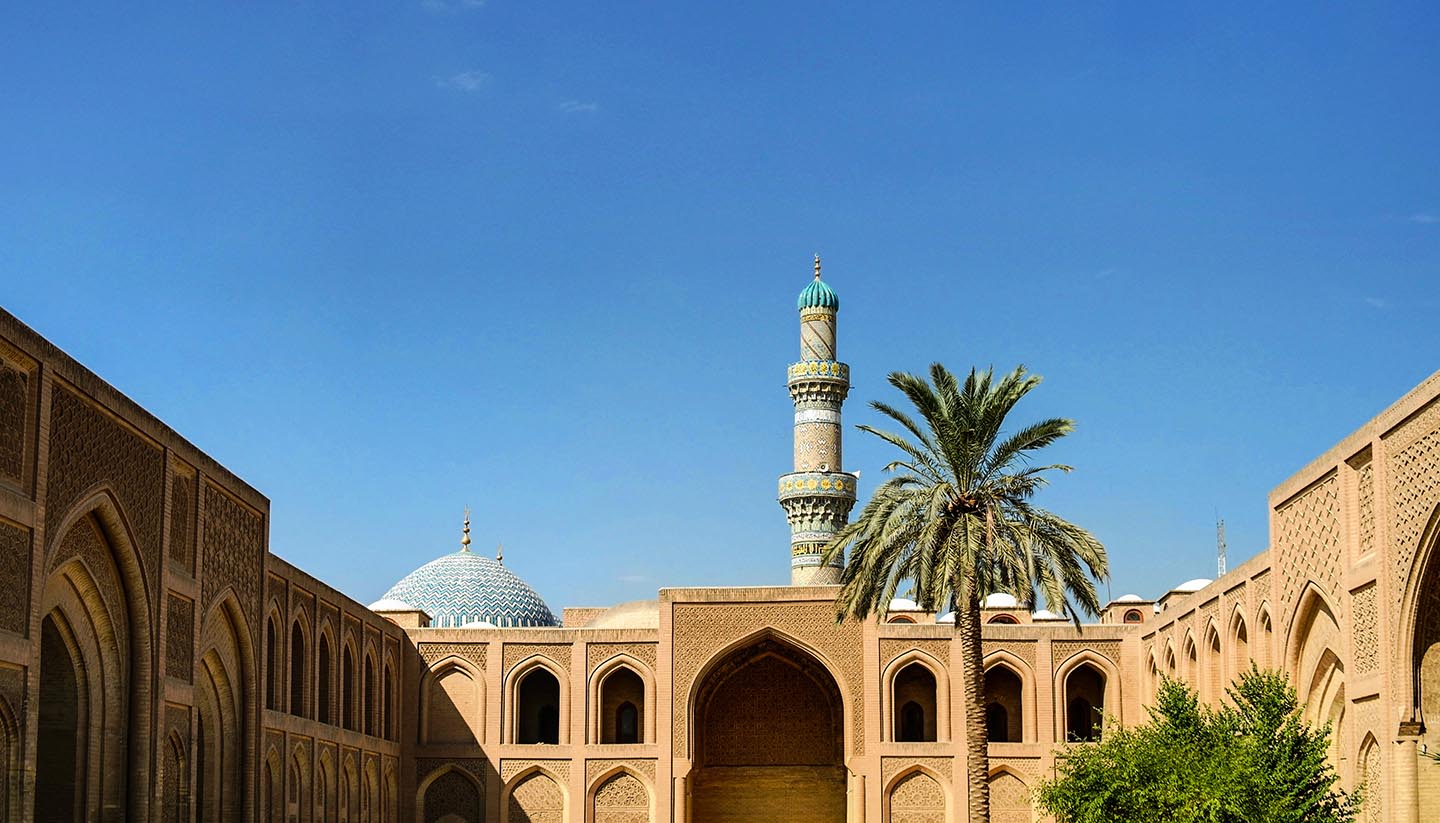
Iraq may be synonymous with strife, a land of dusty, dubious conflicts, but what you don’t see in the mainstream media are the country’s many attributes: its fantastic birdlife, shimmering oases, turquoise rivers, fertile valleys, UNESCO World Heritage Sites and stunning cityscapes. Some of the world’s oldest societies came out of this ancient land and many refer to the region as the ‘cradle of civilisation.’
But despite its glorious past, the country has little to celebrate at present. Most of Iraq’s political, social, physical and economic infrastructures were destroyed by the US-led invasion in 2003. Successful elections and the withdrawal of troops in 2009 seemed to herald Iraq’s road to recovery and there were reasons to be optimistic: despite continuing violence, tourism had climbed back up to an impressive two million people a year by 2013 and plans were afoot to increase that number threefold.
The government even announced that it would restore the Arch of Ctesiphon, the world’s biggest arch made of bricks, and what remains of the ancient Persian capital of the same name. Also revealed were plans to repair the damage done to the southern marshes, which Sadam Hussein drained, and use its status as a bird haven to create a centre for eco-tourism.
Since 2013, though, the security situation has rapidly deteriorated, culminating with the Islamic militant group ISIS seizing large swathes of territory in the north in 2014. The Iraqi government has since pushed back against the insurgency, but the situation remains highly volatile with no end in sight.
Despite government warnings to avoid travelling to the country, a few adventure tour companies are still taking small groups to Iraq, albeit not the north. If and when the country finally stabilises, there’s little doubt that tourists will return in greater numbers to the ‘cradle of civilisation’. But until then, travel to Iraq is strongly advised against.
Key facts
438,317 sq km (169,235 sq miles).
37,547,686 (UN estimate 2016).
89 per km2
Baghdad.
Democratic republic.
President Nizar Amidi.
Prime Minister Ali al-Zaid.
Travel Advice
Your travel insurance could be invalidated if you travel against advice from the Foreign, Commonwealth & Development Office (FCDO).
Areas where FCDO advises against travel
Federal Iraq
FCDO advises against all travel to:
- The parts of Anbar province which are west of, but not including Ramadi City
- Diyala province except for Baqubah City
- Kirkuk province
- Ninawa province
- Salah al-Din province
- Jurf al-Sakr town in Babil province
- Sadr City, part of Baghdad province
- Within 5km of areas that border Iran in Wasit, Maysan and Basra provinces
- Within 5km of Iraq’s borders with Saudi Arabia and Kuwait
FCDO advises against all but essential travel to:
- The remainder of Al-Muthanna province
- Al-Qadasiyah province
- The remainder of Anbar province
- Babil province (except Jurf al-Sakr town)
- Baghdad province (except Sadr City)
- The remainder of Basra province, including Highways 1 and 8 and the Safwan-Kuwait border crossing
- Dhi Qar Province
- Karbala Province
- The remainder of Maysan province
- The remainder of Najaf province
- The remainder of Wasit province
- Baqubah City in Diyala province
- The road sections of Highway 34 between Baghdad and Baqubah, and Highway 2 between Baqubah and Erbil
Kurdistan Region of Iraq
FCDO advises against all but essential travel to the Kurdistan Region of Iraq
Find out more about why FCDO advises against travel.
Consular support
Consular support is severely limited in areas where FCDO advises against travel.
Regional tensions
The US and Iran announced a memorandum of understanding (MOU) on 17 June in relation to the conflict in the Middle East, however the situation in the Middle East remains unpredictable. Since 8 July there have been strikes and retaliatory attacks by Iran in a number of locations across the region, Iraq, including the Kurdistan region of Iraq, against US military and civilian infrastructure. There is a risk of more attacks and unforeseen escalation in the region. Before the ceasefire, the Iranian regime had stated its intention to target locations associated with the US and Israel, including organisations, businesses, facilities, and institutions.
British nationals currently in the Middle East should be prepared for possible flight cancellations, periodic airspace closures, and potential travel disruptions, and should:
- read If you’re affected by a crisis abroad - GOV.UK. This includes guidance on “how to prepare for a crisis” with suggestions on what you might include in your emergency supplies and “what to do in a crisis”
- sign up to FCDO Travel Advice email alerts
- follow advice from the local authorities
- monitor local and international media for the latest information, including updates relating to airports and airspace which could close at short notice
- stay away from areas around security or military facilities
- keep your departure plans under review, and ensure your travel documents are up to date
- if advised to take shelter, stay indoors or find the nearest safe building or designated shelter. An interior stairwell or a room with as few external walls or windows as possible may provide additional protection. The greatest risk is from falling debris caused by intercepts, and you are safest inside a secure structure. Do not approach or touch any drone or missile fragments or unusual objects
Travel insurance
If you choose to travel despite FCDO advice, research your destinations and get appropriate travel insurance. Insurance should cover your itinerary, planned activities and expenses in an emergency.
About FCDO travel advice
FCDO provides advice about risks of travel to help you make informed decisions. Find out more about FCDO travel advice.
Get travel advice updates
Sign up to get email notifications when this travel advice is updated.
Follow FCDO:
This information is for people travelling on a full ‘British citizen’ passport from the UK who choose to travel despite FCDO advice. It is based on the UK government’s understanding of Iraq’s current rules for the most common types of travel.
The authorities in Iraq set and enforce entry rules. If you’re not sure how these requirements apply to you, contact the Iraqi Embassy in the UK.
Entry to Saudi Arabia
British nationals who are trying to leave Iraq via Saudi Arabia and who are travelling on British Emergency Travel Documents, Emergency Passports, or passports with less than 6 months remaining validity, should call the helplines for British Embassy Riyadh +966 (0) 11481 9100 or British Consulate Jeddah +966 (0)126225550 for advice.
See ‘Entry requirements’ for Saudi Arabia.
Passport validity requirements
To enter Iraq, your passport must have an ‘expiry date’ at least 6 months after the date you arrive and have at least one blank page.
Check with your travel provider that your passport and other travel documents meet requirements. Renew your passport if you need to.
You will be denied entry if you do not have a valid travel document or try to use a passport that has been reported lost or stolen.
Dual nationals
When returning to the UK, British citizens must carry a valid British passport or certificate of entitlement. See Dual citizenship.
Visa requirements
You must have a visa to visit Iraq.
You are no longer able to get a visit visa on arrival in Iraq. You must apply for a visa on the e-visa portal of the Government of Iraq at least 24 hours before you travel. The visa costs $160 and is valid for 60 days. Ensure that you have a return ticket in place or a ticket out of Iraq to a third destination. Without such a ticket in place, there is a risk of the airline refusing boarding.
e-visa for Kurdistan Region
The government of the Kurdistan Region of Iraq (KRI) has introduced a new e-visa process. You can find the details and apply on the e-visa portal of the Kurdistan Region Government. It is also possible to obtain a visa on arrival. Both types of visas are valid for travel in KRI only.
Weapon Authority Cards
Make sure you have the right documents when you arrive in Iraq, including Weapon Authority Cards (WAC) if you are carrying weapons.
Foreign nationals have been arrested for failing to provide the correct documentation when requested.
HIV and hepatitis test
You must have a blood test for HIV and hepatitis unless you’re travelling on a visit visa. You must take the test within 10 days of arrival and repeat it every 90 days while you’re in Iraq. Guidance on where to go for the blood test is available at the airport when you arrive.
Customs rules
There are strict rules about goods you can take into or out of Iraq. You must declare anything that may be prohibited or subject to tax or duty.
Taking money into or out of Iraq
On entering or exiting Iraq, you must declare:
- all local currency over 200,000 Iraqi dinars
- all currency or items valued over 10,000 US Dollars or the same value in any other foreign currency
This guide also has additional safety advice for regions of Iraq.
Terrorism
There is a high threat of terrorist attack globally affecting UK interests and British nationals, including from groups and individuals who view the UK and British nationals as targets. Stay aware of your surroundings at all times.
UK Counter Terrorism Policing has information and advice on staying safe and what to do in the event of a terrorist attack. Find out how to reduce your risk from terrorism while abroad.
Terrorism in Iraq
Terrorists are very likely to try to carry out attacks in Iraq.
Attacks can occur throughout the country, including the Kurdistan region of Iraq, but are more frequent in areas where Daesh had a strong presence and capability. This includes parts of the provinces of:
- Anbar
- Diyala
- Ninewah
- Salah Al-Din
- Tam’mim (Kirkuk)
Foreign nationals are high-value targets for terrorists, insurgents and criminals. Indiscriminate attacks against public places and Iraqi civilians also occur. Terrorist attacks could be indiscriminate, including in places visiting by foreign nationals, such as:
- airports and public transport
- land border crossings
- markets, stores, hotels and restaurants
- government buildings, political offices, police stations and military establishments
- residential compounds
- maritime facilities and oil facilities
- religious sites and ceremonies
- political events, large crowds
- sports venues and stadiums
- fake vehicle checkpoints
There is a heightened threat of attacks against western interests. While attacks can take place at any time, there’s a heightened threat during religious or public holidays. Militant groups opposed to a western presence pose a threat to UK and other interests in Iraq, including the Kurdistan Region.
Methods of attack have included:
- large-scale co-ordinated bombings designed to cause mass casualties
- rockets and mortars
- shootings
- suicide bombs
- vehicle bombs
UK prosecution for terrorism offences
If you travel to Iraq to fight, and your activities amount to offences against UK terrorism legislation, you could be prosecuted on your return to the UK.
Terrorist kidnap
There is a high threat of kidnapping throughout Iraq.
This includes both from Daesh and other terrorist and militant groups. Keep your security arrangements up-to-date and carefully plan any travel plans. Kidnappings can be for ideological reasons as well as financial or political gain.
British nationals are seen as legitimate targets, including tourists, humanitarian aid workers, oil workers, journalists and business travellers. If you are kidnapped, the reason for your presence is unlikely to protect you or secure your safe release.
The long-standing policy of the British Government is not to make substantive concessions to hostage takers. The British Government considers that paying ransoms and releasing prisoners builds the capability of terrorist groups and finances their activities. This can, in turn, increase the risk of further hostage-taking. The Terrorism Act (2000) makes payments to terrorists illegal.
Security situation
Some areas of Iraq have experienced recent attack by artillery, drones and rockets. Coalition military installations continue to be a target, including in the Kurdistan Region. Iranian targeting of Iranian-Kurdish opposition groups within the KRI increased during the recent conflict.
Intermittent strikes targeting these groups have continued since in areas across the KRI, including around Rawanduz and Koya. The risk of further strikes remains. Stay away from areas associated with these groups.
The threat level may restrict UK government staff from travelling to certain areas.
If you’re travelling to Iraq, take security precautions:
- get advice from a private security company
- make arrangements for secure accommodation and transport
- have contingency plans in place
- stay up to date with local media
- consider pre-deployment training
The security situation may change at short notice. You may need to ‘shelter in place’ or hunker down for several days. Keep essential supplies, such as food, water and medicine where you are staying.
Anti-British and anti-American sentiment can increase during political tension or because of long-running hostility from some Iraqi militias towards the Global Coalition Against Daesh. Protests or attacks may be directed towards British and American institutes or companies, or those which appear to be connected to Britain or the United States of America. Monitor local media to keep up to date with developments.
In the event of widespread disturbances or a deterioration in the security situation, there may be limits to the help that FCDO can provide. Read further information and advice on how to deal with a crisis overseas.
Ensure your travel documents are up to date in case you need to leave Iraq at short notice. Do not rely on FCDO being able to help you evacuate in an emergency.
Protests
Protests take place regularly across Iraq, including in and around the International Zone. Clashes between Iraqi security forces and protesters have resulted in casualties and loss of life. Avoid rallies, marches and processions, and follow the instructions of local authorities.
Curfews
Curfews and vehicle bans can be imposed at short notice, particularly during protests and civil unrest, but also around religious holidays, pilgrimages and politically sensitive times, such as elections.
Crime
The proliferation of guns throughout Iraq mean they are readily available to many Iraqi citizens. Guns are frequently used to settle personal grievances, criminal acts and tribal disputes.
Laws and cultural differences
Personal ID
It is a legal requirement to carry some form of photographic ID in Iraq. Always carry your passport or residence permit. The authorities may stop people for ID checks at checkpoints within cities and on main roads across the country. You should cooperate with officials conducting checks.
Lost and stolen passports
It is a legal requirement to publish the details of your lost or stolen passport in two local newspapers, after reporting the incident to the police. You may be refused an exit stamp until you have done so.
Ramadan
Ramadan is a holy month for Muslims. The dates vary by year and country. During this time, do not:
- drink, smoke or chew gum in public in the daytime, including in your car
- play loud music or dance
- swear in public
Get more advice when you arrive from your tour guide, hotel or business contacts.
You should also:
- check opening hours of shops and restaurants
- be aware that if hotels and restaurants are providing food or drink in fasting hours, they may separate you from Islamic guests, for example with screens
- follow local dress codes – clothing that does not meet local dress codes may cause more offence at this time
- be aware that fasting can cause tiredness, particularly during the later afternoon and early evening
- be patient and show tolerance
The Arba’-een
The Arba’-een, an annual pilgrimage that attracts millions of pilgrims to Iraq, usually occurs between August and September.
If you travel to Iraq during the pilgrimage, ensure that your belongings are secure at all times. Keep copies of your passports, visas and other important documents.
Child custody
Iraqi family law is very different from UK law. Male heads of household can impose ‘travel bans’ on family members. Even if you, or your child, hold a British passport, you may be subject to Iraqi laws.
If you are leaving Iraq with a child that has an Iraqi or dual-national Iraqi father you may need to show proof of parental permission to travel. This applies even if their mother is with them.
Journalists
Authorities may detain journalists using allegations of inadequate paperwork. Journalists should be extremely cautious and take adequate security measures.
Alcohol laws and bans
The import, manufacture, or selling of alcoholic drinks is punishable by fines of up to 25 million Iraqi dinars (IQD). FCDO is not aware of any instances of Iraqi officials stopping travellers carrying alcohol for personal use.
Illegal drugs and prison sentences
Iraq continues to practise the death penalty for a range of crimes including:
- drug trafficking
- espionage
- kidnapping
- murder
- rape
- smuggling antiquities
- terrorism
- war crimes
Drones
The Kurdistan Regional Government (KRG) prohibits sharing footage of drones being launched or target locations with media outlets or on social media, and violations may result in legal action.
LGBT+ travellers
In July 2024, the Iraqi Parliament updated its Anti-Prostitution and Homosexuality Law which criminalises same-sex relationships, any promotion of same-sex relationships or behaviours, and bans people from changing gender. Under the amendment, same-sex relationships are now illegal and sexual acts could lead to a prison sentence between 10 to 15 years. If the Iraqi authorities consider your actions, clothing or other items to promote LGBT+ identities or prostitution, you could be imprisoned for up to seven years and fined between 10 to 15 million Iraqi dinars.
Under the new law, it is illegal to have or perform gender changing surgery, unless you have approval from the courts. You could be imprisoned for up to three years.
There is an increased risk of violence and threats (such as blackmail and intimidation) against anyone being thought to be part of the LGBT+ community or supporting their rights. There have been attacks against the LGBT+ community and its supporters.
Read more advice for LGBT+ travellers
Transport risks
Road travel
If you are planning to drive in Iraq, see information on driving abroad.
You’ll need to have both the 1968 version of the international driving permit (IDP) and your UK driving licence with you in the car. You cannot buy an IDP outside the UK, so get one before you travel.
Road travel within Iraq is dangerous. Driving standards are low compared to those in the UK. Road traffic accidents are frequent and often result in fatalities. Fake vehicle checkpoints have been used to launch terrorist attacks. There is also a risk of carjacking and robbery.
Air travel
When in an airport, be wary of anyone approaching you that you do not know or cannot identify. Do not accept offers from strangers for help or transport. Cooperate fully with security officials at airports and observe any additional security measures.
Your transfer vehicle should be pre-arranged or provided by a trusted sponsor.
Since October 2023, drone and rocket attacks have hit Coalition military installations across Iraq. Erbil International Airport has had short closures, with operations resuming after a few hours. Indirect rocket attacks have occurred against Baghdad International Airport and Erbil Airport.
Flight schedules may change without notice. Contact your airline or travel company for the latest information before travelling. The UK Air Safety List (ASL) lists all known airlines in Iraq that do not meet international safety standards and are banned from operating commercial air services to, from, and within the UK. Check the UK Air Safety List when considering which airlines to fly with. The list is maintained by the Department for Transport, based on advice from the UK Civil Aviation Authority.
UK government staff working in Iraq are authorised to use aircraft operated by Iraqi Airways for internal flights on a case by case basis.
Sea travel
Ports are at high risk of attack. Be extremely cautious if you are in any type of vessel in the northern Persian Gulf. Vessels are at an increased risk of attack in:
- the Gulf of Oman
- Northern Arabian Sea
- Gulf of Aden
- Bab El Mandeb
Consider any regional tensions that may affect your route and check whether sea borders will be open before your crossing.
Extreme weather and natural disasters
Find out what you can do to prepare for and respond to extreme weather and natural hazards.
Flooding
Flash floods are common between November and March. Expect disruption to travel. Exercise caution in areas of heavy rainfall, as floods have caused loss of life.
Earthquakes
Earthquakes are a risk in Iraq.
The US Federal Emergency Management Agency website has advice about what to do before, during and after an earthquake.
Dust storms
Sand and dust storms are common during the spring and summer months. Poor visibility can create difficult driving conditions and affect flights.
This section has safety advice for regions of Iraq. It only covers regions where the Foreign, Commonwealth & Development Office (FCDO) has specific advice.
You should also read FCDO’s overall travel advice and safety and security advice.
Northern and western Iraq
Areas liberated from Daesh are likely to contain remnants of war and improvised explosive devices.
Baghdad
Routes in and out of Baghdad and its airport may close with little or no notice. Check your routes in advance of travelling.
Stay alert and follow the advice of local authorities.
Avoid political gatherings and large crowds. Reduce your movement around banks, restaurants, and shopping malls. Follow instructions from security officials.
Kurdistan Region of Iraq (KRI)
Routes in and out of the KRI, including Erbil International Airport and Sulaymaniyah International Airport, may close at short notice. If the airport closes, expect significant delays at land border crossings. Check your routes in advance of travelling.
Stay alert and follow the advice of local authorities. Stay away from political gatherings and large crowds.
Foreign nationals crossing the border illegally from neighbouring countries into the Kurdistan Region of Iraq have been arrested for immigration offences. Prosecuted offenders could face a prison sentence of up to 5 years or fines of several thousand US dollars.
Desert areas
Infrastructure in terms of communications, healthcare and security in remote desert areas will be limited.
Basra
Protests are common in Basra. Stay alert, monitor media reports and keep up to date with this travel advice.
Land borders
Border crossing points with countries neighbouring Iraq may close with little or no notice. If crossing the border, stick to main roads and ensure you use official designated border crossings.
Landmines
Landmines and other unexploded weapons are present in some rural and desert areas of Iraq, particularly in border areas. A number of people are killed each year. Some areas have warning signs, but not all. If you are travelling to rural or desert areas take local advice and stick to well trodden paths and well driven tracks, and do not pick up metal objects.
Before you travel check that:
- your destination can provide the healthcare you may need
- you have appropriate travel insurance for local treatment or unexpected medical evacuation
This is particularly important if you have a health condition or are pregnant.
Emergency medical number
Call 122 and ask for an ambulance.
Contact your insurance company quickly if you’re referred to a medical facility for treatment.
Vaccine recommendations and health risks
At least 8 weeks before your trip:
- check the latest vaccine recommendations for Iraq
- see where to get vaccines and whether you have to pay on the NHS travel vaccinations page
See what health risks you’ll face in Iraq, including:
- Crimean-Congo haemorrhagic fever
- malaria
- poor air quality from dust and sand storms
Altitude sickness is a risk in parts of Iraq. Read more about altitude sickness on TravelHealthPro.
Medication
The legal status and regulation of some medicines prescribed or bought in the UK can be different in other countries.
Read best practice when travelling with medicines on TravelHealthPro.
Healthcare in Iraq
FCDO has a list of medical providers in Iraq where some staff will speak English.
Travel and mental health
Read FCDO guidance on travel and mental health. There is also mental health guidance on TravelHealthPro.
The Foreign, Commonwealth & Development Office (FCDO) cannot provide tailored advice for individual trips. Read this travel advice and carry out your own research before deciding whether to travel.
Emergency services in Iraq
Ambulance: 122
Fire: 115
Police: 911
Contact your travel provider and insurer
Contact your travel provider and your insurer if you are involved in a serious incident or emergency abroad. They will tell you if they can help and what you need to do.
Refunds and changes to travel
For refunds or changes to travel, contact your travel provider. You may also be able to make a claim through insurance. However, insurers usually require you to talk to your travel provider first.
Find out more about changing or cancelling travel plans, including:
- where to get advice if you are in a dispute with a provider
- how to access previous versions of travel advice to support a claim
Support from FCDO
FCDO has guidance on staying safe and what to do if you need help or support abroad, including:
- finding English-speaking lawyers, funeral directors and translators and interpreters in Iraq
- dealing with a death in Iraq
- being arrested or imprisoned in Iraq and being arrested or imprisoned in the Kurdistan Region of Iraq
- getting help if you’re a victim of crime
- what to do if you’re in hospital
- if you’re affected by a crisis, such as a terrorist attack
Contacting FCDO
Help abroad
See how to get help from the UK government abroad including in an emergency.
Help in the UK
You can call FCDO in London if you need urgent help because something has happened to a friend or relative abroad.
Telephone: 020 7008 5000 (24 hours)
Get travel advice updates
Sign up to get email notifications when this travel advice is updated.
Follow FCDO:
Risk information for British companies
The Overseas Business Risk service offers information and advice for British companies operating in Iraq on how to manage political, economic, and business security-related risks.