Madagascar travel guide
About Madagascar
Undoubtedly one of the world’s most fascinating destinations, Madagascar floats off the coast of Mozambique, in the turquoise waters of the Indian Ocean, and is home to some of the weirdest, most wonderful wildlife in existence. A cliché it may be, but there really is nowhere quite like it.
Up to 90% of the flora and fauna found in Madagascar is unique to the island, which was cut adrift from the African mainland millions of years ago and has evolved in sweet isolation since. Mother Nature had a chance to experiment in Madagascar, and experiment she did.
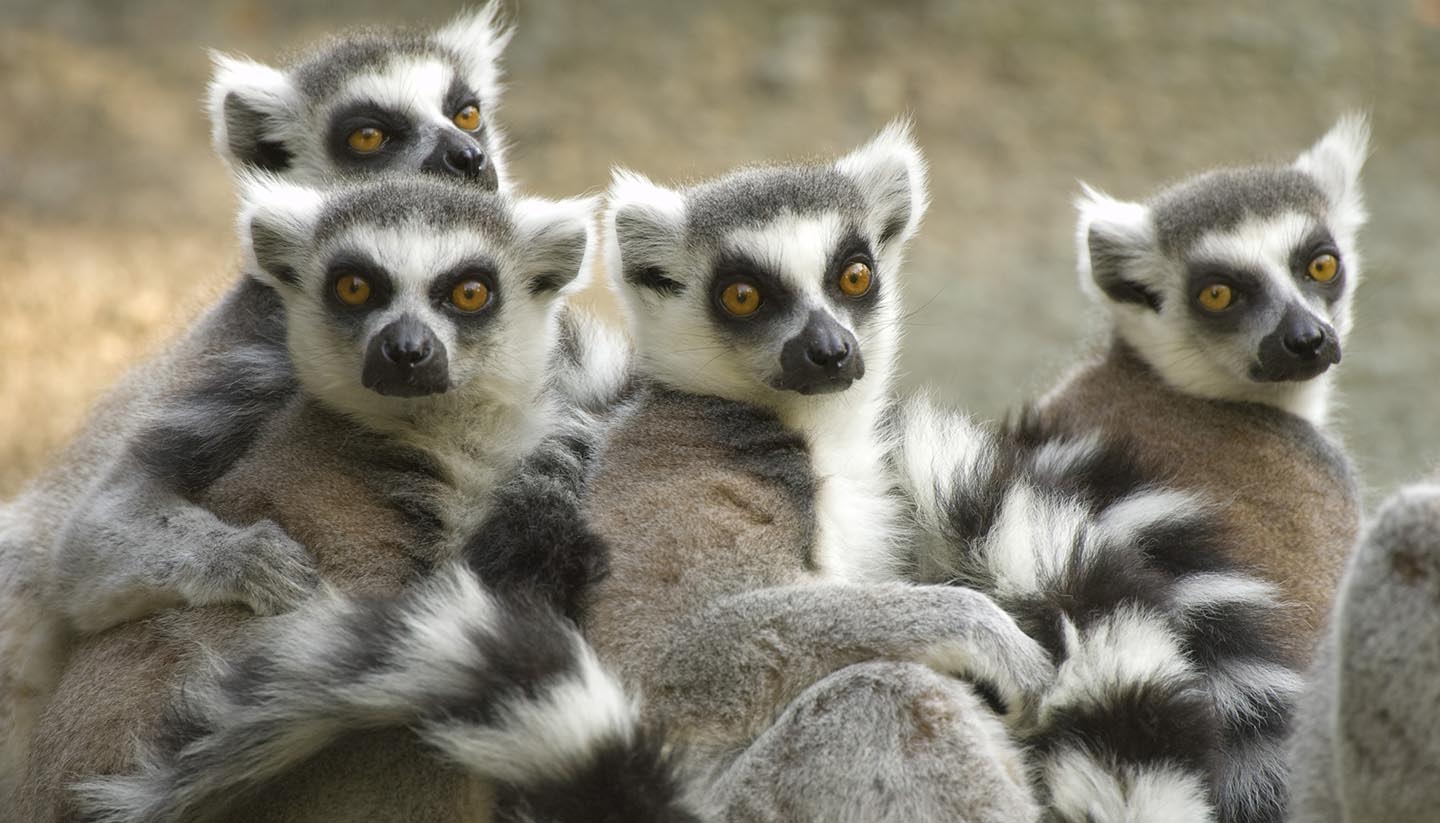
Nowadays the island is home to around a quarter of our planet’s primates and they exist in glorious variety: big and small, social and solitary, adorably cute and downright freaky. The primates’ story is played out across the animal groups: there are several hundred types of frog, dozens of bats, over a hundred snakes (mostly small, all harmless) and almost half of the world’s chameleons. It’s a similar story where flora is concerned, too.
But Madagascar is not just a nirvana for naturalists: the island offers splendid beaches, scuba diving and surfing; gnarly rock climbing and caving; lazy river trips; spectacular scenery; and warm, welcoming people with interesting beliefs and cultural practices.
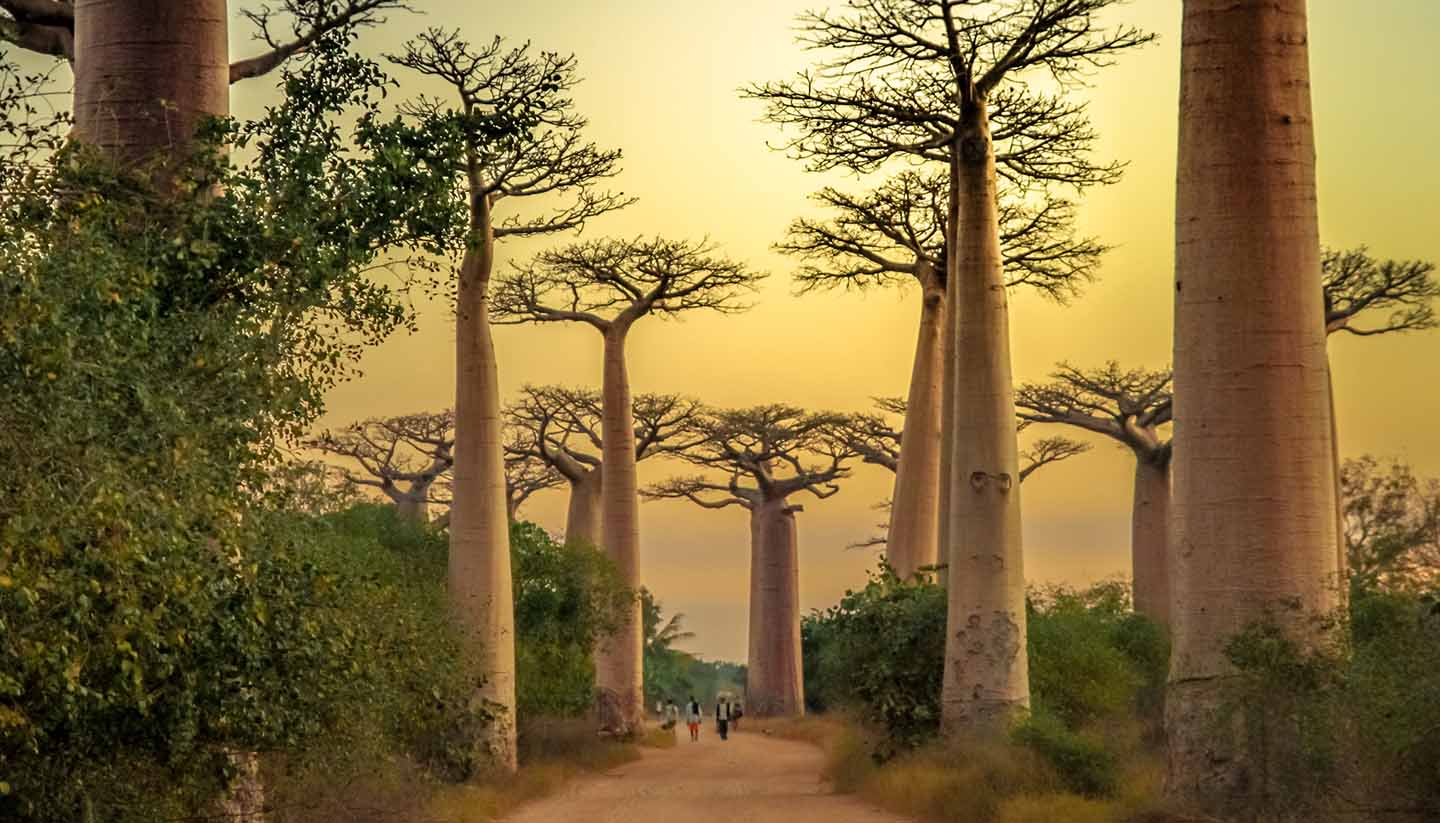
The island is divided along its middle by a high plateau. Lush rainforest runs in a band down the eastern side, while drier deciduous forests lie to the west. In the far south is the unique arid spiny forest, home to the island’s wackiest plant life. Giant baobab trees populate the western regions.
A mix of influences provides telltale evidence of the Polynesian settlers, Arabic presence, Bantu tribes-folk and European arrivals of the past, all of which have culminated in a fascinating cultural melting pot. For sheer diversity, Madagascar hard to beat.
Key facts
587,041 sq km (226,658 sq miles).
24,890,000 (UN estimate 2016).
40.6 per sq km.
Antananarivo.
Republic.
President Michael Randrianirina since 2025.
Prime Minister Herintsalama Rajaonarivelo since 2025.
Travel Advice
Before you travel
No travel can be guaranteed safe. Read all the advice in this guide. You may also find it helpful to:
- see general advice for women travellers
- read our guide on disability and travel abroad
- see general advice for LGBT+ travellers
- read about safety for solo and independent travel
- see advice on volunteering and adventure travel abroad
Travel insurance
If you choose to travel, research your destinations and get appropriate travel insurance. Insurance should cover your itinerary, planned activities and expenses in an emergency.
About FCDO travel advice
The Foreign, Commonwealth & Development Office (FCDO) provides advice about risks of travel to help you make informed decisions. Find out more about FCDO travel advice.
Get travel advice updates
Sign up to get email notifications when this travel advice is updated.
Follow FCDO:
This information is for people travelling on a full ‘British citizen’ passport from the UK. It is based on the UK government’s understanding of Madagascar’s current rules for the most common types of travel.
The authorities in Madagascar set and enforce entry rules. If you’re not sure how these requirements apply to you, contact the Embassy of Madagascar in London.
Passport validity requirements
To enter Madagascar, your passport must have an ‘expiry date’ at least 6 months after the date you arrive. It must also have at least 2 blank pages.
Check with your travel provider that your passport and other travel documents meet requirements. Renew your passport if you need to.
You will be denied entry if you do not have a valid travel document or try to use a passport that has been reported lost or stolen.
Dual nationals
When returning to the UK, British citizens must carry a valid British passport or certificate of entitlement. See Dual citizenship.
Visa requirements
You can visit Madagascar for up to 15 days without a visa. You must pay a 10-euro administration fee on arrival and be ready to show your onward or return tickets.
Applying for a visa
If you want to stay longer than 15 days, you can buy a 30- or 60-day single-entry tourist visa on arrival at the airport with US dollars, euros or Malagasy ariary.
You can also apply in advance to the Embassy of Madagascar in London for a tourist or immigrant visa.
Make sure you get your passport stamped.
You can extend either of these visas to a maximum total stay of 90 days while you are in Madagascar. If you overstay, you may be detained or deported.
Travelling with children
A child aged 17 or under, travelling without one or either parent must carry written authorisation from the absent parent or parents when leaving Madagascar.
Vaccine requirements
To enter Madagascar, you must have a certificates to prove you’ve had:
- a yellow fever vaccination if you’re coming from a country listed as a transmission risk
- a polio vaccine in some circumstances
For full details about medical entry requirements and recommended vaccinations, see TravelHealthPro’s Madagascar guide.
Health screening
Cholera
If you are entering Madagascar from a Cholera-affected country, you may be asked by airport authorities to take an anti-cholera drug (Doxcyline). Anyone who is unable to take Doxcyline should be offered an alternative medication by the health authorities.
Alternative medication will be provided to those that:
- are pregnant
- are under 8 years old
- have a pre existing medical condition
You are likely to be asked to leave contact details with the health authorities and they may follow up with you after 3-5 days.
Ebola
Madagascar has introduced additional health measures in response to the Ebola outbreak:
-
if you have been in, or transited through, a country affected by Ebola in the last 21 days, you may not be allowed to enter Madagascar unless you are exempt
-
Malagasy nationals, foreign residents, people with valid work or student visas, diplomats, and staff of international organisations and Non-Governmental Organisations can enter Madagascar after travelling through an affected country. They must complete a 21-day quarantine and health monitoring period. Quarantine must take place at an approved location. Travellers are responsible for the cost of accommodation, food and transport
-
all travellers must complete a health declaration form, declare any travel through an affected country in the previous 21 days, and undergo health screening on arrival
Customs rules
There are strict rules about goods you can take into or out of Madagascar. You must declare anything that may be prohibited or subject to tax or duty.
Taking food into and out of Madagascar
Do not take in any food, including fruit, as this is illegal.
When leaving Madagascar you may, after declaring and showing receipts, take out:
- up to 2kg of vanilla
- up to 1kg of pepper or cloves
You may only export other plant and animal products if you get permission.
Taking money into Madagascar
You can take up to 400,000 Malagasy ariary into Madagascar.
Declare foreign cash or travellers cheques if the value is 7,500 euros or more. You will get a certified declaration to show you brought it with you. If you do not, your money could be seized when you leave.
This guide also has safety advice for regions of Madagascar.
Terrorism
There is a high threat of terrorist attack globally affecting UK interests and British nationals, including from groups and individuals who view the UK and British nationals as targets. Stay aware of your surroundings at all times.
UK Counter Terrorism Policing has information and advice on staying safe abroad and what to do in the event of a terrorist attack. Find out how to reduce your risk from terrorism while abroad.
Terrorism in Madagascar
Although there’s no recent history of terrorism in Madagascar, attacks cannot be ruled out.
Terrorist attacks could be indiscriminate, including in places frequented by foreign nationals.
Political situation
In late September and early October 2025, significant protests took place in Antananarivo and other parts of Madagascar, which included incidences of violence and looting. A new transitional government was formally established on 17 October. Politically linked rallies are possible and occur in any parts of the country. Avoid large gatherings and political demonstrations as protests can sometimes turn violent. Roads may be closed in response to demonstrations as clashes have been known to occur between security forces and the community.
Crime
Robberies and thefts are commonplace throughout Madagascar. Foreigners are targets for pickpockets and muggers.
Beaches and islands
There have been violent robberies and assaults even in the daytime, be aware of this risk if you visit isolated and remote beaches, especially alone. Get local advice or use an experienced travel operator when visiting any beach. This could happen in many popular coastal locations including:
- Nosy Be island
- Ankify Port
- Ambanja
- beaches to the south and north of Toliara (Tuléar)
Protecting yourself and your belongings
To reduce the risk of street crime:
- do not walk alone in city centres or poorly lit urban areas after dark
- use pre-booked taxis or hotel transport
- be alert even in nature reserves, national parks and beaches
- be wary of people approaching you in an over-friendly manner
- be on the alert for criminals acting in pairs
- do not use your mobile or show cash while on the street
Vehicle crime
There are frequent armed robberies on main roads, particularly at night and outside major towns. Where possible, drive in a convoy . Either use a recognised tour operator or ask your hotel to arrange transport. Always keep car doors locked and windows closed, particularly in Antananarivo.
See regional risks to find out which roads are particularly dangerous.
Due to the risk of robbery, avoid using multi-passenger taxi vans (‘taxi-brousses’ or ‘bush taxis’). If you’re attacked in any vehicle, do not resist or argue as the criminal could be armed. Stay calm and agree to their demands.
If you are stopped by security personnel or police, ask for ID as there have been reports of criminals falsely claiming to be police.
Report any incident to the police if possible. Take a copy of the police report if you need it for an insurance claim.
Criminal kidnaps
There have been occasional instances of criminal kidnapping for ransom in Madagascar, targeting individuals (normally Malagasy nationals) perceived to be wealthy.
When arranging business meetings use a secure location. Be aware of your surroundings and always let someone you trust know your whereabouts, especially after dark. If you are a victim of kidnapping, follow the kidnapper’s instructions.
Laws and cultural differences
Local taboos (‘fady’)
In many parts of Madagascar, aspects of daily life are regulated by taboos, known as ‘fady’. These vary from one region to another. Fady can range from forbidden foods to restrictions on clothing.
If you plan to visit remote rural areas, get advice from your tour operator or a local guide. They can advise you about how to behave in certain locations.
If you plan a longer stay in a village, first check if you should inform the head of the local authority (‘Fokontany’) and the village head or wise man (‘Ray aman-dreny’).
Personal ID
Always carry your passport with you, as police randomly make ID checks and do not always accept copies. Keep a copy of your passport’s photo page, visa and insurance details somewhere safe, and leave further copies with family or friends in the UK.
Public offences
Paying for sex is illegal. The penalty is a fine of 1,500 to 7,000 euros and possibly a prison sentence of up to 10 years.
The law against sexual abuse of underage children (aged 17 and under) is strictly enforced, especially for incidents that involve foreign tourists. Underage sex workers may carry fake identity cards. In this situation, you could be prosecuted, or an attempt could be made to extort a bribe from you.
Illegal drugs and prison sentences
Drug smuggling is a serious offence. Punishments can be severe and prison conditions are harsh and life-threatening.
Security personnel and police
Security personnel are known for their firm responses to what might be perceived as relatively minor issues. Avoid actions that might provoke them, such as taking photographs of them. If you’re stopped by the police, show respect and stay calm.
LGBT+ travellers
Same-sex sexual activity is legal among persons of at least 21 years old. However public attitudes are less tolerant than in the UK and showing affection in public may receive negative attention.
Read more advice for LGBT+ travellers.
Wildlife, animal products and souvenirs
It’s illegal to collect, buy or export protected animals, plants or products made from them. This includes certain woods such as items made of rosewood. If you buy anything made of wild animal skin or shell, check with the vendor exactly what information you can give to customs if they ask for details.
Stadiums and venues
Security and safety standards at stadiums and venues in Madagascar may be lower than in the UK. If you go to a large-scale event, make sure you know the location of fire exits and check exit routes.
Transport risks
Road travel
If you are planning to drive in Madagascar, see information on driving abroad. You need to have both the correct version of the international driving permit (IDP) and your UK driving licence with you in the car.
You cannot buy an IDP outside the UK, so get one before you travel.
Road conditions vary greatly and are often poor. Many roads outside Antananarivo have steep gradients and sharp bends. Heavy freight trucks use the roads. Drive with extreme care as drivers often fail to signal and pull out sharply. Avoid driving at night as vehicles often have no lights and few roads are lit.
In the rainy season, from December to April, many secondary roads are impassable except by 4-wheel-drive vehicles and bridges are often washed away.
When travelling in Madagascar be aware of the risks, including carjacking or robbery. If you are involved in, or see, an accident, you can call the police on 117. If you are driving and it is safe to do so, you can drive to the nearest town and report the incident to the police directly.
Taxis
There are frequent road deaths involving multi-passenger taxi vans (‘taxi-brousses’ or ‘bush taxis’).
Use pre-booked taxis or hotel transport. If you have concerns about the safety of a vehicle or the ability of a driver, ask for a different driver.
River and sea travel
Armed criminals have boarded boats on the Tsiribihina River in western Madagascar and robbed the passengers. Seek alternative routes.
Get local advice on ferries from Tamatave-Sonierana to Sainte Marie Island and the west coast (Toliara/Tuléar, Morondava, Mahajanga and Nosy Be). There have been accidents caused by overcrowding, poor maintenance, poor crew training and unexpected squalls. Check weather conditions locally before travelling.
There is a significant risk of piracy in the Gulf of Aden and Indian Ocean. Pirates can attack up to 1,000 nautical miles from the Somali coast or more. If you’re travelling by sea, read about the regional risks at sea.
Extreme weather and natural disasters
Cyclones
The cyclone season in Madagascar normally runs from November to April. Coastal areas are particularly at risk. Storms can cut access to remote parts of the country and contaminate water supplies.
Monitor local news and check World Meteorological Organization weather warnings for Madagascar, Meteo Madagascar (French) or Cyclone Océan Indien (French, Malagasy).
Find out what you can do to prepare for and respond to cyclone warnings.
This section has safety advice for regions of Madagascar. It only covers regions where FCDO has specific advice.
You should also read FCDO’s overall travel advice and safety and security advice.
Central Madagascar
In 2022, over 30 people were killed when criminals (often referred to as ‘dahalo’) set fire to buildings in a village in Ankazobe District, north-west of Antananarivo. Armed forces are active in the area. Dahalo have not targeted tourists but you should seek local advice before travelling there.
Northern Madagascar
Use an official local guide if you’re visiting the Montagne des Français protected area. Take local advice if visiting beaches as there have been opportunistic attacks on tourists.
Southern Madagascar
Violent incidents involving cattle rustlers (‘dahalo’) in southern Madagascar have resulted in fatalities. Tourists have not been targeted, but you should avoid staying in rural areas without security arrangements. Madagascar’s armed forces are active in southern Madagascar.
In 2021, a large-scale attack on 3 villages in Midongy District resulted in the deaths of 17 civilians and 2 military officers. Other attacks have taken place:
- to the north of Fort Dauphin
- around the township of Betroka
- along the west coast between Belo sur Tsiribihina and Toliara (Tuléar)
- in the Commune of Ilakakabe (near Isalo National Park)
The security situation in the southern triangle between Ihosy, Toliara (Tuléar) and Fort Dauphin remains tense, the risks are greater at night and the roads are in a poor condition. Use a recognised tour operator when travelling in this area. If you are travelling to Fort Dauphin, you should travel by air.
Criminal gangs have attacked vehicles travelling in convoy on the RN7 (between Antananarivo and Toliara (Tuléar).
Be vigilant when visiting night clubs in Toliara (Tuléar).
In July 2023, demonstrations in the Lanirano area to the east of Fort Dauphin turned violent with reports of gunfire and injury to civilians
Western Madagascar
Due to the risk of violent highway robberies, particularly at night, use a recognised tour operator when travelling in the region between Besalampy and Morombe, including the RN35 and RN1 (between Tsiroanomandidy and Maintirano). You should also maintain a high level of vigilance if you travel on the following roads: RN7, RN27, RN10 and RN34.
Before you travel check that:
- your destination can provide the healthcare you may need
- you have appropriate travel insurance for local treatment or unexpected medical evacuation
This is particularly important if you have a health condition or are pregnant.
Emergency medical number
Call 117 from a mobile or 17 from a landline and ask for an ambulance.
Contact your insurance company quickly if you’re referred to a medical facility for treatment.
Vaccine recommendations and health risks
At least 8 weeks before your trip:
- check the latest vaccine recommendations for Madagascar
- see where to get vaccines and whether you have to pay on the NHS travel vaccinations page
See what health risks you’ll face in Madagascar including:
- malaria
- dengue
- schistosomiasis
- mpox
Altitude sickness is a risk in parts of Madagascar. Read more about altitude sickness on TravelHealthPro.
Tap water in Madagascar is unsafe. You should drink and use only boiled or bottled water and avoid ice in drinks. There are high levels of syphilis in Madagascar.
Medication
The legal status and regulation of some medicines prescribed or bought in the UK can be different in other countries.
Read best practice when travelling with medicines on TravelHealthPro.
Healthcare in Madagascar
Although there are public and private hospitals in Antananarivo, they can only handle routine operations. For complex surgery, patients are flown to Mauritius, South Africa or Réunion. Make sure you have adequate travel health insurance and accessible funds to cover the cost of any medical treatment abroad and repatriation.
FCDO has a list of medical providers in Madagascar where some staff will speak English.
Travel and mental health
Read FCDO guidance on travel and mental health. There is also mental health guidance on TravelHealthPro.
The Foreign, Commonwealth & Development Office (FCDO) cannot provide tailored advice for individual trips. Read this travel advice and carry out your own research before deciding whether to travel.
Emergency services in Madagascar
Ambulance or police emergency
Telephone: 17
Mobile: 117
To contact the police station directly, call 19, or 119 from a mobile phone.
Fire
Telephone: 18
Mobile: 118
Contact your travel provider and insurer
Contact your travel provider and your insurer if you are involved in a serious incident or emergency abroad. They will tell you if they can help and what you need to do.
Refunds and changes to travel
For refunds or changes to travel, contact your travel provider. You may also be able to make a claim through insurance. However, insurers usually require you to talk to your travel provider first.
Find out more about changing or cancelling travel plans, including:
- where to get advice if you are in a dispute with a provider
- how to access previous versions of travel advice to support a claim
Support from FCDO
FCDO has guidance on staying safe and what to do if you need help or support abroad, including:
- finding English-speaking lawyers, funeral directors and translators and interpreters in Madagascar
- dealing with a death in Madagascar
- being arrested or imprisoned in Madagascar
- getting help if you’re a victim of crime
- what to do if you’re in hospital
- if you’re affected by a crisis, such as a terrorist attack
Contacting FCDO
Help abroad
See how to get help from the UK government abroad including in an emergency.
Help in the UK
You can call FCDO in London if you need urgent help because something has happened to a friend or relative abroad.
Telephone: 020 7008 5000 (24 hours)
Get travel advice updates
Sign up to get email notifications when this travel advice is updated.
Follow FCDO: