
Muscat Travel Guide
About Muscat
Stretching almost 25km (15.5 miles) along the Omani coastline, Muscat is a taste of real Arabia, and despite a recent Dubai-style building blitz, it’s a capital city that has retained all of its old-world charm.
That’s because, unlike the Emirati city, most of the new buildings are less than three-storeys high and the historic Mutrah district remains much the same as it has for generations.
One of Arabia’s prettiest cities, Muscat life is dominated by the old corniche, a picturesque stretch of seafront that is fringed by 18th-century buildings and dominated by the imposing 17th century Mutrah Fort.
By day, the harbour is awash with locals selling everything from bread to Sheikh salt pots, but by night it rings to the sound of locals chewing the fat and enjoying the cool twilight breeze.
Away from the corniche, there’s plenty to see – not least the tiny Bayt al-Baranda, a quirky little museum charting the city’s cultural history.
Then, there’s the mighty National Museum which focuses on Muscat’s role in the Omani empire, which stretched as far as East Africa. Here, history is brought to life with a dazzling collection of jewels (among them ruby encrusted daggers and elaborate emerald necklaces) that were amassed by the Sultan.
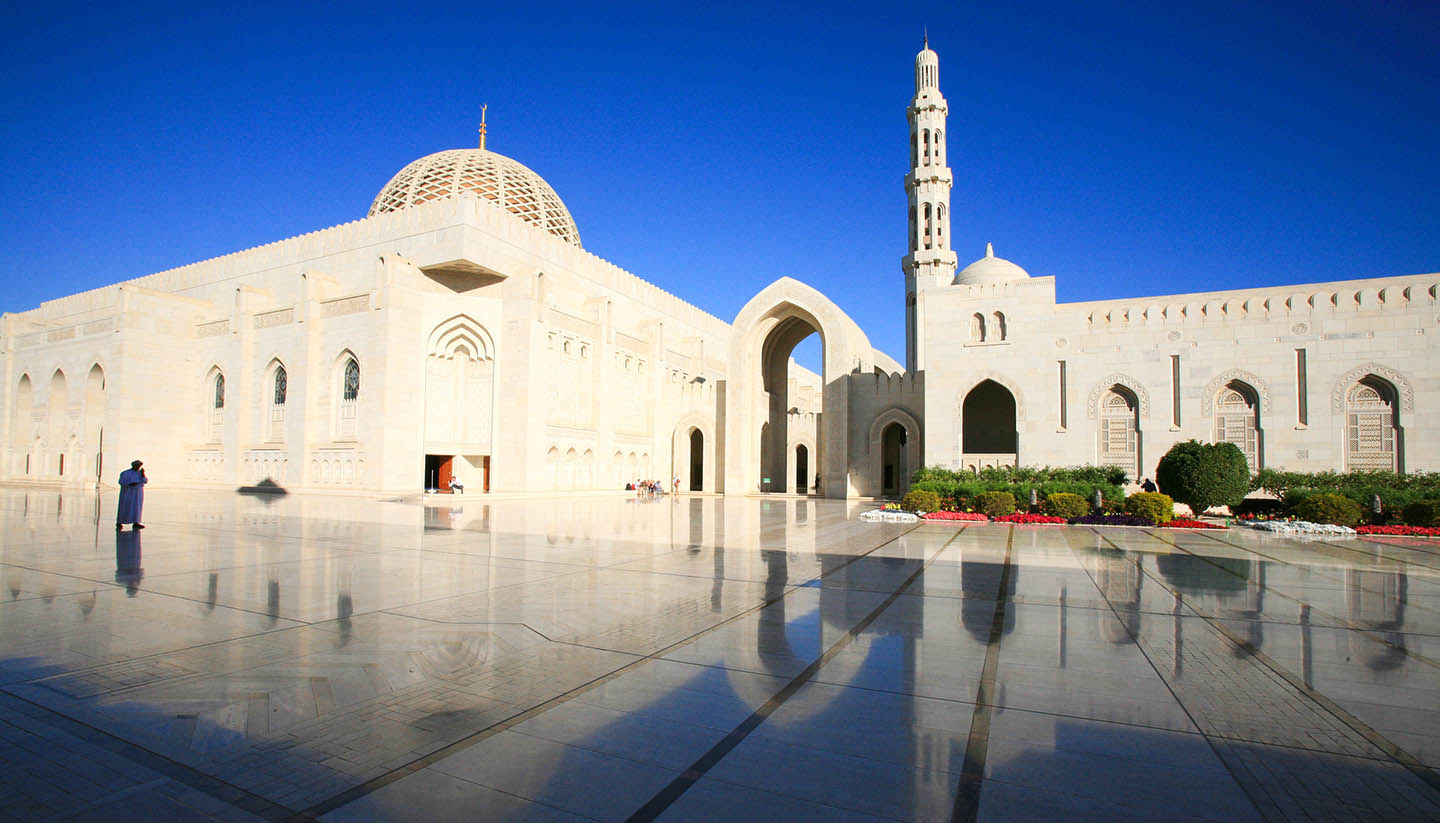
The current Sultan, Qaboos bin Said Al Said, shares the magnificent Al Alam Palace with the rest of the Omani royal dynasty. Flanked by Forts Al-Jalali and Al-Mirani, the palace is closed to the public but worth visiting for the architecture alone, as is the city’s other main focal point, the Grand Mosque.
Just as important as the sightseeing is the shopping and no visit would be complete without a trip to the Mutrah souk. Here, you’ll find everything from leather babouche slippers to pink plastic mosque alarm clocks, as well as plenty of vendors ready to indulge in a spot of haggling. For authentic charm, few places come close to Muscat – and the beaches aren’t half bad either.