

Oman travel guide
About Oman
Oman is the sort of place that makes you wonder why it is still relatively under-the-radar. One minute you are in a whitewashed coastal city with frankincense drifting through a souq, the next you are driving into jagged mountains, date palms and hidden wadis where the water is improbably turquoise.
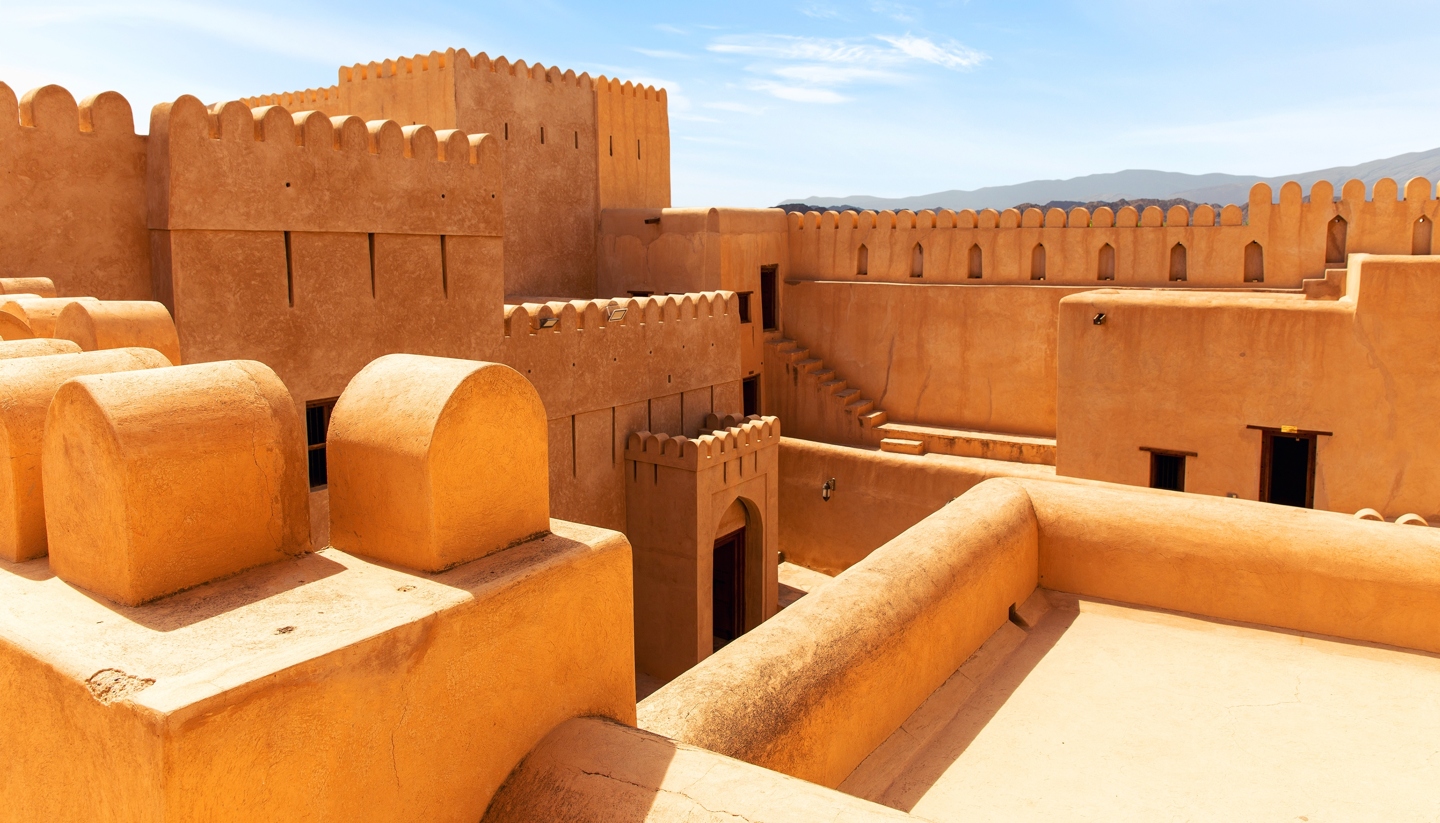
Muscat, Oman's capital, is the natural starting point. Low-rise buildings, whitewashed architecture and the deep blue of the sea set it apart from the skyscraper skylines found elsewhere in the Gulf. Highlights include elegant mosques, historic forts and a scenic waterfront, while the surrounding mountains give the city a dramatic natural backdrop.
Beyond Muscat, Oman reveals its remarkable diversity. The interior is dominated by vast deserts such as the Wahiba Sands, where rolling dunes glow at sunrise and sunset. In contrast, the Hajar Mountains cut across the north of the country, offering cool air, terraced villages and some of the best hiking in the Arabian Peninsula. Many of Oman's most beautiful wadis are found here, with clear pools, rocky gorges and date palms providing refreshing escapes from the heat.
Oman's long maritime history is reflected along its coastline, from quiet fishing villages to historic port towns. The country's beaches remain largely undeveloped, making them ideal for relaxation, dolphin watching and diving. Offshore islands and coral reefs add to Oman's appeal for nature lovers, while seasonal monsoon rains transform parts of the south into a rare burst of green.
For visitors, Oman combines safety, hospitality and a strong sense of identity. It is a place where modern comforts sit comfortably alongside ancient customs, and where travel feels unhurried and rewarding. Whether exploring desert dunes, mountain villages or coastal towns, Oman offers a deeply atmospheric introduction to the Arabian world.
Key facts
309,500 sq km (119,499 sq miles).
5.3 million (2025).
18 per sq km.
Muscat.
Sultanate.
Sultan and Prime Minister Haitham ibn Tariq since 2020.
Sultan and Prime Minister Haitham ibn Tariq since 2020.
Travel Advice
Regional tensions
The US and Iran announced a memorandum of understanding (MOU) on 17 June in relation to the conflict in the Middle East, however the situation in the Middle East remains unpredictable. Since 8 July there have been strikes and retaliatory attacks by Iran in a number of locations across the region, including Oman, against US military and civilian infrastructure. There is a risk of more attacks and unforeseen escalation in the region. Before the ceasefire, the Iranian regime had stated its intention to target locations associated with the US and Israel, including organisations, businesses, facilities, and institutions.
British nationals currently in the Middle East should be prepared for possible flight cancellations, periodic airspace closures, and potential travel disruptions, and should:
- read If you’re affected by a crisis abroad - GOV.UK. This includes guidance on “how to prepare for a crisis” with suggestions on what you might include in your emergency supplies and “what to do in a crisis”
- sign up to FCDO Travel Advice email alerts
- follow advice from the local authorities
- monitor local and international media for the latest information, including updates relating to airports and airspace which could close at short notice
- stay away from areas around security or military facilities
- keep your departure plans under review, and ensure your travel documents are up to date
- if advised to take shelter, stay indoors or find the nearest safe building or designated shelter. An interior stairwell or a room with as few external walls or windows as possible may provide additional protection. The greatest risk is from falling debris caused by intercepts, and you are safest inside a secure structure. Do not approach or touch any drone or missile fragments or unusual objects
Before you travel
No travel can be guaranteed safe. Read all the advice in this guide. You may also find it helpful to:
- see general advice for women travellers
- read our guide on disability and travel abroad
- see general advice for LGBT+ travellers
- read about safety for solo and independent travel
- see advice on volunteering and adventure travel abroad
Travel insurance
If you choose to travel, research your destinations and get appropriate travel insurance. Insurance should cover your itinerary, planned activities and expenses in an emergency.
About FCDO travel advice
The Foreign, Commonwealth & Development Office (FCDO) provides advice about risks of travel to help you make informed decisions. Find out more about FCDO travel advice.
Get travel advice updates
Sign up to get email notifications when this travel advice is updated.
Follow FCDO:
This information is for people travelling on a full ‘British citizen’ passport from the UK. It is based on the UK government’s understanding of Oman’s current rules for the most common types of travel.
The authorities in Oman set and enforce entry rules. If you’re not sure how these requirements apply to you, contact the Omani Embassy in the UK.
Passport validity requirements
To enter Oman, your passport must have an ‘expiry date’ at least 6 months after the date you arrive.
Check with your travel provider that your passport and other travel documents meet requirements. Renew your passport if you need to.
You will be denied entry if you do not have a valid travel document or try to use a passport that has been reported lost or stolen.
Dual nationals
When returning to the UK, British citizens must carry a valid British passport or certificate of entitlement. See Dual citizenship.
British-Omani dual nationals
Oman does not recognise dual nationality. If you hold both British and Omani passports, the Omani authorities may confiscate one of your passports.
Visa requirements
You can visit Oman for up to 14 days without a visa.
If you overstay or do not extend your visa or residency, the Omani authorities may fine and detain you. Fines can be up to 10 Omani rials a day, with a total maximum fine of 500 rials.
Applying for a visa
To stay longer than 14 days or for work, study or other reasons, you must have a visa. To avoid the risk of refusal, it’s better to apply for a visa online before you travel – you can select the ‘unsponsored visit visa’ option if you’re a tourist.
You can also get a visit visa on arrival at an airport in Oman.
Checks at border control
At Omani border control, you must be able to show:
- a ticket for return or onward travel
- proof of your accommodation – for example, a hotel booking
- proof of your travel health insurance
Vaccine requirements
You must have a certificate to prove you’ve had a yellow fever vaccination if you’re coming from Rwanda, Tanzania or a country listed as a transmission risk.
For full details about medical entry requirements and recommended vaccinations, see TravelHealthPro’s Oman guide.
Customs rules
There are strict rules about goods you can take into or out of Oman. You must declare anything that may be prohibited or subject to tax or duty.
Taking medicines into Oman
Some UK prescription and over-the-counter medicines are illegal in Oman. Carry a copy of your prescription if you’re bringing medicine. Check with Oman’s Ministry of Health well before you travel.
Terrorism
There is a high threat of terrorist attack globally affecting UK interests and British nationals, including from groups and individuals who view the UK and British nationals as targets. Stay aware of your surroundings at all times.
UK Counter Terrorism Policing has information and advice on staying safe abroad and what to do in the event of a terrorist attack. Find out how to reduce your risk from terrorism while abroad.
Terrorism in Oman
Terrorist attacks in Oman cannot be ruled out.
Attacks could be indiscriminate including in places visited by foreigners.
Terrorists have threatened to carry out attacks in the Gulf region, including on:
- Residential compounds
- Military, oil, transport and aviation interests
- Public places, including restaurants, hotels, beaches, shopping centres and places of worship
Stay aware of your surroundings, keep up to date with local media reports, including official messaging from Oman’s Government Communication Centre, and follow the advice of the local authorities, including the Royal Oman Police.
Examples of significant incidents include:
- in July 2024, 6 people were killed and others injured in a shooting incident in the vicinity of a mosque, in the Wadi Kabir area of Muscat.
Political situation
Developments in the Middle East continue to affect public opinion in Oman. In October 2023, there was a small, peaceful demonstration outside the British Embassy. Further unannounced demonstrations are possible throughout the country. Stay alert and avoid large crowds.
Be aware of local sensitivities on these issues and follow the advice of the Omani authorities, including the Royal Oman Police. Follow news reports and be alert to local and regional developments, which might trigger public disturbances.
Crime
Sexual assault
Personal attacks against foreign nationals, including sexual assault and rape, are relatively rare, but happen. Take care when walking or travelling alone, particularly at night. You should maintain at least the same level of personal security awareness as you would in the UK. See advice for women travelling abroad.
Laws and cultural differences
Oman’s laws and customs are very different to those in the UK and reflect the fact that Oman is an Islamic country. You should respect local traditions, customs, laws and religions at all times. Make sure your actions do not offend, especially during the holy month of Ramadan or if you plan to visit religious areas.
Personal ID
Always carry a copy of the photo page of your passport and keep the original in a safe place. If you live in Oman, carry your Omani ID.
Ramadan
Ramadan is a holy month for Muslims. The dates vary by year and country. During this time, do not:
- eat, drink, smoke or chew gum in public in the daytime, including in your car
- play loud music or dance
- swear in public
Get more advice when you arrive from your tour guide, hotel or business contacts.
You should also:
- check opening hours of shops and restaurants
- be aware that if hotels and restaurants are providing food or drink in fasting hours, they may separate you from Islamic guests, for example with screens
- follow local dress codes – clothing that does not meet local dress codes may cause more offence at this time
- be aware that fasting can cause tiredness, particularly during the later afternoon and early evening
- be patient and show tolerance
Alcohol laws
Tourists and visitors can buy and drink alcohol in licensed venues, such as hotels, restaurants and clubs. The legal drinking age is 21.
Non-Muslim residents can get a licence to drink alcohol at home from the Royal Oman Police. Liquor licences are not available to non-residents.
It is illegal to drink alcohol in public, be drunk in public or to drink-drive. The police have arrested and charged British nationals for these offences. Border police may arrest passengers travelling through Omani airports or seaports under the influence of alcohol.
E-cigarette and vape bans
It is illegal to import or use e-cigarettes or vape products in Oman.
Blood test following arrest
If you are arrested, the authorities may require you to take a blood test, particularly if they suspect you have used drugs or alcohol. If you refuse, you could be arrested for your failure to comply.
Dress codes
You should dress modestly in public areas including in shopping malls. Your clothing should cover the tops of your arms and legs (below the knee), and underwear should not be visible.
Wearing tight-fitting clothes is likely to attract attention. Do not wear swimming costumes or beachwear in public areas, except on tourist beaches or at swimming pools.
Cross-dressing is illegal.
Unmarried couples
It is illegal to live with or share a hotel room with someone of the opposite sex if you are not married or closely related.
You may have difficulty registering the birth of a baby born in Oman if you are unmarried or in a relationship the Omani authorities do not recognise as marriage.
Illegal drugs penalties
There are severe penalties for importing, trafficking, smuggling and possessing drugs, even residual amounts. In some cases, offenders could get the death penalty. There is no distinction in Omani law between ‘soft’ and ‘hard’ drugs – both are treated with equal severity.
Public offences
It is illegal to swear and make rude gestures, including while driving. You can also be charged with obscenity for social media posts or shared photos or videos.
Showing affection in public is frowned upon and may bring you to the attention of the police.
Pornography
It is illegal to create, import or share pornographic images and videos, even if created for personal use with the consent of those involved.
Using cameras and binoculars
It is illegal to photograph some government buildings and military sites. Do not photograph people without their permission. Hobbies like bird watching and plane spotting may be misunderstood – particularly near military sites, government buildings and airports.
Drones
It is illegal to fly drones or any other remote-controlled flying device without a valid licence or in restricted airspace.
LGBT+ travellers
Same-sex sexual activity is illegal in Oman. Read more advice for LGBT+ travellers.
Financial crimes and unpaid bills
Foreign nationals must pay all debts and traffic fines before leaving Oman. You can check if you have outstanding traffic fines via the ROP app or online service: Royal Oman Police Website - Online Services - Traffic Offense Payment.
Financial crimes and unpaid bills include:
- fraud
- giving somebody a cheque which bounces (including post-dated and ‘security’ cheques)
- non-payment of bills (for example property rent, hotel bills or car hire)
You may also be liable for cheques that you have signed on behalf of a company.
Financial crimes can be punished with:
- imprisonment
- fines
- deportation
- freezing bank accounts and other assets
- seizing of any end-of-service benefits or bonuses
- blocking your access to possible future sponsors (employers)
- delay and/or prevention from leaving the country
See more details about financial crimes if you are living and working in Oman.
Child custody cases
The border authorities may prevent children from leaving Oman if they are the subject of a child custody dispute.
Outdoor activities and adventure tourism
Swimming safety
See water safety on holiday from the Royal Life Saving Society.
Hiking and mountaineering
When hiking in Oman, be sure to follow marked hiking trails.
Extreme heat has caused deaths in Oman due to dehydration and heat exhaustion – see advice for travellers affected by extreme heat.
Transport risks
Road travel
If you are planning to drive in Oman, see information on driving abroad.
You can use a UK photocard driving licence to drive a rental car in Oman for the first 6 weeks after you arrive. If you still have a paper driving licence, you may need to update it to a photocard licence or get the 1949 version of the international driving permit (IDP) as well.
If you live in Oman or are staying longer than 6 weeks, you must get an Omani licence.
Hire car companies often have stricter requirements for their customers, such as a year of driving experience, a higher minimum age and holding an IDP.
Drink-driving is a serious offence in Oman. If you are tested and found to have any alcohol in your system, you may get a fine and possible imprisonment.
Reporting traffic accidents
If you are involved in a serious traffic accident and do not need emergency treatment, you must stay with your vehicle and call the Royal Oman Police on 9999.
Serious accidents include those with:
- severe damage to vehicles
- injuries or deaths
- damage to public or private property
- drink-driving or drugs
- one or more drivers without a licence (or with a suspended licence)
- uninsured vehicles
- military or security vehicles
You may not need to call the police after a minor accident, but you must complete a minor road traffic accident form. You must keep a form in your car – you can get one from your insurance company and at a police station. Car rental companies are responsible for keeping forms in their cars.
In a minor accident there is generally:
- limited damage to vehicles
- no injury or death
- no damage to public or private property, apart from vehicles and property belonging to those involved
Rules of the road
Rules of the road in Oman include:
- all passengers must wear seatbelts
- all children aged 3 and under must use child car seats
- it is illegal to use a mobile phone while driving
The Omani authorities strictly enforce traffic laws. There are severe penalties for traffic offences, including fines of up to 3,000 Omani rials or prison sentences of up to 3 years.
Driving conditions
Driving can be dangerous outside Muscat. There is a risk of hitting wandering camels and goats on the road. Rainfall can cause sudden, severe floods in dry riverbeds and on roads that cross them.
The condition of Omani roads is generally good. Driving standards in Oman are not always as disciplined as those in the UK, and the rate of traffic accidents in Oman is significantly higher.
Desert and mountain travel
Road trips to the desert and mountains can be dangerous unless you’re in a well-equipped 4-wheel-drive vehicle. You should always:
- travel in convoy if possible
- take a supply of water
- take a mobile phone or satellite phone
- leave a copy of your travel plans with friends or relatives
- make sure you’re insured for this type of travel
Sea travel
The safety of tourist boats may not be up to UK standards. Make sure life jackets are available for all passengers.
Many areas of the Gulf of Aden are restricted. Vessels entering these areas have been detained and inspected, sometimes resulting in arrests. You should make careful enquiries before entering these waters or visiting ports. Consider how regional tensions may affect your route.
Vessels may be at increased risk of maritime attack, including piracy, in:
- the Gulf of Oman
- the Northern Arabian Sea
- the Gulf of Aden
- Bab El Mandeb
See piracy in the Gulf of Aden and Indian Ocean. The threat assessment of the combined international naval counter-piracy forces is that sailing yachts should not enter the designated high-risk area, due to the risk of hijacking.
Extreme weather and natural disasters
Find out what you can do to prepare for and respond to extreme weather and natural hazards.
Tropical cyclones
Tropical cyclones from the Indian Ocean sometimes affect Oman in July and August, disrupting services and utilities.
You should:
- follow official weather warnings
- check local weather forecasts, weathers warnings from Oman’s civil aviation authority and the World Meteorological Organization reports for Oman
- get advice about travelling conditions, particularly if you’re planning off-road travel or adventure tourism
Flash floods
Flash floods can cause injuries and deaths. Wadis (dry riverbeds) in Oman are prone to flash flooding after heavy rainfall from October to March.
Before travelling to a wadi, check the weather forecast and avoid places where heavy rain is expected and for at least one day afterwards.
If you’re caught in a flash flood:
- go to a high point
- do not try to cross the water
- drive to a dry spot if you’re in a vehicle
Follow any instructions or guidance from the Royal Oman Police and the Civil Defence & Ambulance Authority.bYou can also use the Nidaa/CDAA to stay up to date with any emergency updates.
Before you travel check that:
- your destination can provide the healthcare you may need
- you have appropriate travel insurance for local treatment or unexpected medical evacuation
This is particularly important if you have a health condition or are pregnant.
Emergency medical number
Call 9999 and ask for an ambulance.
Contact your insurance company quickly if you’re referred to a medical facility for treatment.
Vaccine recommendations and health risks
At least 8 weeks before your trip:
- check the latest vaccine recommendations for Oman
- see where to get vaccines and whether you have to pay on the NHS travel vaccinations page
See what health risks you’ll face in Oman, including:
- dengue
- Middle East respiratory syndrome coronavirus
Altitude sickness is a risk in parts of Oman. Read more about altitude sickness on TravelHealthPro.
Extreme heat has caused deaths in Oman due to dehydration and heat exhaustion.
Medication
The legal status and regulation of some medicines prescribed or bought in the UK can be different in other countries.
Read best practice when travelling with medicines on TravelHealthPro.
Healthcare in Oman
The quality of healthcare facilities in Oman is similar to those in the UK.
British nationals must use the private healthcare system. Visitors who do not have travel insurance or the means to settle any charges may be stopped from leaving the country until the debt is paid. Make sure you have adequate travel health insurance and accessible funds to cover the cost of any medical treatment abroad and repatriation.
FCDO has a list of medical providers in Oman where some staff will speak English.
There is also guidance on healthcare if you’re living in Oman.
Travel and mental health
Read FCDO guidance on travel and mental health. There is also mental health guidance on TravelHealthPro.
The Foreign, Commonwealth & Development Office (FCDO) cannot provide tailored advice for individual trips. Read this travel advice and carry out your own research before deciding whether to travel.
Emergency services in Oman
Telephone: 9999 (ambulance, fire, police)
Contact your travel provider and insurer
Contact your travel provider and your insurer if you are involved in a serious incident or emergency abroad. They will tell you if they can help and what you need to do.
Refunds and changes to travel
For refunds or changes to travel, contact your travel provider. You may also be able to make a claim through insurance. However, insurers usually require you to talk to your travel provider first.
Find out more about changing or cancelling travel plans, including:
- where to get advice if you are in a dispute with a provider
- how to access previous versions of travel advice to support a claim
Support from FCDO
FCDO has guidance on staying safe and what to do if you need help or support abroad, including:
- finding English-speaking lawyers, funeral directors and translators and interpreters in Oman
- dealing with a death in Oman
- being arrested or imprisoned in Oman
- getting help if you’re a victim of crime
- what to do if you’re in hospital
- if you’re affected by a crisis, such as a terrorist attack
Contacting FCDO
Help abroad
See how to get help from the UK government abroad including in an emergency.
Help in the UK
You can call FCDO in London if you need urgent help because something has happened to a friend or relative abroad.
Telephone: 020 7008 5000 (24 hours)
Get travel advice updates
Sign up to get email notifications when this travel advice is updated.
Follow FCDO:
Risk information for British companies
The Overseas Business Risk service offers information and advice for British companies operating in Oman on how to manage political, economic, and business security-related risks.