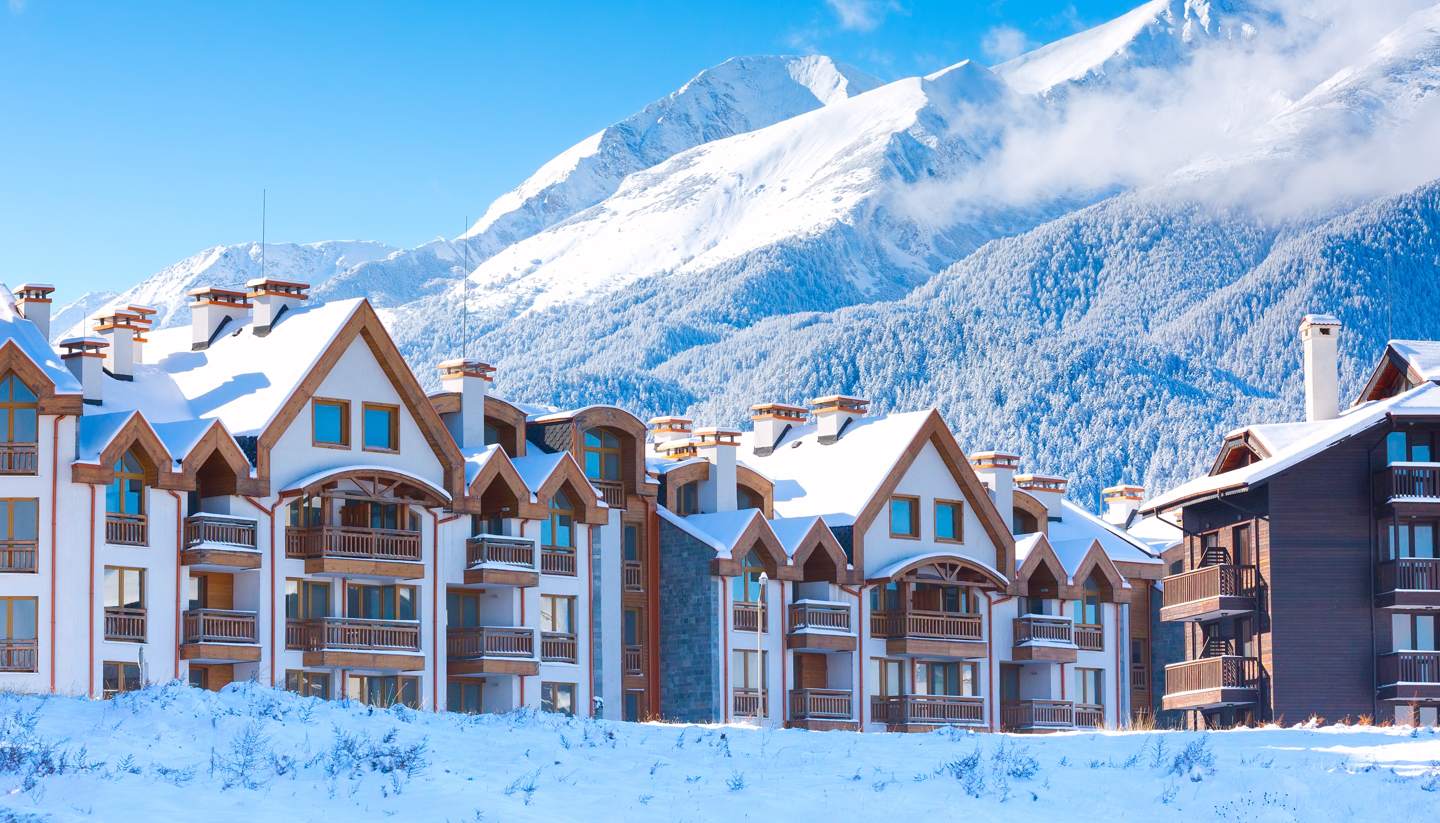

Bansko ski resort
About Bansko
The Bulgarian ski resort of Bansko remained relatively unknown until as recently as the start of this century, but that all changed in the year 2000 when a gondola was built linking the atmospheric old mountain village to the ski areas, creating one of the biggest lift-served verticals in Eastern Europe. The international ski community quickly took note.
As popularity grew, huge investment followed and development was prolific. More than half a dozen fast quad and six-seat chairlifts were installed along with dozens of new hotels, including some of the region’s first 5-star offerings.
This construction boom slowed for a time, due in part to the economic downturn and in part to the controversy of illegal construction taking place on land designated within the Pirin National Park, a UNESCO World Heritage Site. But these issues appear to have been largely resolved and Bansko is growing again.
Today modern Bansko is a very unique ski destination, with a huge range of accommodation and a modern ski area, but also the attraction of an ancient village with 19th-century stone buildings, cobbled streets and a clock tower that’s been ticking for more than 150 years.
Location:
Bansko is situated on the River Glazne in the northeastern foothills of the Pirin Mountains, 165km (103 miles) south of Bulgaria’s capital Sofia and 50km (31 miles) east of the border with Macedonia. It lies north of Pirin National Park and its highest mountain, Mt Vihren, peaks at 2,914m (9,560ft).
Website:
http://www.banskoski.comResort Data:
Slopes
Bansko
Resort Elevation: 925mTop Elevation: 2560m
Base Elevation: 990m
On the slopes
The runs at Bansko are relatively evenly divided among ability levels – a third of the slopes are suitable for beginners, while intermediates and advanced skiers both have around 35% of the slopes to themselves.
Skiers can take the Bunderishka gondola up to the slopes from the town. At the top, there are nursery slopes for beginners to explore, while a blue run leads from here back to the resort base. Further up the mountain there is a greater choice of runs and a terrain park for freestylers. The longest run at Bansko is 10km (6 miles), although it does rely on snow cover right down to village level, which can be problematic at the end of the season.
More than 40 snow cannons cover most of the slopes with artificial snow, boosting the resort's natural base and consequently improving its snow reliability. The ski season here is relatively comparable to most resorts in the Alps, with the slopes generally open from mid-December to mid-April.
The Ulen Ski and Snowboard School is the largest in the region, offering ski and snowboard lessons for all levels. For those without their own skis, equipment hire is available at many stores located near the gondola, on Ulitsa Pirin.
Other snow sports facilities here include cross-country trails and a rare biathlon training centre, which has played host to major international competitions.