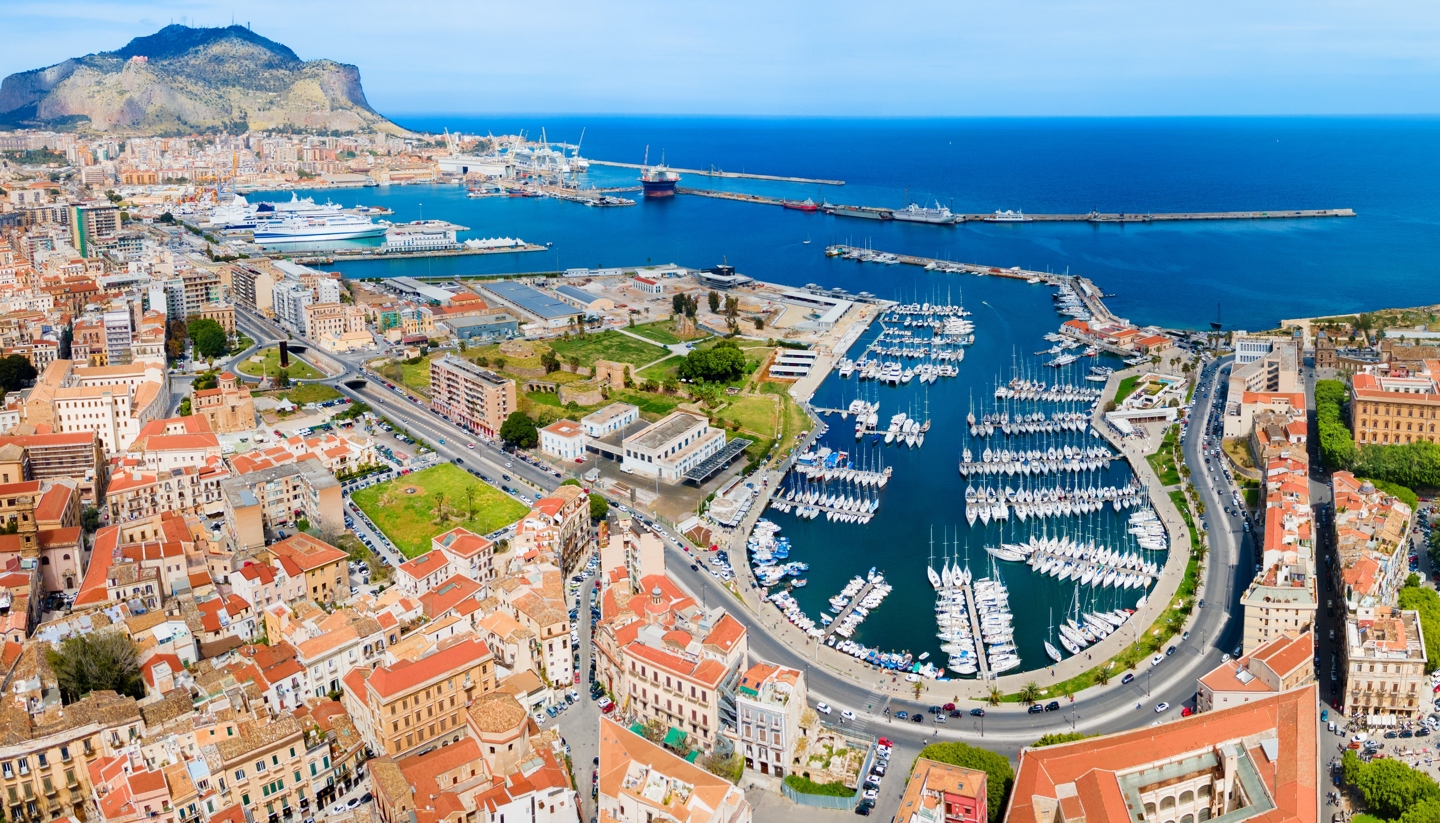

Sicily History, Language and Culture
History of Sicily
Sicily has a long and complex history shaped by successive waves of conquest and cultural exchange. The island was first colonised by the Greeks, who established powerful city-states such as Syracuse, and later came under Roman rule after the Punic Wars. During the Middle Ages, Sicily came under Arab and later Norman control, each leaving a lasting influence on architecture, language and cuisine.
In later centuries, the island was ruled by the Spanish and Bourbon monarchies before becoming part of unified Italy in the 19th century. This layered history is visible throughout Sicily in its architecture, traditions and cultural identity.
Did you know?
• The city of Catania has been completely destroyed and buried by Mount Etna's lava 17 times and was rebuilt every time.
• Legend tells of a 17th-century Sicilian nun who, while allegedly possessed by the devil, wrote a letter in an indecipherable code at the monastery of Palma di Montechiaro, which still remains an unsolved mystery.
• Sicilian is considered a distinct language with historical roots in Greek, Arabic, and Catalan. It is recognised by UNESCO as an endangered language with its own unique grammar and vocabulary.
Sicily Culture
Religion in Sicily
Roman Catholicism is the dominant religion in Sicily, reflecting the island's long-standing cultural and historical ties to the Church. The majority of the population identifies as Roman Catholic, with smaller communities of other Christian denominations, Muslims and other religions.
Social Conventions in Sicily
Social customs in Sicily are warm and expressive, with a strong emphasis on family, hospitality and community. Greetings are friendly and often involve a handshake or, among acquaintances, cheek kisses. Personal space may be smaller than in some cultures, and conversation is often animated.
Tipping is not expected but is appreciated for good service. Photography is generally permitted in public places, though visitors should be respectful when photographing people or inside churches, where restrictions may apply.
Language in Sicily
Italian is the official language of Sicily and is used in government, education and everyday communication. English is widely spoken in tourist areas, hotels and restaurants, particularly in cities such as Palermo, Catania and Taormina, though it may be less common in smaller towns and rural areas.
Sicilian (Sicilianu), a regional language with its own vocabulary and history, is also spoken by many locals, especially in informal settings.