
Lebanon travel guide
About Lebanon
Fringed by golden beaches, peppered with World Heritage Sites and home to the Middle East's premier party city, Lebanon has all the hallmarks of a classic traveller's destination.
Yet the reality, alas, is not quite so rosy. Still recovering from a brutal civil war (1975-1990), the conflict in neighbouring Syria is spilling across the border and the Bekaa Valley remains a stronghold for the militant group Hezbollah. Suffice to say, cautious tourists have stayed away.
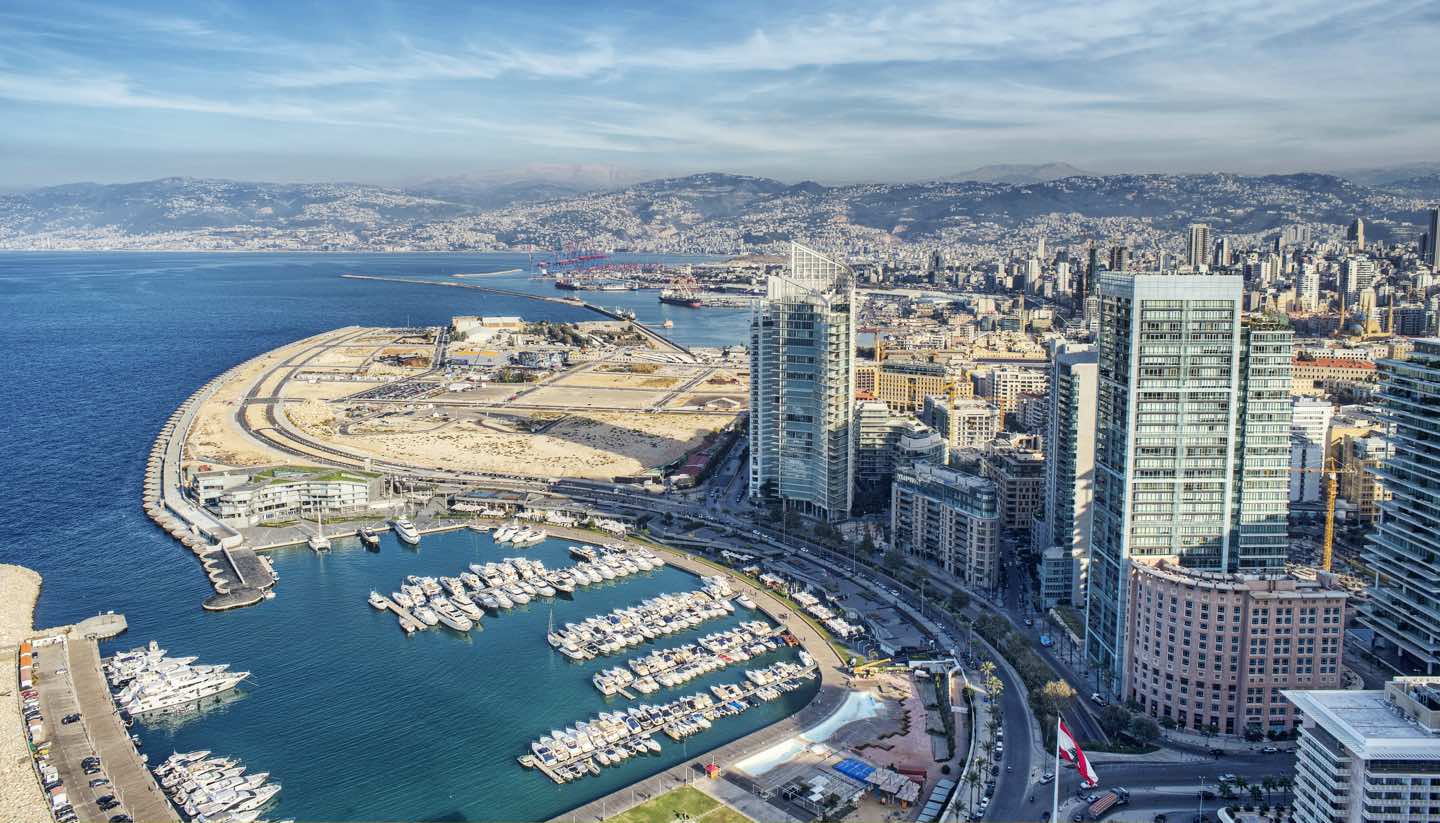
Nevertheless, for now, a fragile peace prevails in Lebanon, which extends a warm welcome to foreign visitors. Nowhere is this clearer than in the capital, Beirut, a friendly party town sandwiched between the Mediterranean Sea and the foothills of Mount Lebanon.
Characterised by its affable inhabitants, dramatic coastline and delicious cuisine, bustling Beirut sits at the crossroads between Europe and Arabia. Influences from east and west abound – it is not uncommon to hear the call to prayer competing with DJs in some of the livelier parts of town.
Although buildings still bear the scars of past conflicts, the city is a forward-thinking capital where the biggest danger nowadays seems to be the traffic – crossing the road can feel like an extreme sport.
Though small in size, Lebanon boasts five UNESCO World Heritage Sites including the city of Byblos, one of the oldest Phoenician ports, and the haunting remains of Baalbeck in the Hezbollah-run Bekaa Valley, one of the finest examples of Greco-Roman architecture in existence.
Other highlights including the magnificent cedar forests and Christian monasteries of the Holy Valley, as well as the ancient cities of Tyr and Tripoli, home to one of the oldest seaports in the world.
And if that's not enough, there's always skiing in Mount Lebanon. Granted, it might not be an obvious place to hit the slopes, but there are few places in this world that can offer sun, sand and skiing in one day. But then Lebanon is not your average destination.
Key facts
10,452 sq km (4,036 sq miles).
5,988,153 (UN estimate 2016).
591.7 per sq km.
Beirut.
Republic.
President Joseph Aoun since 2025.
Prime Minister Nawaf Salam since 2025.
Travel Advice
Your travel insurance could be invalidated if you travel against advice from the Foreign, Commonwealth & Development Office (FCDO). Consular support is also severely limited where FCDO advises against travel.
Areas where FCDO advises against travel
Areas in Beirut and Mount Lebanon Governorate
FCDO advises against all travel to the following areas of Beirut and its southern suburbs, excluding Route 51 from central Beirut to Rafic Hariri International Airport:
- Tariq el Jdideh and the area east of Tariq el Jdideh, south of Jalloul Street, west of Hourch and the war cemetery (not including the war cemetery), and south of the Soulieman Bastani
- Ghobeiry and the area north of Ghobeiry but south of Yarmouk street, the war cemetery and Horsh park (not including Horsh park and the cemetery and Yarmouk street)
- Chiyah (south and west of the Rizkallah Semaan road)
- Haret Hraik
- Burj Al Barajneh
- Mraije
- Laylaki
- Jnah, south of El Imam Mousa El Sader street
- The Golf Club of Lebanon
- all other areas west of the Camil Chamoun Boulevard (south of Forn el Chebbak) that becomes the Old Saida Road through Hadath to Beirut airport
FCDO advises against all but essential travel to:
The area of Mount Lebanon Governorate south of (but excluding) the road from Wadi El Zayni in the west (and extending to the Mediterranean Sea), which travels through the villages of Aanout, Gharifeh, Ainbal, Boqaata, Moukhtara, Maaser El Chouf to the Mount Lebanon-Beqaa Governorate boundary in the east
Areas in the South and Nabatiyeh Governorates
FCDO advises against all travel to South and Nabatiyeh Governorates.
Areas in the Beqaa Governorate
FCDO advises against all travel to:
The area of Beqaa Governorate to the east of (but not including) the Masnaa-Rachaiya Road from Masnaa, Dahr El Ahmar to the Beqaa-Nabatiyeh boundary in the south.
FCDO advises against all but essential travel to:
The area of Beqaa Governorate to the south of (but not including) the road from Kafraiya to Joub Jannine, east of (but not including) the road from Joub Jannine to Bar Elias and south of the road from Bar Elias to Deir Zenoun.
Areas in the Baalbek-Hermel Governorate
FCDO advises against all travel to:
The area of Baalbek-Hermel Governorate north of (but not including) the Danniyeh-Hermel Road from the Baalbek-Hermel Governate boundary in the west to Hermel in the east.
The area north of (but not including) the Hermel-Ras Baalbek Road from Hermel to the Baalbek-Qaa Highway, and the entire area east of the Baalbek–Qaa Highway (excluding the highway itself), extending south to the Beqaa Governorate boundary.
FCDO advises against all but essential travel to the rest of the Baalbek-Hermel Governate:
Areas in the North Governorate
FCDO advises against all but essential travel to the area of Tripoli to the east of the Bechara El Khoury road from Bohssas in the south to Beddaoui in the north – including the neighbourhoods of Abou Samra, Tabbaneh, Jessrin, Qoubbeh and Zaytoun.
Areas in the Akkar Governorate
FCDO advises against all travel to:
The area of Akkar Governorate north of (but excluding) the road from Qlayaat in the west (and extending to the Mediterranean Sea) to Tal Keri, Kouaikhat, Aamriyeh, and Qoubaiyat. And east of the same road and from Qoubaiyat to Qatlabah to the boundary of Akkar and Baalbek-Hermel Governorates in the south.
Palestinian refugee camps
FCDO advises against all travel to the 12 Palestinian refugee camps. See Palestinian refugee camp locations on the UN Relief and Works Agency website.
Regional tensions
The situation in the Middle East remains unpredictable.
British nationals should:
- read If you’re affected by a crisis abroad - GOV.UK. This includes guidance on “how to prepare for a crisis” with suggestions on what you might include in your emergency supplies and “what to do in a crisis”
- follow advice from the local authorities
- sign up to FCDO Travel Advice email alerts
- monitor local and international media for the latest information
- stay away from areas around security or military facilities
- keep your departure plans under review, and ensure your travel documents are up to date
- if you are advised to take shelter, stay indoors or find the nearest safe building or designated shelter. An interior stairwell or a room with as few external walls or windows as possible may provide additional protection. The greatest risk is from falling debris caused by intercepts, and you are safest inside a secure structure
Leaving Lebanon
Keep your departure plans under review and ensure your travel documents are up to date, including any visas required for onward travel. Make sure you have access to emergency supplies and essential medication. Travel to or within Lebanon is at your own risk. and you should have a personal emergency plan which does not rely on the UK government.
Conflict affecting Lebanon
Since 2 March, conflict in Lebanon escalated in response to regional events. Airstrikes and rocket attacks between Israel and Lebanese Hizballah increased. Widespread evacuation warnings led to a mass movement of people from conflict-affected areas.
Israeli airstrikes have occurred primarily in the South, Nabatieh and Beqaa Governates and Beirut’s southern suburbs, but have also occurred outside these areas. The Israeli military often releases evacuation warnings before airstrikes, but many have also taken place with no advance notice.
A cessation of hostilities was announced in June 2026 but fighting and airstrikes have continued particularly in southern Lebanon, where an Israeli military presence remains. The dynamic nature of the conflict means the situation may change quickly. British nationals should follow local, international and social media to keep up to date with official alerts.
We advise you to keep up to date with the latest situation, including using multiple media sources to understand frequency and location of strikes, as these may change rapidly. There are various mapping sources available online.
Access to Beirut airport
Beirut airport is open and operational. If you are travelling to the airport, check the local security situation before you travel. Remain alert to local conditions as these could change quickly.
Civil disorder
Celebratory gunfire is common in Lebanon and there is a risk from gunfire being fired in residential areas in reaction to major regional developments. If you hear gunfire, take cover immediately. Protests related to regional events could also take place at short notice and may escalate quickly. Exercise caution, avoid demonstrations, and monitor local media for developments.
Local support
Our embassy is operating as normal.
Keep up to date with local and international media including TV and radio stations such as Virgin Radio Lebanon (FM 89.5) and Voice of Lebanon / Sawt Lubnan (FM 100.3 - 100.5) which may be useful sources of information on any developments.
You should have a personal emergency plan that does not rely on the UK government. This may include the ability to leave quickly or to shelter in place if you judge it necessary and safe to do so.
Read FCDO advice on what to do if you’re affected by a crisis abroad and how to prepare.
Help and support in Lebanon
You can contact the emergency services by calling 112.
If you need urgent help (for example, you’ve been attacked, arrested or someone has died), call +961 (0)1 960 800.
Travel insurance
If you choose to travel, research your destinations and get appropriate travel insurance. Insurance should cover your itinerary, planned activities and expenses in an emergency.
About FCDO travel advice
FCDO provides advice about risks of travel to help you make informed decisions. Find out more about FCDO travel advice.
Get travel advice updates
Sign up to get email notifications when this travel advice is updated.
Follow FCDO:
This information is for people travelling on a full ‘British citizen’ passport from the UK who choose to travel against FCDO advice. It is based on the UK government’s understanding of Lebanon’s current rules for the most common types of travel.
The authorities in Lebanon set and enforce entry rules. If you’re not sure how these requirements apply to you, contact the Lebanese Embassy in the UK.
Passport validity requirements
Your passport should be valid for at least 3 months from the date you enter Lebanon.
Check with your travel provider that your passport and other travel documents meet requirements. Renew your passport if you need to.
You will be denied entry if you do not have a valid travel document, or try to use a passport that has been reported lost or stolen.
Checks at border control
If your passport contains an Israeli stamp, you may be refused entry to Lebanon even if you hold a valid Lebanese visa.
Dual nationals
When returning to the UK, British citizens must carry a valid British passport or certificate of entitlement. See Dual citizenship.
Visa requirements
British citizens can normally apply for a free single-entry tourist or family visit visa on arrival at Beirut airport. A tourist visa is valid for one month from the date of entry. Travellers can extend their visa for up to three months at the General Security offices.
British citizens can also obtain a visa from the Lebanese Embassy in London. These may be valid for a different time period. Travellers should make sure they understand their visa validity to avoid any penalties for overstaying.
Travellers overstaying their visa may have to pay a fine at the airport. Only Lebanese currency will be accepted for payment. This should be paid at departures before security procedures.
Entry requirements may change at short notice. Check with the Lebanese Embassy in the UK before you travel.
Name checks against offender database
Lebanese immigration authorities check all visitors’ names on arrival against a database of those wanted for, or convicted of, offences in Lebanon. If your name matches an entry on the database, you may be detained (or occasionally allowed entry by surrendering your passport) until they can be satisfied that the record does not relate to you. You might be able to do this by producing a copy of a birth certificate or other official documentation that allows parents’ names to be checked against the database. Consider carrying this kind of supporting documentation.
Vaccine requirements
For details about medical entry requirements and recommended vaccinations, see TravelHealthPro’s Lebanon guide.
Terrorism
There is a high threat of terrorist attack globally affecting UK interests and British nationals, including from groups and individuals who view the UK and British nationals as targets. Stay aware of your surroundings at all times.
UK Counter Terrorism Policing has information and advice on staying safe abroad and what to do in the event of a terrorist attack. Find out how to reduce your risk from terrorism while abroad.
Terrorism in Lebanon
Terrorists are likely to try to carry out attacks in Lebanon.
Islamist terrorist groups seek to target the Lebanese state, security services, and civilians, and intend to target foreigners in Lebanon. Groups within Lebanon, including Lebanese Hizballah, are proscribed under the Terrorism Act 2000 and the Counter Terrorism (Sanctions) (EU Exit) Regulations 2019. Offences committed under the act – including funding and supporting proscribed organisations – may be liable to prosecution in the UK.
Terrorist groups have particularly operated in:
- Tripoli
- Palestinian refugee camps
- areas close to the Syrian border, including around Hermel and Aarsal
- Southern suburbs of Beirut
Recent terrorist-related incidents include a firearm attack which targeted the US embassy in 2024:
There is a heightened risk of terrorism against aviation. Additional security measures have been in place on flights departing from Lebanon to the UK since March 2017. You should co-operate fully with security officials.
If you notice or suspect a security incident is underway, leave the area immediately. Suspects have detonated explosives to avoid arrest. Keep clear of affected areas immediately after any attacks.
Terrorist kidnap
There’s a threat of kidnapping in Lebanon. The Lebanese authorities have warned that foreigners could be targeted.
British nationals are seen as legitimate targets, including tourists, humanitarian aid workers, journalists and business travellers. If you are kidnapped, the reason for your presence is unlikely to protect you or secure your safe release.
The long-standing policy of the British Government is not to make substantive concessions to hostage takers. The British Government considers that paying ransoms and releasing prisoners builds the capability of terrorist groups and finances their activities. This can, in turn, increase the risk of further hostage-taking. The Terrorism Act (2000) makes payments to terrorists illegal.
Security situation
The security situation in Lebanon is volatile and can deteriorate quickly.
Violence may occur:
- as a result of the conflict affecting Lebanon
- between security forces and protestors
- between supporters of political groups
- over scarce or subsidised resources
Confrontations often happen without warning and can result in large numbers of casualties. Security forces may use tear gas and rubber bullets during clashes.
Weapons are common in Lebanon and groups such as Lebanese Hizballah have arms that are beyond state control. Arguments can quickly escalate into violence, including the use of weapons, typically firearms and bladed weapons.
Celebratory gunfire is illegal in Lebanon but remains widespread. Every year there are reported casualties.
Regional and international developments such as in Iran, Israel, Syria and Iraq can have an impact on the local security situation. Monitor the regional situation whilst in Lebanon.
Security advice for British nationals
You should:
- avoid large crowds and political gatherings
- take cover in a building and move away from windows in areas where there’s celebratory or other gunfire
- be especially vigilant during periods of religious significance (including the holy month of Ramadan) and public holidays
- monitor this travel advice and sign up for email updates
- make sure you have correct and up-to-date travel documents, including a passport and visa if necessary, for yourself and anyone you are travelling with (even if they are not a British national) in case a sudden deterioration in the security situation means you need to leave Lebanon
If there are widespread disturbances or the security situation deteriorates, there may be limits to the assistance that the British Embassy Beirut can provide. Be prepared to shelter in place for several days, if the security situation requires it. This means having enough essential supplies, such as food, water and medicine, at the place where you are staying. Do not rely on the FCDO being able to evacuate you in an emergency.
Read FCDO advice on what to do if you’re affected by a crisis abroad and how to prepare.
Severe economic crisis
Currency
Lebanon is experiencing a prolonged economic crisis. This may affect your ability to pay for goods and services by credit or debit card. US dollars are widely accepted and are the main cash currency, including in most supermarkets, restaurants and other retail outlets. It may be difficult or expensive to access US dollars locally and many companies do not accept credit/debit cards. Plan accordingly and ensure you have access to adequate cash for the length of your stay.
Power cuts
Lebanon’s power plants are only producing limited electricity for the national grid. This can lead to power cuts. Many businesses rely heavily on generators for electricity, and electricity provision can vary. Have a torch to hand at night and plan how you would leave your accommodation in the dark.
Crime
Protecting your belongings
There is moderate risk to tourists from petty or violent crime. Take sensible precautions to protect yourself and your belongings:
- consider your route and vary daily routines
- hide expensive-looking jewellery, which could draw unwanted attention
- avoid carrying large amounts of cash in public
- be aware of your surroundings when using ATMs
Sexual assault
There have been reported incidents of sexual harassment and assault in public areas. Consider whether it is safe to walk alone, particularly in less busy areas. Due to the lack of electricity, streetlights often do not work, so streets can be dark at night. Consider taking a torch with you at night and make sure your phone is charged in case of an emergency.
Drug smuggling and violent crime
Criminal gangs involved in drug cultivation and smuggling operate in parts of the Beqaa Valley, especially northern Beqaa. Other armed crimes, such as robbery and kidnap, can occur in these areas. There are also frequent armed clashes between gangs and the security forces.
Laws and cultural differences
Using cameras and drones in secure areas
Avoid photography in Lebanese Hizballah areas, including the southern suburbs of Beirut, the Beqaa Valley and areas in southern Lebanon. You may be detained if you are observed taking photographs.
Only take photographs in tourist sites. You could be arrested for photographing military sites. Flying drone cameras without permission is illegal.
Ramadan
Ramadan is a holy month for Muslims. The dates vary by year and country. During this time, be aware of:
- eating, drinking, smoking or chewing gum in public in the daytime, including in your car
- playing loud music or dance
- swearing in public
Get more advice when you arrive from your tour guide, hotel or business contacts.
You should also:
- check opening hours of shops and restaurants
- follow local dress codes – clothing that does not meet local dress codes may cause more offence at this time
Diversity
Lebanon’s people are diverse, with many different Muslim and Christian sects represented. Respect local traditions, customs, laws and religions at all times and make sure your actions do not offend.
Dress code
In many areas you will find dress codes more relaxed than in other countries of the region, but you should still dress modestly when visiting religious sites.
Illegal drugs and prison sentences
Possessing, using and trafficking illegal drugs (including small quantities) are all serious offences, punishable with prison sentences.
LGBT+ travellers
The Lebanese Criminal Code includes a general provision concerning ‘every sexual act against nature’. Lebanese courts might consider that this includes same sex sexual activity. A criminal offence under this provision is punishable by a prison sentence of up to a year. The Lebanese Medical Association for Sexual Health has resources for LGBT+ people.
Read more advice for LGBT+ travellers.
Child abduction and travel bans
If you have concerns about child custody, get legal advice before travelling to Lebanon about ‘travel bans’ that can be imposed by male heads of family. Even if you or your child holds a British passport you may be subject to Lebanese laws and regulations.
In Lebanon a father or husband can legally arrange for a travel ban to be placed on their wife or children. If a travel ban is placed on you or your children, you will not be able to travel. If that does happen a parent should seek legal assistance to check if the travel ban can be lifted.
Lebanese family law is very different from UK law and particular care is needed if child custody becomes an issue.
If you’re a British national involved in international parental child abductions or custody disputes, contact the Foreign, Commonwealth & Development Office (FCDO) for assistance or call +44 (0) 2070 085 000. FCDO has information on international parental child abduction, including how we can help. FCDO strongly advises against attempting to move your child yourself. This may be considered abduction (or ‘re-abduction’). This may be illegal and can put your child at risk.
Transport risks
Shared taxis and unofficial taxis
Do not use shared taxis or taxis hailed on the street. In 2017, the Lebanese Interior Minister advised people in Lebanon not to use Uber taxis.
Only use taxis:
- from recognised companies that use vetted drivers
- recognised by hotels, which are safe and well-maintained
There have been armed robberies and physical attacks against passengers in shared taxis (known locally as service taxis) with passengers being attacked by either the driver or other passengers.
Road travel
You need either a 1968 international driving permit (IDP) or a UK driving licence to drive in Lebanon. The 1949 IDP is not accepted anymore. You cannot buy an IDP outside the UK, so get one before you travel.
If you are planning to drive in Lebanon, see information on driving abroad.
Driving standards are poor and the accident rate is high. Traffic lights are often switched off and not always observed. It may be better to hire a car with a driver if you’re inexperienced. You must wear a seat belt (if fitted). Avoid travelling at night outside towns if possible. Cars with diesel engines are banned.
Licences and permits
Carry ID with you at all times and be prepared to stop at checkpoints to show your papers. The army has set up checkpoints on major and minor roads.
Temporary local licences are also available, but they take longer to get and are more expensive than an IDP.
Roadblocks
Protests and roadblocks may restrict travel at short notice. Major roads in and out of Beirut and across the country, including the roads to and from Beirut Rafik Hariri International Airport, have become blocked at short notice. If you’re travelling to or from the airport, check your flight status before leaving and allow extra time for your journey. If roads from the airport are blocked, wait there until the authorities confirm access roads are open.
Landmines
Landmines and other unexploded weapons are present in Lebanon and are not always clearly marked. Use only well-travelled tracks and do not stray from their edges. Avoid remote abandoned properties. Use local guides and seek local knowledge if you are unsure.
Extreme weather and natural disasters
Find out what you can do to prepare for and respond to extreme weather and natural hazards.
Forest fires
There is a heightened risk of forest fires in Lebanon, particularly during summer. Forest fires are highly dangerous and unpredictable. Take care when visiting or driving through woodland areas. The authorities may evacuate areas and close roads for safety.
If you are travelling in Lebanon, familiarise yourself with local safety and emergency procedures, stay vigilant, and follow the advice of local authorities.
For information on the risk of forest fires, visit the Disaster Risk Management website, Facebook page and X account.
If you see a forest fire, call the emergency services on 112 (for the fire service, call 175).
Earthquakes
Lebanon is in an earthquake zone. There have been no damaging tremors in recent years, although Lebanon experienced strong aftershocks from an earthquake in Turkey in February 2023. The US Federal Emergency Management Agency has advice about what to do before, during and after an earthquake.
This section has safety advice for regions of Lebanon. It only covers regions where FCDO has specific advice.
You should also read FCDO’s overall travel advice and safety and security advice.
Southern suburbs of Beirut
FCDO advises against all travel to the southern suburbs of Beirut due to the presence of armed groups and heightened risk of organised crime including kidnapping.
Weapons are common in these areas and groups such as Lebanese Hizballah have arms that are beyond state control. There have been Israeli airstrikes in the southern suburbs of Beirut in 2026. Future airstrikes cannot be ruled out.
Areas in the South and Nabatiyeh Governorates
Since 2023, there has been frequent artillery fire and airstrikes in Lebanon, particularly in the South and Nabatiyeh Governorates. There is a risk of further strikes in the area.
There is a UN peacekeeping presence in the area south of the Litani River due to tensions between Lebanon and Israel.
The Israeli Defence Forces currently retain a presence in southern Lebanon . British Nationals should be aware that Israeli Defences Forces have fired at civilians who have ignored their instructions to leave these areas.
See Conflict affecting Lebanon for further information.
Areas in the Beqaa Governorate, including the Beqaa Valley
FCDO advises against all travel and all but essential travel to areas in the Beqaa Governorate (as described in ‘Warnings and insurance’ page) due to risks from Israeli airstrikes and criminal activity in these areas.
Since 2024, there have been several Israeli airstrikes in the Beqaa Valley. There is a risk of further strikes in the area.
Areas in the Baalbek-Hermel Governorate
There have also been Israeli airstrikes in Baalbek-Hermel Governorate, including the town of Baalbek.
In addition, British nationals should be vigilant to heightened risks from criminal activity in the Baalbek-Hermel Governorate. Since 2025, there have been several instances of deadly armed clashes between Lebanese and Syrian groups in border towns near Hermel. Further clashes cannot be ruled out.
The Lebanese Armed Forces have conducted raids against narcotics factories in Baalbek, resulting in the death of numerous soldiers. Since 2024, there have been airstrikes close to the highway and near to the border with Syria. Further strikes cannot be ruled out in this area.
Palestinian refugee camps
FCDO advises against all travel to the 12 Palestinian refugee camps. See Palestinian refugee camp locations on the UN Relief and Works Agency website.
Palestinian refugee camps are volatile environments where the Lebanese state has limited capacity to impose law and order. There has been a long pattern of violent clashes.
In September 2023, Ain el Hilweh camp witnessed intense violence resulting in a number of casualties. There were reports of bullets reaching as far as Ghaziyeh Town (2km south). The situation remains volatile and tensions could escalate without warning. There have been Israeli airstrikes on Palestinian refugee camps, including strikes on Ain el Hilweh camp in November 2025, February 2026 and March 2026, which resulted in casualties.
Akkar Governorate including the city of Tripoli
FCDO advises against all travel to the area of Akkar Governate close to the Syrian border due to the unstable security situation in Syria.
FCDO advises against all but essential travel to some areas of the city of Tripoli due to the risk of criminality, localised armed disputes, and public disorder.
Before you travel check that:
- your destination can provide the healthcare you may need
- you have appropriate travel insurance for local treatment or unexpected medical evacuation
This is particularly important if you have a health condition or are pregnant.
Emergency medical number
Dial 140 and ask for an ambulance.
Contact your insurance company quickly if you’re referred to a medical facility for treatment.
Vaccine recommendations and health risks
At least 8 weeks before your trip:
- check the latest vaccine recommendations for Lebanon
- see where to get vaccines and whether you have to pay on the NHS travel vaccinations page
See what health risks you’ll face in Lebanon.
There have been reported cases of cholera in Lebanon. More guidance is available in TravelHealthPro’s cholera factsheet.
Medication
Medical supplies can occasionally be hard to find in country. Take any medicines you need with you to Lebanon. The legal status and regulation of some medicines prescribed or purchased in the UK can be different in other countries. If you’re travelling with prescription medication you should carry a medical certificate confirming that the medication has been prescribed for a medical condition.
Read best practice when travelling with medicines on TravelHealthPro.
Healthcare in Lebanon
The availability and quality of medical treatment available in Lebanon has been affected by the economic crisis and fuel shortages, although the situation has stabilised for private healthcare/hospitals in Beirut.
Medical care in Lebanon can be expensive. Most medical providers and hospitals are insisting on significant cash deposits before admitting patients, including in emergency situations. Make sure you have adequate travel health insurance and accessible funds to cover the cost of any medical treatment abroad and repatriation.
Doctors are generally well qualified, though nursing standards vary. Most medical staff speak French and English.
FCDO has a list of medical providers in Lebanon where some staff will speak English.
Travel and mental health
Read FCDO guidance on travel and mental health. There is also mental health guidance on TravelHealthPro.
The Foreign, Commonwealth & Development Office (FCDO) cannot provide tailored advice for individual trips. Read this travel advice and carry out your own research before deciding whether to travel.
Emergency services in Lebanon
Ambulance: 140
Fire: 175
Police: 112
Contact your travel provider and insurer
Contact your travel provider and your insurer if you are involved in a serious incident or emergency abroad. They will tell you if they can help and what you need to do.
Refunds and changes to travel
For refunds or changes to travel, contact your travel provider. You may also be able to make a claim through insurance. However, insurers usually require you to talk to your travel provider first.
Find out more about changing or cancelling travel plans, including:
- where to get advice if you are in a dispute with a provider
- how to access previous versions of travel advice to support a claim
Support from FCDO
FCDO has guidance on staying safe and what to do if you need help or support abroad, including:
- finding English-speaking lawyers, funeral directors and translators and interpreters in Lebanon
- dealing with a death in Lebanon
- being arrested or imprisoned in Lebanon
- getting help if you’re a victim of crime
- what to do if you’re in hospital
- if you’re affected by a crisis, such as a terrorist attack
Contacting FCDO
Help abroad
See how to get help from the UK government abroad including in an emergency.
Help in the UK
You can call FCDO in London if you need urgent help because something has happened to a friend or relative abroad.
Telephone: 020 7008 5000 (24 hours)
Get travel advice updates
Sign up to get email notifications when this travel advice is updated.
Follow FCDO:
Risk information for British companies
The Overseas Business Risk service offers information and advice for British companies operating in Lebanon on how to manage political, economic, and business security-related risks.