
Armenia History, Language and Culture
History of Armenia
Armenia's history stretches back thousands of years, making it one of the world's oldest continuously inhabited regions. Ancient kingdoms flourished here long before the rise of Rome, and the strategic location between Europe and Asia meant that empires repeatedly passed through, traded, conquered and left their mark.
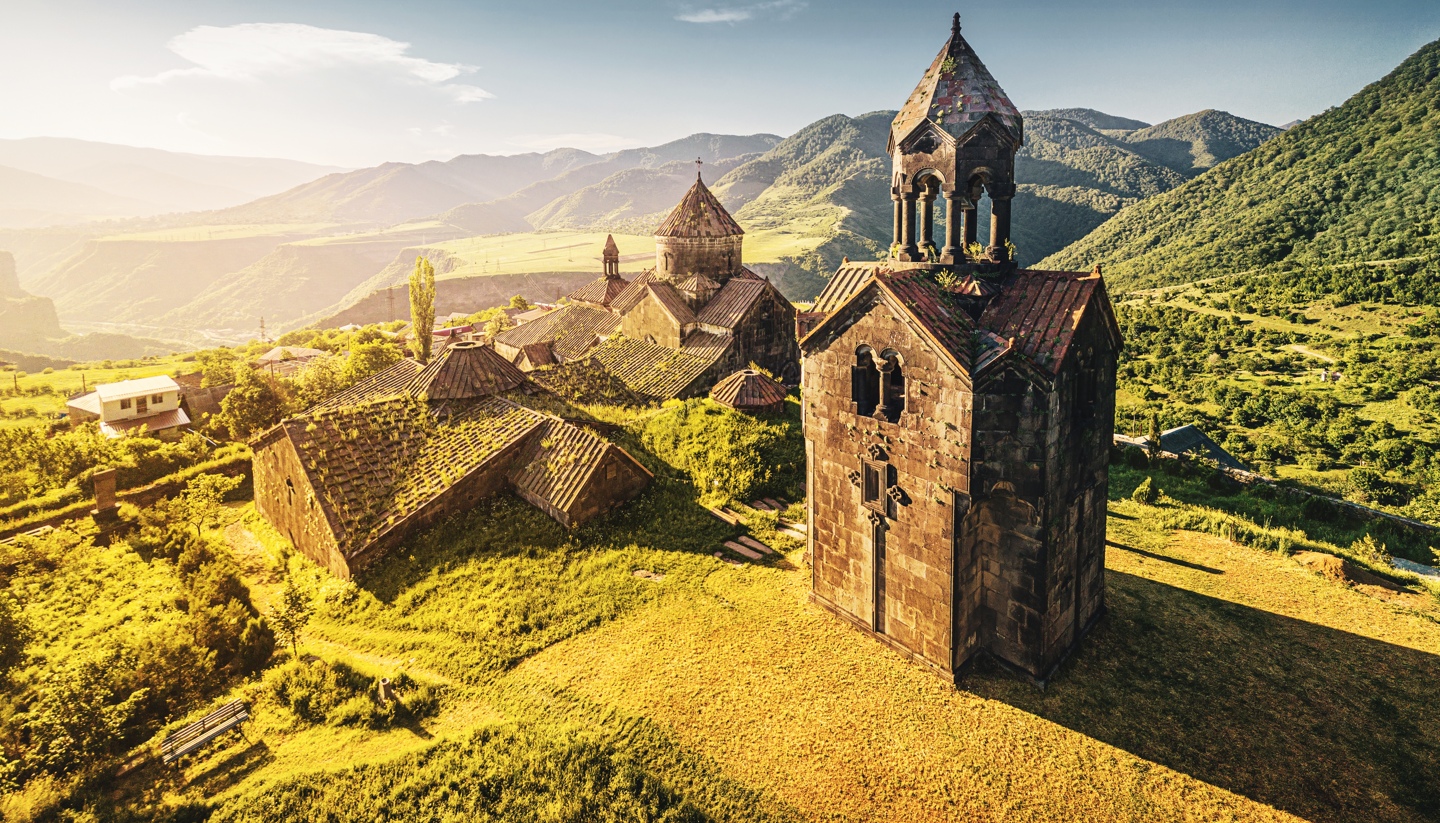
In 301 AD, Armenia became the first country in the world to adopt Christianity as a state religion — a defining moment that shaped its architecture, culture and identity. Monasteries and churches were built across the highlands, many of which still stand today. Over the centuries, Armenia was ruled or influenced by Persian, Byzantine, Arab, Seljuk, Mongol and Ottoman powers, yet it retained a distinct language, alphabet and religious tradition.
The creation of the Armenian alphabet in the 5th century by Mesrop Mashtots was a turning point in preserving national culture. It enabled the translation of religious texts and the development of a rich literary tradition that strengthened Armenian identity during long periods of foreign domination.
The 20th century brought immense upheaval. The Armenian Genocide of 1915 remains a central and painful chapter in the nation's collective memory. Following a brief period of independence, Armenia became part of the Soviet Union in 1920 and remained so until gaining independence in 1991. Since then, the country has navigated economic transition, regional conflict and political reform while maintaining a strong sense of historical continuity.
Did you know?
• In ancient times, the Armenian Kingdom under Tigranes the Great briefly stretched from the Mediterranean to the Caspian Sea, making it one of the most powerful states in the region during the 1st century BC.
• In 2011, archaeologists uncovered what is widely considered the world's oldest known winery, dating back over 6,000 years, in the Areni-1 cave complex in southern Armenia.
• The Armenian alphabet consists of 39 letters and was created in 405 AD. It remains in use today and is regarded as one of the pillars of Armenian cultural survival.
Armenia Culture
Religion in Armenia
Armenian Apostolic Christian (approximately 92–95%), Other Christian (including Catholic and Protestant, around 2–3%), Yezidi (around 1–2%), Other or unaffiliated (less than 2%).
The Armenian Apostolic Church is the national church and plays a central role in cultural and historical identity.
Social Conventions in Armenia
Armenian society places importance on respect, family and tradition. Greetings are usually warm but polite; a handshake is common when meeting someone for the first time. Among friends and relatives, greetings may be more informal. It is customary to address people using titles and surnames in more formal settings.
Dress standards are generally relaxed in Yerevan, though modest attire is appropriate when visiting churches and monasteries. When entering places of worship, visitors should dress respectfully and avoid loud behaviour.
Photography inside churches is usually permitted, but flash photography may be discouraged and it is courteous to check before taking pictures during services.
Tipping is appreciated but not strictly obligatory. In restaurants, a service charge of around 10% is sometimes included in the bill; if not, leaving around 10% for good service is customary. In cafés, rounding up the bill is common. Taxi drivers do not usually expect tips, though rounding up the fare is considered polite.
Hospitality is highly valued, and guests may be offered food or drink when visiting a home. Accepting at least a small portion is considered courteous. Conversations can be animated and expressive, but public displays of affection are generally modest.
Language in Armenia
The official language of Armenia is Armenian, an independent branch of the Indo-European language family with its own unique alphabet. The Armenian script, created in 405 AD, consists of 39 letters and remains central to national identity.
There are two main forms of Armenian: Eastern Armenian, which is spoken in Armenia, and Western Armenian, used primarily within the diaspora. Visitors will encounter Eastern Armenian throughout the country.
Russian is widely spoken, particularly among older generations, and remains commonly used in business and education. English is increasingly spoken in Yerevan, especially among younger people and those working in tourism, hospitality and the technology sector. Outside the capital, English proficiency may be more limited.