
Egypt travel guide
About Egypt
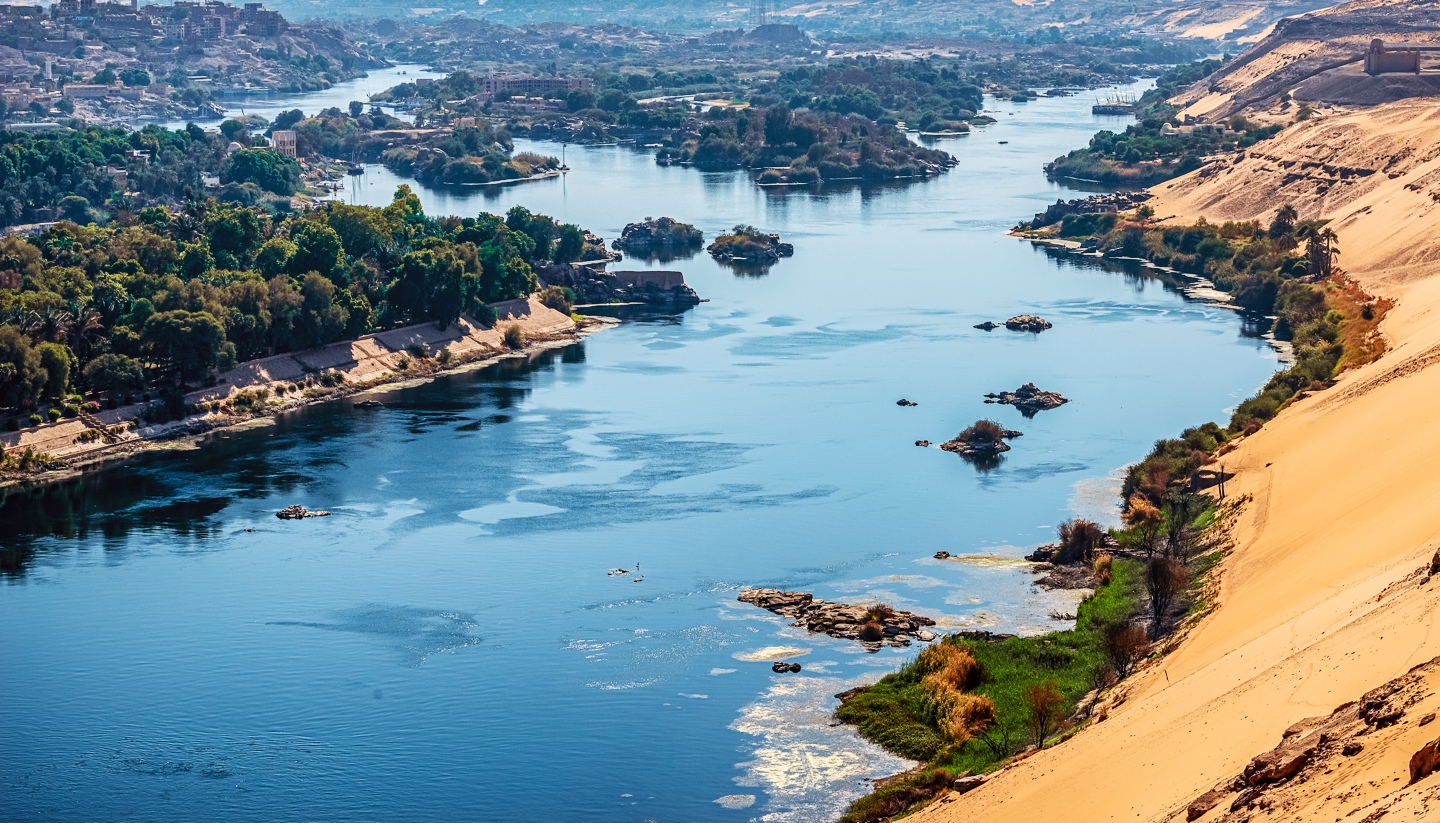
Egypt, officially the Arab Republic of Egypt, is a country where history feels less like a subject and more like a companion. Stretching from the Mediterranean coast to the edge of the Sahara, Egypt is shaped by the Nile River, whose steady flow has sustained civilisation here for more than five millennia. Few destinations offer such a continuous human story, where ancient temples, medieval mosques and modern city life exist side by side.
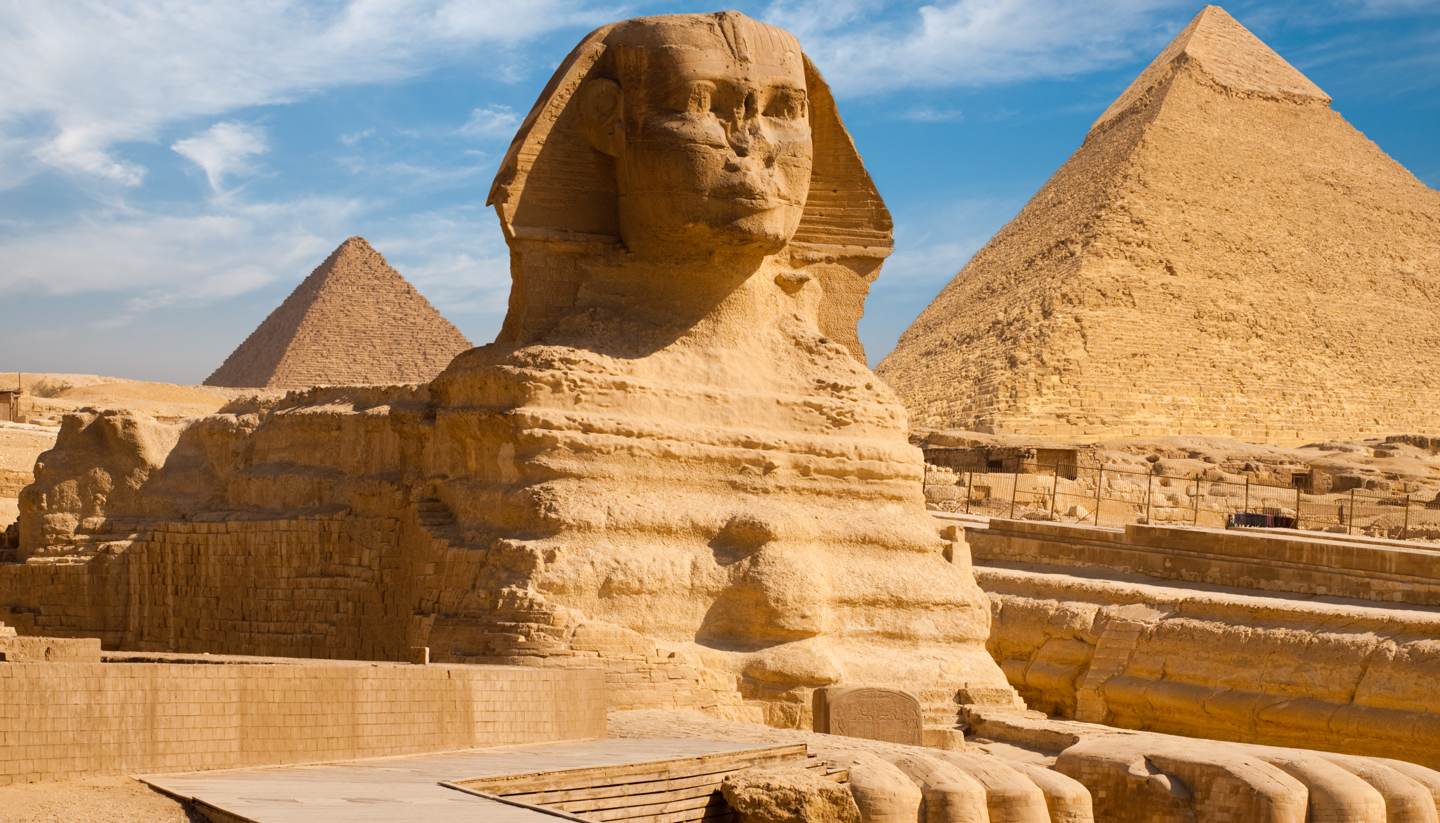
Cairo, the capital, is a city of immense scale and energy, where traffic, call to prayer and daily life unfold against the backdrop of some of the world's most famous monuments. Just beyond the city rise the Pyramids of Giza, reminders of a time when Egypt stood at the centre of the ancient world. Further south, the Nile Valley reveals a procession of temples, tombs and river towns, culminating in Aswan, where Egypt slows and the river widens into a landscape of islands and granite outcrops.
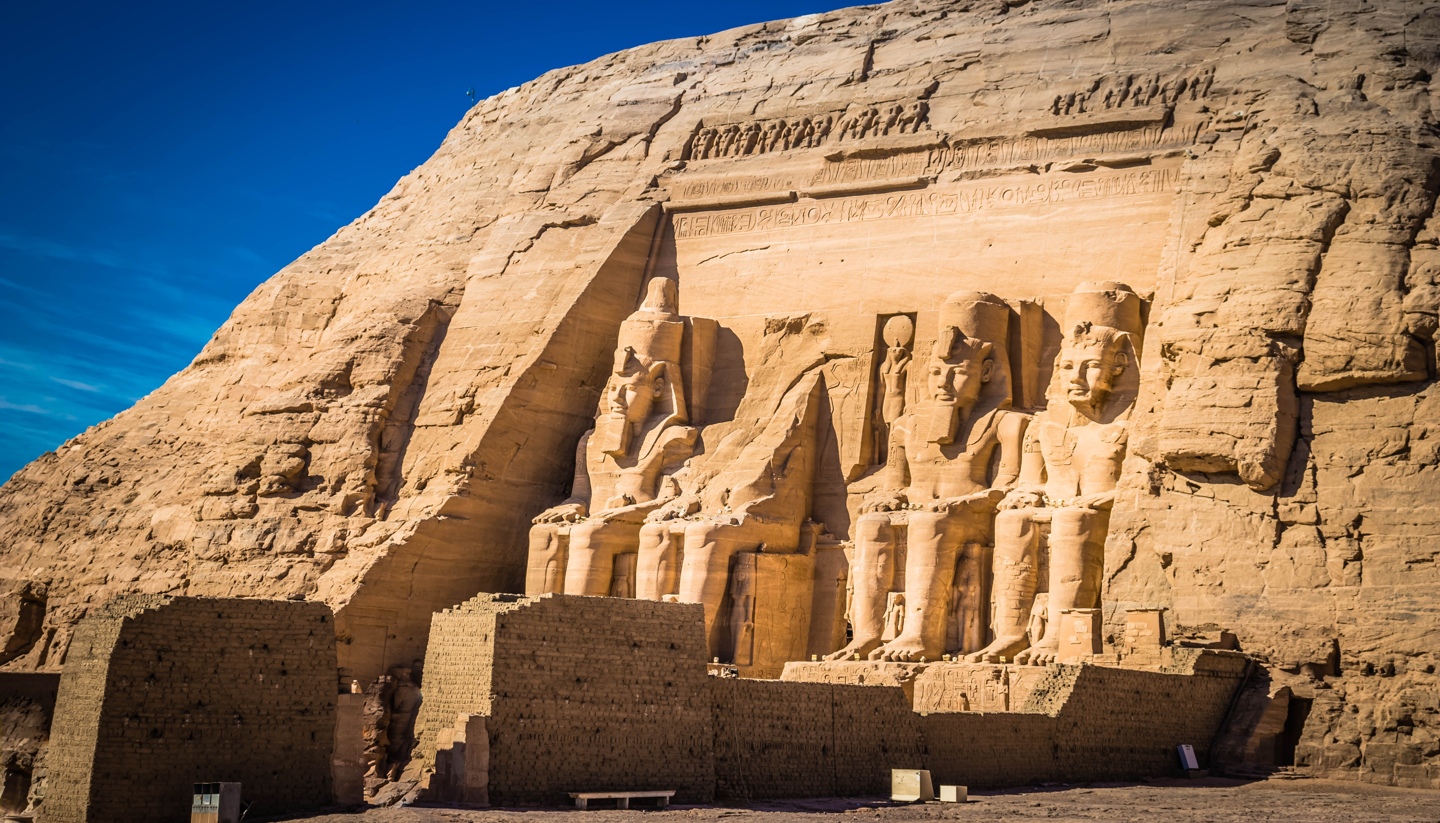
Beyond its antiquities, Egypt offers striking contrasts. The Red Sea coast is known for coral reefs and clear waters, the Western Desert for vast oases and silence, and Alexandria for its Mediterranean character and layered history. Whether exploring tombs in Luxor, sipping tea on a felucca or diving offshore reefs, Egypt delivers experiences that feel both monumental and deeply human.
Travel here rewards curiosity and patience. Distances can be long, bureaucracy occasionally slow, and daily life noisy and chaotic. Yet Egypt's warmth, humour and sense of continuity leave a strong impression. This is not a country you simply visit; it is one you absorb.
Key facts
1,001,450 sq km (386,662 sq miles).
116.5 million (2024).
119 per sq km.
Cairo.
Democratic Republic.
President Abdel Fattah al-Sisi since 2014.
Prime Minister Mostafa Madbouli since June 2018.
Travel Advice
Your travel insurance could be invalidated if you travel against advice from the Foreign, Commonwealth & Development Office (FCDO).
Areas where FCDO advises against travel
Egypt-Libya border
FCDO advises against all travel to within 20km of the Egypt-Libya border, except for the town of El Salloum, where we advise against all but essential travel.
North Sinai
FCDO advises against all travel to the North Sinai Governorate.
Northern part of South Sinai
FCDO advises against all but essential travel to the northern part of the South Sinai Governorate, beyond the St Catherine-Nuweibaa road, except for the coastal areas along the west and east of the peninsula.
Eastern part of Ismailiyah Governorate
FCDO advises against all but essential travel to the Ismailiyah Governorate east of the Suez Canal.
Western Desert
FCDO advises against all but essential travel to the area west of the Nile Valley and Nile Delta regions, except for:
- Luxor, Qina, Aswan, Abu Simbel and the Valley of the Kings
- the Faiyum Governorate
- the coastal areas between the Nile Delta and Marsa Matruh
- the Marsa Matruh-Siwa road
- the oasis town of Siwa
- the Giza Governorate north-east of the Bahariya Oasis
- the White Desert and Black Desert
- the oasis towns of Bahariya, Farafra, Dakhla (Mut) and Kharga
- the following roads and the desert area between them and the Nile valley:
- the road between Giza and Farafra and within 50km either side of this road (but FCDO advises against all but essential travel on the road between Bahariya and Siwa)
- the road between Farafra, Dakhla (Mut) and Kharga
- the road between Kharga and Baris
- the road between Baris and Luxor
Hala’ib Triangle and Bir Tawil Trapezoid
FCDO advises against all but essential travel to the Hala’ib Triangle and the Bir Tawil Trapezoid.
Find out more about why FCDO advises against travel.
Regional tensions
The US and Iran announced a memorandum of understanding (MOU) on 17 June in relation to the conflict in the Middle East, however the situation in the region remains unpredictable. Before the ceasefire, the Iranian regime had stated its intention to target locations associated with the US and Israel, including organisations, businesses, facilities, and institutions.
Since 8 July there have been strikes and retaliatory attacks in a number of locations across the region against US military and civilian infrastructure. There is a risk of more attacks and unforeseen escalation in the region. On 29 July, an apparent drone strike and fire caused damage to two ships moored off Damietta, in northern Egypt.
Conflict in Israel and Palestine
International borders in Israel and Palestine could close at short notice, including the Taba border crossing between Israel and Egypt. Check with local authorities and read Israel travel advice and Palestine travel advice before trying to cross.
Entering Egypt from Gaza
The Rafah border crossing is currently closed. When re-opened, Israel, Egypt and the authorities in Gaza may determine procedures for who is permitted to cross and when.
If you are a British national in Gaza who wants to leave Gaza, see Israel travel advice and Palestine travel advice.
Concern for friends and family
If you are concerned about friends or family, or need support from the UK government, call the British Embassy in Cairo.
Telephone: + 20 (0)2 2791 6000
If you have technical difficulties using this number, call +44 1767 667 600 (UK number).
Before you travel
No travel can be guaranteed safe. Read all the advice in this guide. You may also find it helpful to:
- see general advice for women travellers
- read our guide on disability and travel abroad
- see general advice for LGBT+ travellers
- read about safety for solo and independent travel
- see advice on volunteering and adventure travel abroad
Travel insurance
If you choose to travel, research your destinations and get appropriate travel insurance. Insurance should cover your itinerary, planned activities and expenses in an emergency.
About FCDO travel advice
FCDO provides advice about risks of travel to help you make informed decisions. Find out more about FCDO travel advice.
Get travel advice updates
Sign up to get email notifications when this travel advice is updated.
Follow FCDO:
This information is for people travelling on a full ‘British citizen’ passport from the UK. It is based on the UK government’s understanding of Egypt’s current rules for the most common types of travel.
The authorities in Egypt set and enforce entry rules. If you’re not sure how these requirements apply to you, contact the Egyptian Consulate General in the UK.
Passport validity requirements
To enter Egypt, your passport must have an ‘expiry date’ at least 6 months after the date you arrive and have at least one blank page.
Check with your travel provider that your passport and other travel documents meet requirements. Renew your passport if you need to.
You will be denied entry if you do not have a valid travel document.
Dual nationals
When returning to the UK, British citizens must carry a valid British passport or certificate of entitlement. See Dual citizenship.
Visa requirements
British passport holders travelling to Egypt normally need a visa.
If you are arriving by air to Sharm El-Sheikh and staying for less than 15 days at resorts in Sharm El Sheikh, Dahab, Nuweiba or Taba, you do not need a visa. You will get a free entry permission stamp on arrival at Sharm El-Sheikh Airport. If you plan to travel outside the resorts or stay more than 15 days, you must get a visa. You can get a visa at Sharm El-Sheikh Airport or online.
If you arrive in South Sinai by land through the Taba Border Crossing, see ‘Entering Egypt from Israel’.
Applying for a visa
You can apply for a visa:
- online – getting an e-visa in advance can help to prevent delays, tourist e-visas are valid for up to 3 months
- in person or by post – apply through the Egyptian Consulate General in the UK
- on arrival in Egypt – approved airports have kiosks before you reach the immigration counters where you can buy a physical visa for 30 US dollars (cash only). Visas on arrival are valid for up to 30 days.
Starting from 1 August 2026, travellers arriving at Cairo International Airport can also purchase digital visas on arrival (card payment only) via self-service machines or the Visa on Arrival portal for 36 US dollars, including a 6 US dollar digital service fee.
British passport holders from British Overseas Territories and Crown Dependencies cannot apply online.
Visa extensions
You can apply for a visa extension at the Egyptian Passport and Immigration Offices. If you try to leave Egypt on an expired visa, you may face difficulties, including a fine if your visa has expired by more than 14 days. Contact the Egyptian Consulate General in the UK for more information.
Visa agents in airports
You do not need to buy a visa from an agent. Agents often charge more than the required 30 US dollars. If an agent harasses you, report the incident to the tourist police in the airport terminal.
Gender expression
You may be denied entry if your gender expression or physical appearance does not match the sex marker in your passport or your passport photograph. See general advice for LGBT+ travellers
Entering Egypt from Israel
If you plan to cross the border from Israel into Egypt at Taba, we recommend you bring at least 170 US dollars (cash) per person, with some extra US dollars in cash to cover any further expenses. Since early March 2026, border crossing charges at Taba have been subject to increases at short notice.
-
If staying in Taba, travellers will need to pay a border tax of 20 US dollars. The border tax allows you to obtain an entry permission stamp for a stay of up to 15 days
-
If travelling further than Taba, including to Sharm El-Sheikh, but remaining within the Sinai Peninsula, travellers will need to pay a border tax of 120 US dollars. The border tax allows you to obtain an entry permission stamp for a stay of up to 15 days
-
If travelling beyond the Sinai Peninsula, including to fly from airports such as Cairo and Hurghada, travellers will need to pay a border tax of 120 US dollars and purchase a standard entry visa for 30 US dollars. At Taba, this entry visa also requires a “letter of guarantee”, provided by travel agents and costing around 20 US dollars. Both the visa and the “letter of guarantee” can be purchased at the Border Crossing
If travelling by car through the Taba Border Crossing, you may also be required to pay 100 US dollars, with additional charges for parking.
Please note that ATMs at the Taba Border Crossing are unreliable and frequently run out of cash. Travellers should obtain US dollars before travelling or in Eilat before arriving at the Crossing as all payments are required in cash.
Border officials may ask travellers to remove hats, coats or other items of clothing, including religious clothing, as they pass through the Taba Border Crossing terminal.
Entering Egypt from Jordan
Ferry services operate between Aqaba, Jordan and Taba Heights and Nuweiba in Egypt. Contact ferry operators directly for schedules and availability. Please check Travel Advice for Jordan for latest on exit requirements.
If your stay in Sinai will exceed 15 days, or you are planning to travel in Egypt beyond the Sinai Peninsula, including to fly from mainland airports, for example Cairo or Hurghada, you will need an entry visa. If entering at Taba Heights, this costs 35 US dollars. If entering at Nuweiba, this costs 30 US dollars. Visas can be purchased at the port terminals. Travellers should obtain USD in cash before travelling given payments are often required in cash.
Entering Egypt from Sudan
The situation at the Egypt-Sudan border remains unclear. There are 2 main land border crossings, Qustul and Argeen. There is almost no infrastructure at these crossings, and it is no longer possible to obtain a visa on arrival at these locations. The Egyptian consulate is based in Wadi Halfa, 30km from the border, applications for Egyptian visas can be made here, but visa approvals can take upwards of 6 months.
The British Embassy in Cairo does not have staff at the border and our ability to provide assistance is very limited. Travel in and from Sudan is at your own risk. See Sudan travel advice.
If you are a British national and have crossed into Egypt from Sudan without valid documents, contact the British Embassy in Cairo for support.
Vaccine requirements
To enter Egypt, you must have a certificate to prove you’ve had a yellow fever vaccination if you’re coming from a country listed as a transmission risk.
For full details about medical entry requirements and recommended vaccinations, see TravelHealthPro’s Egypt guide.
HIV test for work permits
You will need to show HIV test results to apply for a work permit.
Customs rules
There are strict rules about goods you can take into or out of Egypt. You must declare anything that may be prohibited or subject to tax or duty. Contact the Egyptian Consulate General in the UK for more information about customs rules.
Taking money into or out of Egypt
You can bring up to 5,000 Egyptian pounds into or out of Egypt.
You must declare foreign currency worth more than 10,000 US dollars on arrival – there is no limit to the amount of foreign currency you can bring.
Electronic and communication devices
You should declare high value electronic devices and recording equipment when you arrive. Officials are likely to confiscate satellite phones or radio communications equipment unless you have prior clearance from the Ministry of Telecommunications.
Approximately one million British people travel to Egypt each year. Most visits are trouble-free. This guide also has safety advice for regions of Egypt.
Terrorism
There is a high threat of terrorist attack globally affecting UK interests and British nationals, including from groups and individuals who view the UK and British nationals as targets. Stay aware of your surroundings at all times.
UK Counter Terrorism Policing has information and advice on staying safe and what to do in the event of a terrorist attack. Find out how to reduce your risk from terrorism while abroad.
Terrorism in Egypt
Terrorists are likely to try to carry out attacks in Egypt.
Terrorist attacks could be indiscriminate including in places visited by foreign nationals. Stay aware of your surroundings, keep up to date with local media reports and follow the advice of local authorities. Be vigilant in crowds and large gatherings.
Targets might include:
- Egyptian security forces
- religious sites
- large public gatherings
- places visited by foreign nationals
The authorities in Egypt have a significant security presence across the country. Extra measures are in place at tourist sites.
Examples of recent attacks include:
-
In 2024, one Israeli-Canadian national was killed in a shooting attack in Alexandria
-
In 2023, 2 Israeli tourists and an Egyptian tour guide were killed in a shooting attack in Alexandria
-
In 2022, 4 police officers and one insurgent killed in an attack on a police checkpoint in Ismailiya City
Political situation
The political environment in Egypt is restrictive. Avoid large gatherings, demonstrations and protests as the situation could change quickly and without warning. Security forces have responded forcefully to protests and disturbances.
Foreign nationals involved in any political activity or activities critical of the government may be at risk of detention. This includes posting negative comments on social media.
Crime
The crime rate is generally low, but visitors should take sensible precautions as they would in the UK.
To report a crime, phone the tourist police on 126. If you do not report a crime before you leave Egypt, it will be difficult to prosecute later.
Sexual assault and harassment
A number of sexual assaults have been reported to the British Embassy, including cases involving minors.
The majority of cases that have been reported took place in tourist resorts in the Red Sea region, often committed by someone the victim had already met, including hotel workers and excursion staff. There have also been reports of hotel staff discouraging incidents being reported to local police.
Female travellers should exercise caution when travelling alone, particularly at night, in taxis.
Take extra precautions:
-
do not leave children unaccompanied
-
do not allow hotel staff to enter your room when you are alone – try to ensure a friend or relative is present
-
avoid travelling in a taxi alone – if this is not possible, apply extra security by sharing the details of your driver, trip and live location with a friend
-
use reputable providers for any services and excursions, and carry out research beforehand
-
avoid sharing personal contact or social media details
Protecting your belongings
Pickpocketing is rare in Egypt. Take the same precautions as you would in the UK.
It might be helpful to make photocopies of your passport, visa and flight ticket to keep separately from originals when travelling. If your passport is lost or stolen, tell the police immediately and get a police report. You will need a police report to get visa stamps transferred to your replacement passport.
Scammers and touts at tourist sites
Be cautious in tourist areas, where scammers and touts sometimes target foreign nationals.
Laws and cultural differences
Egypt is predominantly an Islamic country. Take care to respect local traditions, customs, laws and religions. Seek to avoid offence, especially during Ramadan or when you visit religious areas.
Religion
It is illegal to encourage people to convert to Christianity or any other religion.
Ramadan
Ramadan is a holy month for Muslims. The dates vary by year and country and you should check this before you travel. During this time, it is culturally insensitive to eat, drink or smoke in public during daylight hours. It is advisable not to play loud music, dance or swear in public.
Get more advice when you arrive from your tour guide, hotel or business contacts.
You should also:
-
check opening hours of shops and restaurants
-
be aware that if hotels and restaurants are providing food or drink in fasting hours, they may separate non-fasting guests, for example with screens
-
follow local dress codes – clothing that does not meet local dress codes may cause more offence at this time
-
be aware that driving may be erratic, particularly when people are trying to get home at dusk
-
be patient and show tolerance
Personal ID
Police check ID regularly and will ask to see your passport. They may detain you if you cannot show your ID and your visa (or a digital/paper copy).
Dress code
Dress modestly, especially in rural areas, mosques and souqs (markets).
Behaviour in public
Couples showing physical affection in public is frowned upon. Holding hands is generally fine. Behaviour accepted in tourist resort areas may not be accepted elsewhere.
Alcohol laws
Drinking alcohol anywhere other than licensed restaurants, bars, or private homes or certain tourist resorts is illegal and can lead to arrest.
Illegal drugs penalties
Possession, use or trafficking of illegal drugs is a serious offence and can, even for small amounts, lead to life imprisonment or the death penalty. People who get a life sentence on drugs charges normally spend the rest of their lives in prison with no chance of parole or a pardon.
Khat is illegal in Egypt.
Photography and filming restrictions
You must get a permit to enter Egypt with professional photography or film equipment. This includes photography umbrellas, artificial outdoor lighting gear and any equipment that occupies or blocks public roads.
It is illegal to take or share photos that could be considered damaging to the country’s image.
Ministry of Tourism regulations on photography say that you must get an Egyptian citizen’s written permission before you take their photo. Taking pictures of children is prohibited. Do not photograph officials without their consent.
It is illegal to take photos of, or near, military property. This includes the Suez Canal.
If you are in any doubt, get permission before taking photos. There are sensitivities about taking photographs of:
- embassies
- government buildings and infrastructure
- religious buildings
Drones
It is illegal to use radio-controlled helicopters or drones to take photos near sensitive sites.
Do not import, use or produce drones in Egypt unless the Egyptian Ministry of Defence gives you permission beforehand. Anyone who uses or imports drones without permission could get a prison sentence of up to 7 years or a fine of 5,000 to 50,000 Egyptian pounds.
LGBT+ travellers
Same-sex sexual activity is not explicitly criminalised in Egypt. However, the Egyptian authorities have prosecuted LGBT+ people under ‘debauchery’ laws, including people flying rainbow flags at public events.
There is little public acceptance of same-sex relationships in Egypt. Same-sex couples showing affection in public are likely to receive negative attention.
Be cautious about sharing content or having discussions of a sexual nature on social media, especially about sexual acts that are considered illegal. Some travellers have been arrested and imprisoned for this.
You may be denied entry if your gender expression or physical appearance does not match the sex marker in your passport or your passport photograph.
Read more advice for LGBT+ travellers.
Child custody law
Egyptian family law is very different from UK law, particularly around child custody. See International parental child abduction for information and how to get assistance.
Outdoor activities and adventure tourism
Insurance for adventure activities
Make sure your travel insurance, or the tour or dive company, will cover the costs for any air or sea rescue, which can cost more than 4,000 US dollars per hour. The Egyptian authorities will only start rescue operations when they are guaranteed payment. Book excursions for activities at your resort or through approved agents or tour operators.
See Foreign travel insurance for more information.
Hot air balloons
Speak to your tour company before booking a hot air balloon flight. Some UK tour operators have stopped selling balloon flights because they have not been able to verify safety standards.
Watersports and cruises
There have been recent incidents involving British nationals on diving boats/tours in the Red Sea. Some of these have included fatalities. Safety standards of Red Sea resort diving operators and boats vary considerably. Some operators may not provide adequate safety and insurance standards.
The Marine Accident Investigation Branch (an independent investigative unit within the Department for Transport) published guidance about liveaboard vessels on their website in February 2025. They recommend that prospective customers book liveaboard dive holidays only through reputable vendors who can provide assurance about the safety standards applicable to the dive boat. On arrival on board, customers should request that the crew provide a thorough safety briefing before departure.
You should:
- observe safety standards on board and exercise caution
- make bookings through your tour representative or reputable operator if possible
- not dive below your insurance policy’s depth limit – doing so will invalidate your cover
Shark attacks are rare, but there have been attacks on tourists in the Red Sea region. Monitor any updates from local authorities or your tour operator.
See watersports safety advice from the Royal Society for the Prevention of Accidents (ROSPA).
Quad bikes and desert visits
There have been several serious quad bike accidents involving British nationals in resort areas. Take the same precautions as you would in the UK. Safety standards vary considerably. Always wear a crash helmet.
Transport risks
Road travel
If you are planning to drive in Egypt, see information on driving abroad.
You’ll need to have both the 1949 version of the international driving permit (IDP) and your UK driving licence with you in the car. You cannot buy an IDP outside the UK, so get one before you travel.
You can drive in Egypt using your UK licence and an IDP for up to 6 months. If you plan to stay longer, you must apply for an Egyptian driving licence.
Drivers and front seat passengers must wear seatbelts.
Driving under the influence of alcohol or drugs is a serious offence in Egypt. If you are caught, you may get a fine and possible imprisonment.
You may not be allowed to import a vehicle into Egypt. If you want to bring in a vehicle temporarily, you must get a ‘carnet de passage’ from the Automobile Association.
Driving conditions
Accidents are common because of variable road conditions, dangerous driving and poor traffic law enforcement. Do not drive outside main cities and resorts at night. Make sure you have appropriate insurance.
Off-road travel
If you’re travelling off road, use a qualified guide and get a permit from the Ministry of Interior.
Rail and bus travel
Serious bus crashes in recent years have caused many deaths, including tourists.
There have also been fatal train collisions and derailments.
River and sea travel
Overcrowding and poor safety standards have caused accidents on Red Sea ferries and Nile cruises.
This section has safety advice for regions of Egypt. It only covers regions where FCDO has specific advice.
You should also read FCDO’s overall travel advice and safety and security advice.
Egypt-Libya border
FCDO advises against all travel to within 20km of the Egypt-Libya border, except for the town of El Salloum, where we advise against all but essential travel. There are active military operations targeting criminal activity in this area.
North Sinai
FCDO advises against all travel to North Sinai Governate due to continuing criminal activity and terrorist attacks on police and security forces that have resulted in deaths. See Terrorism in Egypt.
Northern part of South Sinai
FCDO advises against all but essential travel to the northern part of South Sinai Governate, beyond the St Catherine-Nuweibaa road, except for the coastal areas along the west and east of the peninsula.
We advise against all but essential travel due to criminal activity and terrorist attacks on police and security forces that have resulted in deaths. See Terrorism.
If you plan to travel in a 4-wheel-drive vehicle from mainland Egypt through the Suez crossing, you must get a permit from Travel Permits Department of the Egyptian Ministry of the Interior. You should book any activities outside of resort areas through approved agents or tour operators.
Travel to Red Sea tourist areas in the southern part of the Sinai Peninsula is generally low risk. Security forces carry out routine checks on vehicles and at airports to protect resorts such as Sharm El Sheikh, Hurghada and Marsa Alam.
Eastern part of Ismailiyah Governorate
FCDO advises against all but essential travel to the parts of the Ismailiyah Governorate which are east of the Suez Canal, due to ongoing military operations against terrorists and criminals. Egyptian authorities at checkpoints may prevent onward travel to this region. See Terrorism.
Western Desert
FCDO advises against all but essential travel to the area west of the Nile Valley and Nile Delta regions due to risks from criminal activity and military operations, except for:
- Luxor, Qina, Valley of the Kings, Aswan and Abu Simbel
- the Faiyum Governorate
- the coastal areas between the Nile Delta and Marsa Matruh
- the Marsa Matruh-Siwa road
- the oasis town of Siwa
- the Giza Governorate north-east of the Bahariya Oasis
- the White Desert and Black Desert
- the oasis towns of Bahariya, Farafra, Dakhla (Mut) and Kharga
- the following roads and the desert area between them and the Nile valley:
- the road between Giza and Farafra and within 50km either side of this road (but FCDO advises against all but essential travel on the road between Bahariya and Siwa)
- the road between Farafra, Dakhla (Mut) and Kharga
- the road between Kharga and Baris
- the road between Baris and Luxor
Tourists who enter the Western Desert areas of Bahariya Oasis, Farafra, the White Desert and Black Desert must apply for permits in advance and use an official guide. There is limited phone reception and poor medical facilities. Monitor travel advice and follow guidance from official guides and local authorities.
FCDO advises against all but essential travel on the road between Al Bawiti and Siwa, including the desert areas near the start of the road in Bahariya. The road is closed and there are military checkpoints.
If you travel to the south-west corner of Egypt near the border with Sudan or Libya, you will need a permit from the Ministry of Interior. Bandits and armed groups operate in these areas.
Be extremely cautious in all border areas.
Hala’ib Triangle and Bir Tawil Trapezoid
FCDO advises against all but essential travel to the Hala’ib Triangle and Bir Tawil Trapezoid.
The Hala’ib Triangle remains disputed territory between Egypt and Sudan. If you’re in the Hala’ib Triangle and need urgent UK government support, contact the British Embassy in Cairo.
The Bir Tawil Trapezoid is unclaimed by either Egypt or Sudan. If you’re in this area and need urgent UK government support, contact FCDO in the last country you travelled through.
Before you travel check that:
- your destination can provide the healthcare you may need
- you have appropriate travel insurance for local treatment or unexpected medical evacuation
This is particularly important if you have a health condition or are pregnant.
Emergency medical number
Call 123 and ask for an ambulance.
Contact your insurance or medical assistance company quickly if you’re referred to a medical facility for treatment.
Vaccine recommendations and health risks
At least 8 weeks before your trip:
- check the latest vaccine recommendations for Egypt
- see where to get vaccines and whether you have to pay on the NHS travel vaccinations page
See what health risks you’ll face in Egypt, including:
- dengue
- tick-borne diseases such as Crimean-Congo haemorrhagic fever
Altitude sickness is a risk in parts of Egypt. Read more about altitude sickness on TravelHealthPro.
Medication
The legal status and regulation of some medicines prescribed or bought in the UK can be different in other countries.
Read best practice when travelling with medicines on TravelHealthPro.
Some prescribed and over-the-counter medicines may be controlled substances in Egypt. You may need permission from Egypt’s Ministry of Health before you arrive. If you do not have prior permission or the required documentation, you will not be allowed to take the medication into Egypt and you may be prosecuted.
If you travel with prescription medication, carry a letter from your GP stating the:
- condition you’re being treated for
- amount of medication you will be carrying
- medication is for your personal use only
For further information, contact the Egyptian Consulate General in the UK.
Healthcare in Egypt
Some hotel doctors have overcharged for treatment and medicines. Pharmacies outside hotels will often supply medication at lower prices. FCDO has a list of medical providers in Egypt where some staff will speak English.
Access to specialised treatment for psychiatric illness is limited and may not be available outside major cities.
Travel and mental health
Read FCDO guidance on travel and mental health. There is also mental health guidance on TravelHealthPro.
The Foreign, Commonwealth & Development Office (FCDO) cannot provide tailored advice for individual trips. Read this travel advice and carry out your own research before deciding whether to travel.
Emergency services in Egypt
Ambulance: 123
Fire: 180
Police: 122
Tourist police: 126
Contact your travel provider and insurer
Contact your travel provider and your insurer if you are involved in a serious incident or emergency abroad. They will tell you if they can help and what you need to do.
Refunds and changes to travel
For refunds or changes to travel, contact your travel provider. You may also be able to make a claim through insurance. However, insurers usually require you to talk to your travel provider first.
Find out more about changing or cancelling travel plans, including:
- where to get advice if you are in a dispute with a provider
- how to access previous versions of travel advice to support a claim
Support from FCDO
FCDO has guidance on staying safe and what to do if you need help or support abroad, including:
- finding English-speaking lawyers, funeral directors and translators and interpreters in Egypt
- dealing with a death in Egypt
- being arrested in Egypt
- getting help if you’re a victim of crime
- what to do if you’re in hospital
- if you are affected by a crisis, such as a terrorist attack
Contacting FCDO
Help abroad
See how to get help from the UK government abroad including in an emergency.
Help in the UK
You can call FCDO in London if you need urgent help because something has happened to a friend or relative abroad.
Telephone: 020 7008 5000 (24 hours)
Get travel advice updates
Sign up to get email notifications when this travel advice is updated.
Follow FCDO:
Risk information for British companies
The Overseas Business Risk service offers information and advice for British companies operating in Egypt on how to manage political, economic, and business security-related risks.