
Things to see and do in Egypt
Attractions in Egypt
Abu Simbel
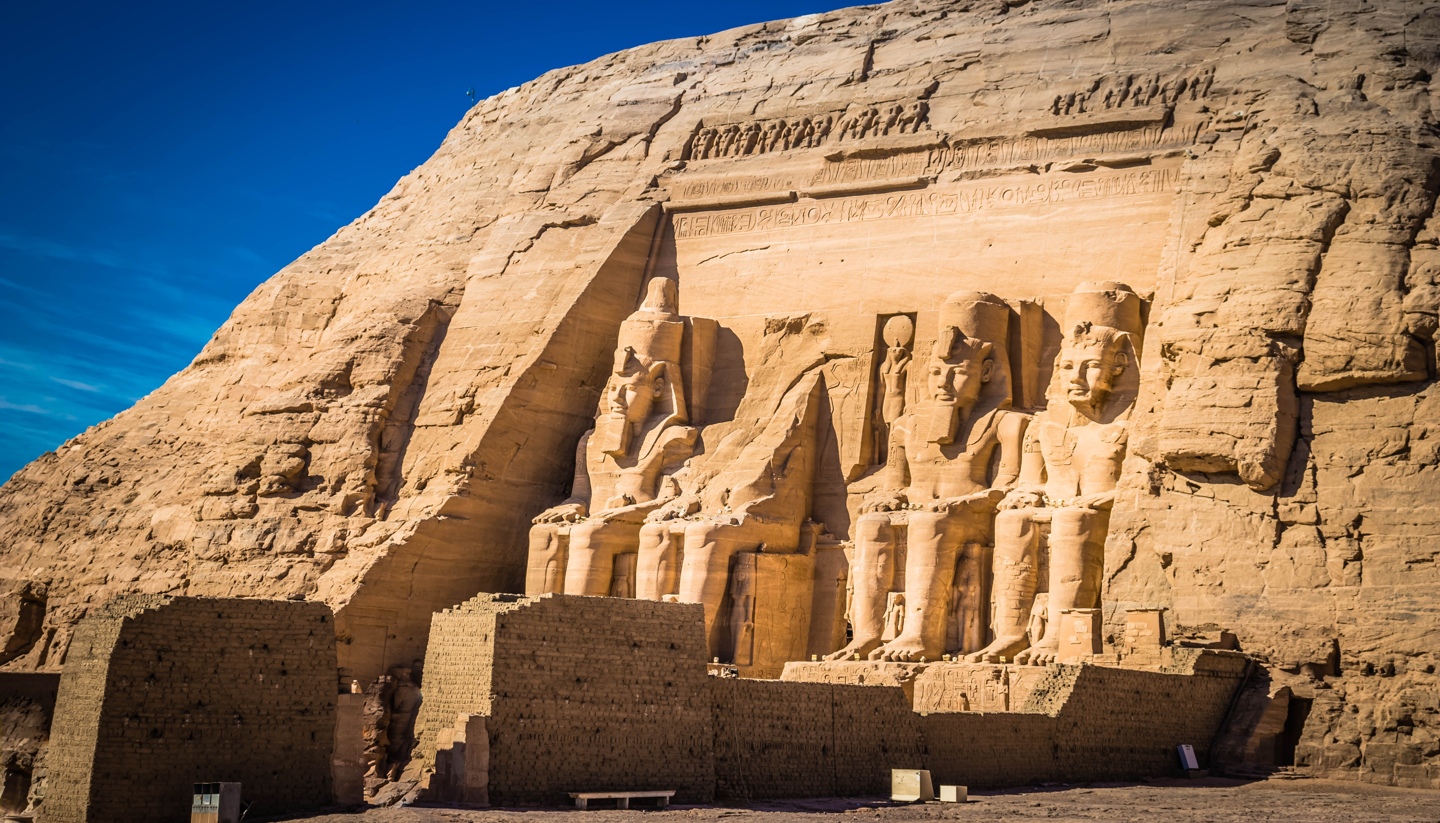
Carved directly into a sandstone cliff near the Sudanese border, Abu Simbel is among Egypt's most dramatic monuments. Built by Ramses II, the twin temples were famously relocated in the 1960s to save them from flooding caused by the Aswan High Dam. Their remote setting only heightens the sense of awe.
Alexandria
Founded by Alexander the Great, Alexandria feels distinctly Mediterranean in both climate and character. Long corniches, faded elegance and historic cafés give the city a slower rhythm than Cairo. Highlights include the modern Bibliotheca Alexandrina, Roman ruins and seaside neighbourhoods that reward unhurried exploration.
Aswan
Aswan marks a shift in both pace and atmosphere. Calmer and sunnier than Luxor, it sits among granite islands and palm-lined banks, where feluccas glide quietly across the Nile. Nubian culture, colourful villages and relaxed evenings make it one of Egypt's most appealing places to linger.
Cairo
Cairo is less a city to "see" than one to experience. From the Egyptian Museum and the Citadel to the dense lanes of Islamic Cairo, the capital layers ancient, medieval and modern Egypt in one restless sprawl. Chaotic, noisy and exhausting, it is also endlessly fascinating, especially once the rhythm of daily life begins to make sense.
Cairo (Islamic Cairo)
Islamic Cairo is a historic district within the capital. Spreading east of the city centre, the area contains one of the world's richest collections of medieval Islamic architecture, with mosques, madrasas, mausoleums and city gates dating from the Fatimid, Mamluk and Ottoman periods. Narrow lanes lead past workshops, courtyards and minarets, while landmarks such as Al-Azhar Mosque and the Khan el-Khalili bazaar anchor the district in daily life.
Karnak Temple
Karnak is less a single temple than a sprawling religious city, expanded over centuries by successive rulers. Its forest of colossal columns, towering pylons and sacred lakes reflects the wealth and power of ancient Thebes. Visiting at dusk, when light softens stone and shadows stretch across courtyards, is particularly memorable.
Luxor
Often described as the world's greatest open-air museum, Luxor concentrates an astonishing number of monuments into a compact area along the Nile. On the east bank stand vast temple complexes, while the west bank holds royal tombs carved deep into desert hills. Few places convey the ambition of ancient Egypt quite so vividly.
Nile River
The Nile is not a single attraction but the thread that ties Egypt together. Whether experienced from a cruise ship, a felucca or a riverbank café, it shapes landscapes, livelihoods and daily routines. Travelling along the Nile provides a sense of continuity that no monument alone can convey.
Pyramids of Giza
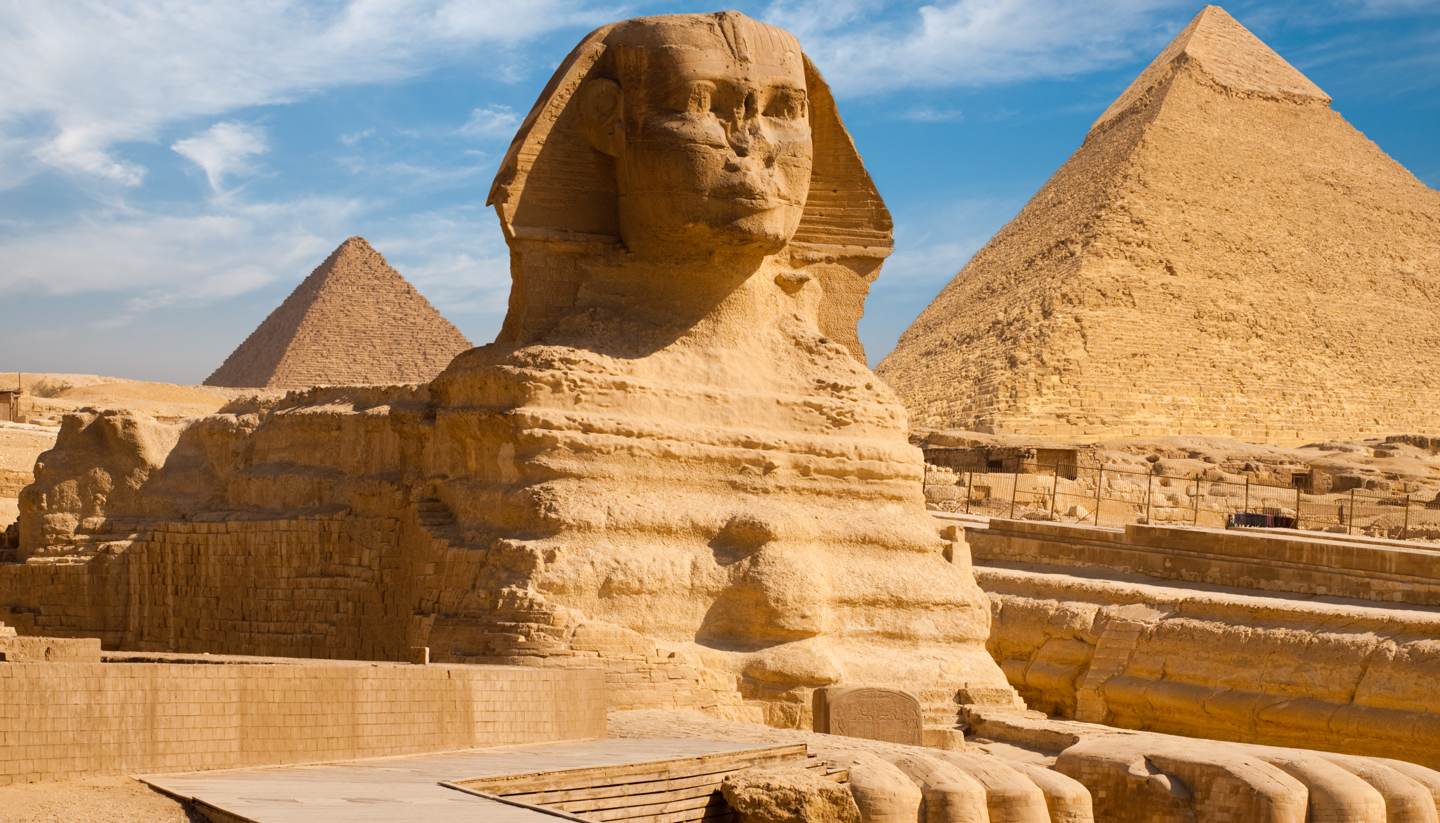
Egypt's most iconic sight needs little introduction. Rising from the desert on the edge of modern Cairo, the pyramids of Khufu, Khafre and Menkaure have dominated the skyline for more than 4,500 years. Nearby, the Great Sphinx adds an air of mystery that no amount of reading quite prepares you for. Despite crowds and camels, the sheer scale and endurance of the site remain deeply affecting.
Red Sea
Egypt's Red Sea coast is renowned for its clear waters and coral reefs. Resorts such as Hurghada and Sharm el-Sheikh serve as gateways to world-class snorkelling and diving, where colourful fish and reefs lie just offshore. Even for non-divers, the sea offers a welcome contrast to desert travel.
Siwa Oasis
Remote and culturally distinct, Siwa lies deep in the Western Desert near the Libyan border. Known for its mud-brick architecture, salt lakes and ancient oracle temple, the oasis feels far removed from the Nile Valley. It is a place of quiet landscapes, slow days and strong local identity.
Valley of the Kings
Hidden among the arid cliffs opposite Luxor, this burial ground was the final resting place of Egypt's New Kingdom pharaohs. Tombs plunge underground into chambers painted with scenes of the afterlife, their colours still remarkably intact. Some are modest, others grand, but all convey a powerful sense of belief in eternity.