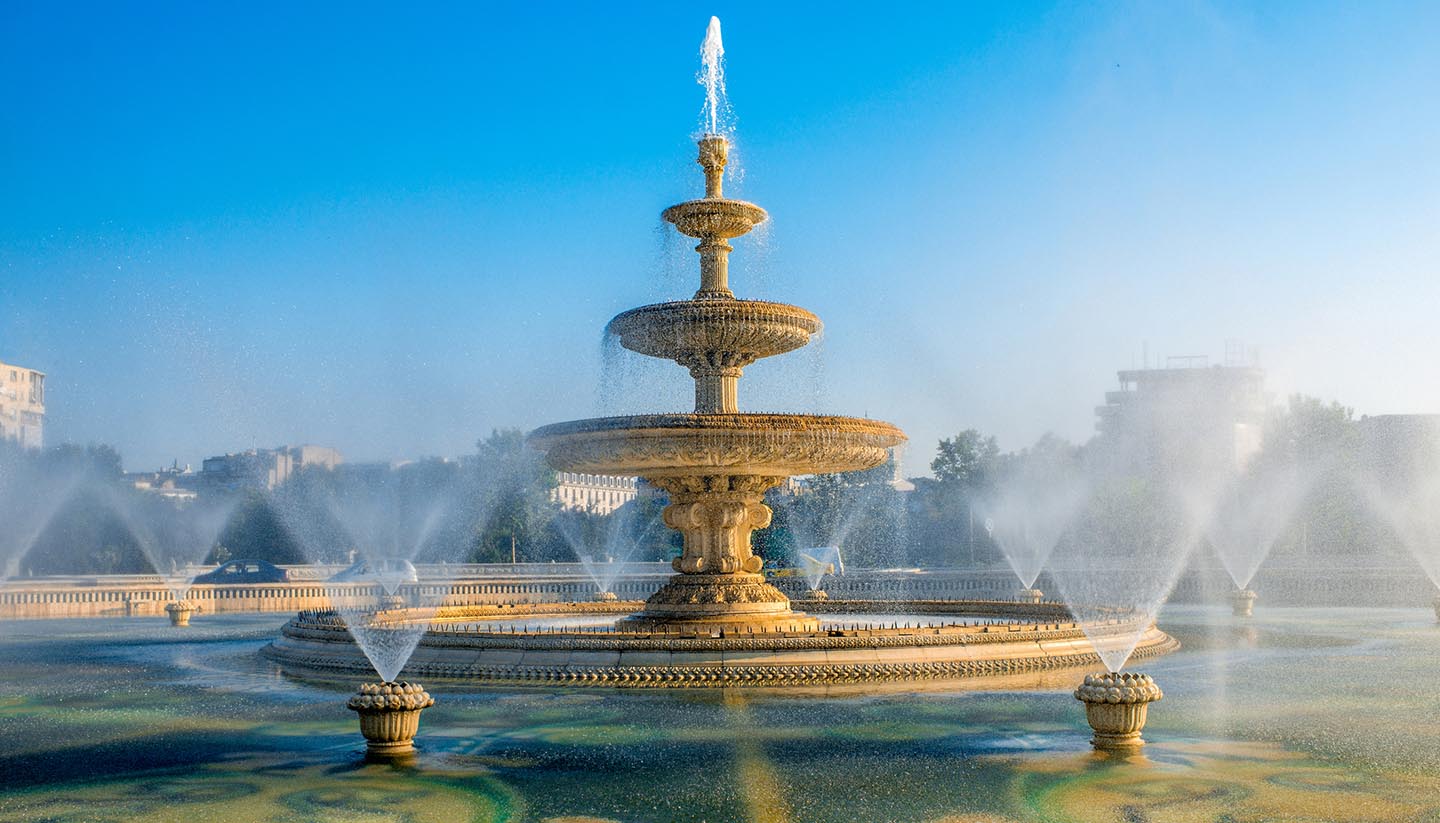

Romania travel guide
About Romania
Romania is a country of broad plains, forested mountains, medieval towns and layered histories stretching from the Roman Empire to the communist era and beyond. Situated in southeastern Europe on the western shore of the Black Sea, it combines Central European, Balkan and Eastern European influences, giving the country a distinct identity of its own. Gothic churches, Ottoman traces, Austro-Hungarian architecture and vast communist boulevards can all be found within the same journey, often against a backdrop of the Carpathian Mountains or rolling rural landscapes that still preserve traditions largely lost elsewhere in Europe.
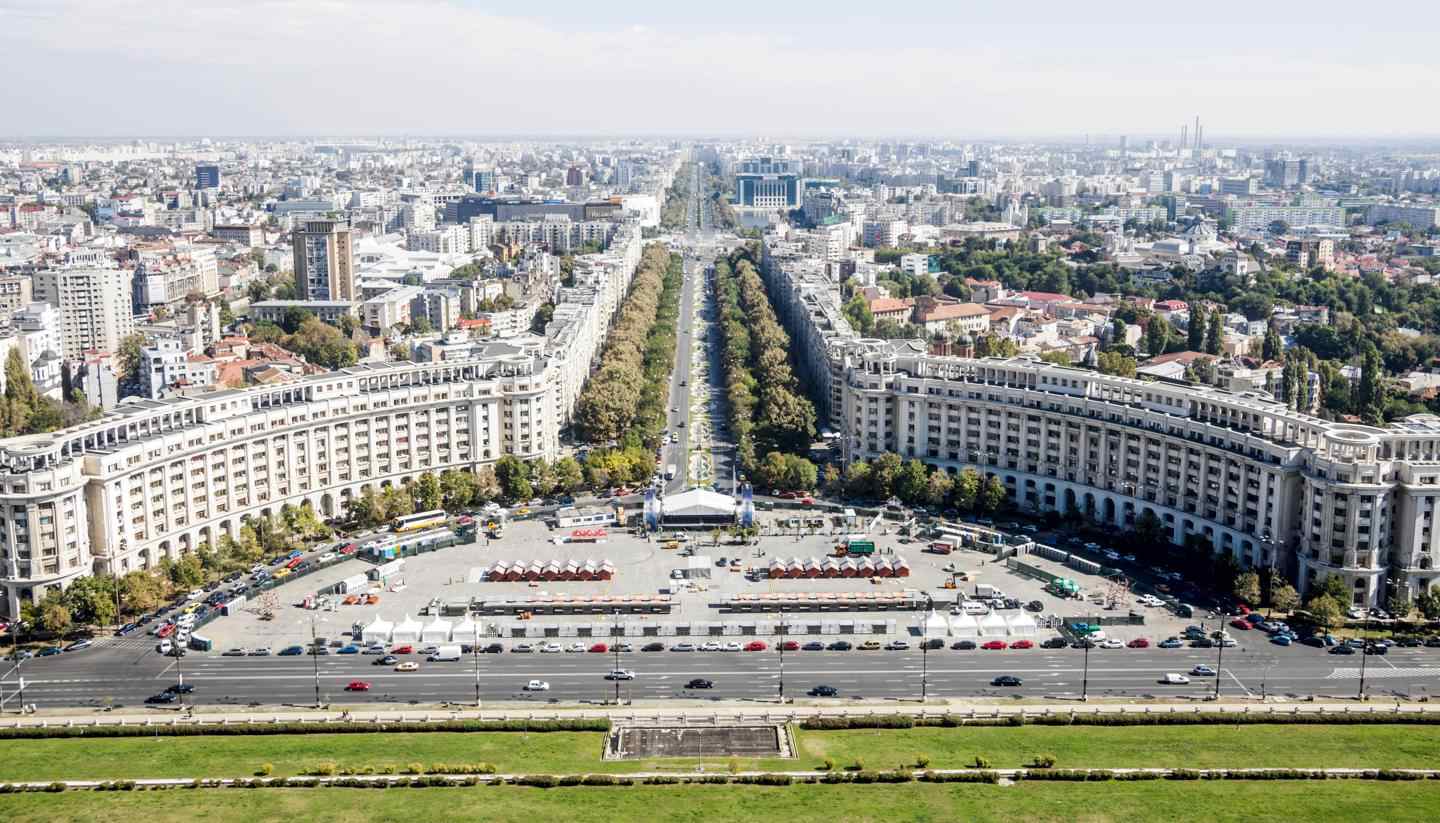
Bucharest, the capital, is one of Europe's most contrasting cities. Elegant 19th-century buildings and leafy boulevards sit beside colossal communist-era architecture, reflecting Romania's turbulent 20th-century history. The enormous Palace of the Parliament, commissioned during Nicolae Ceaușescu's dictatorship, dominates the city both physically and symbolically. Yet Bucharest is not defined solely by its past. Cafés, restaurants, galleries and nightlife have flourished in recent years, giving the city an increasingly energetic and creative atmosphere.
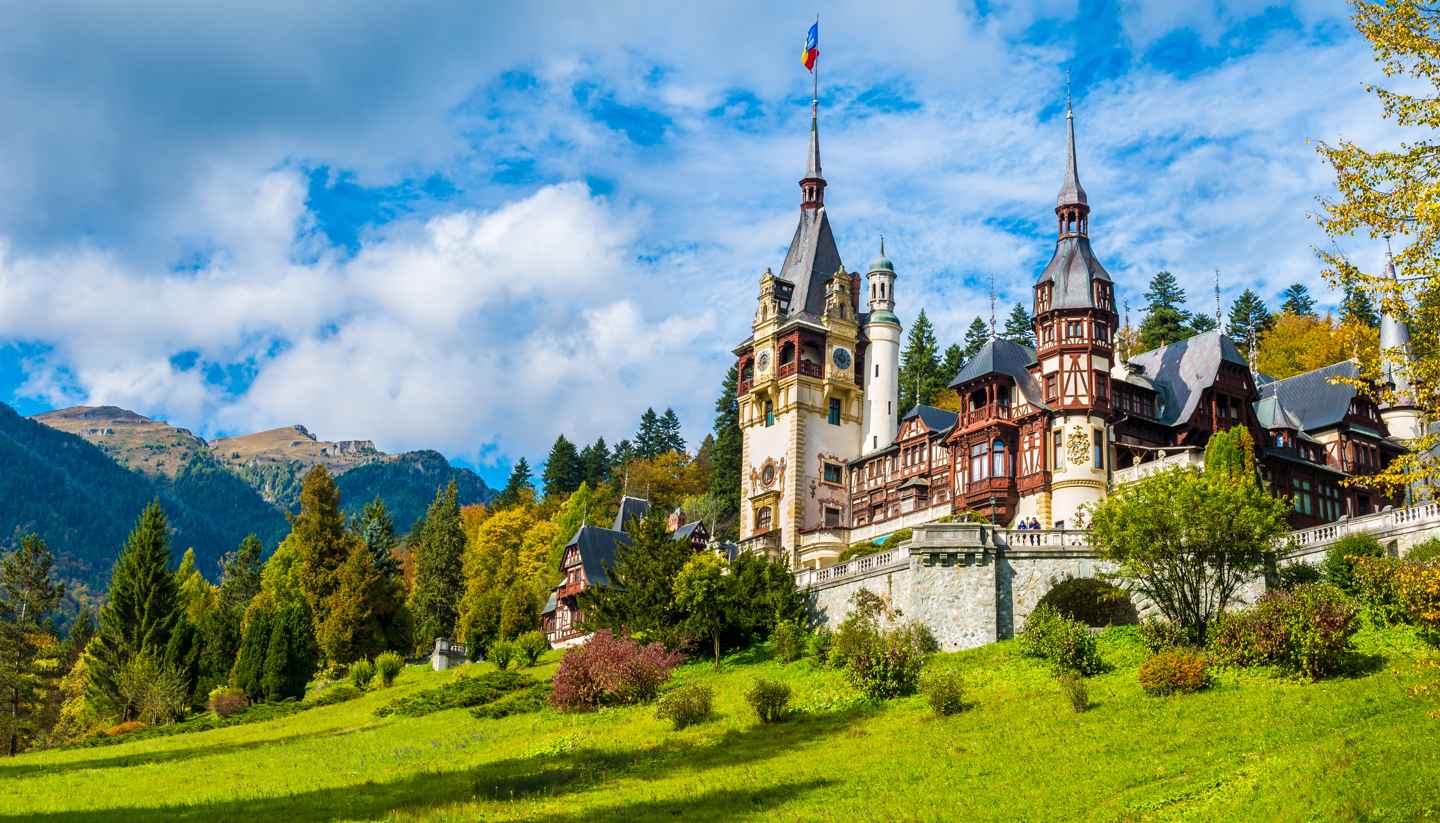
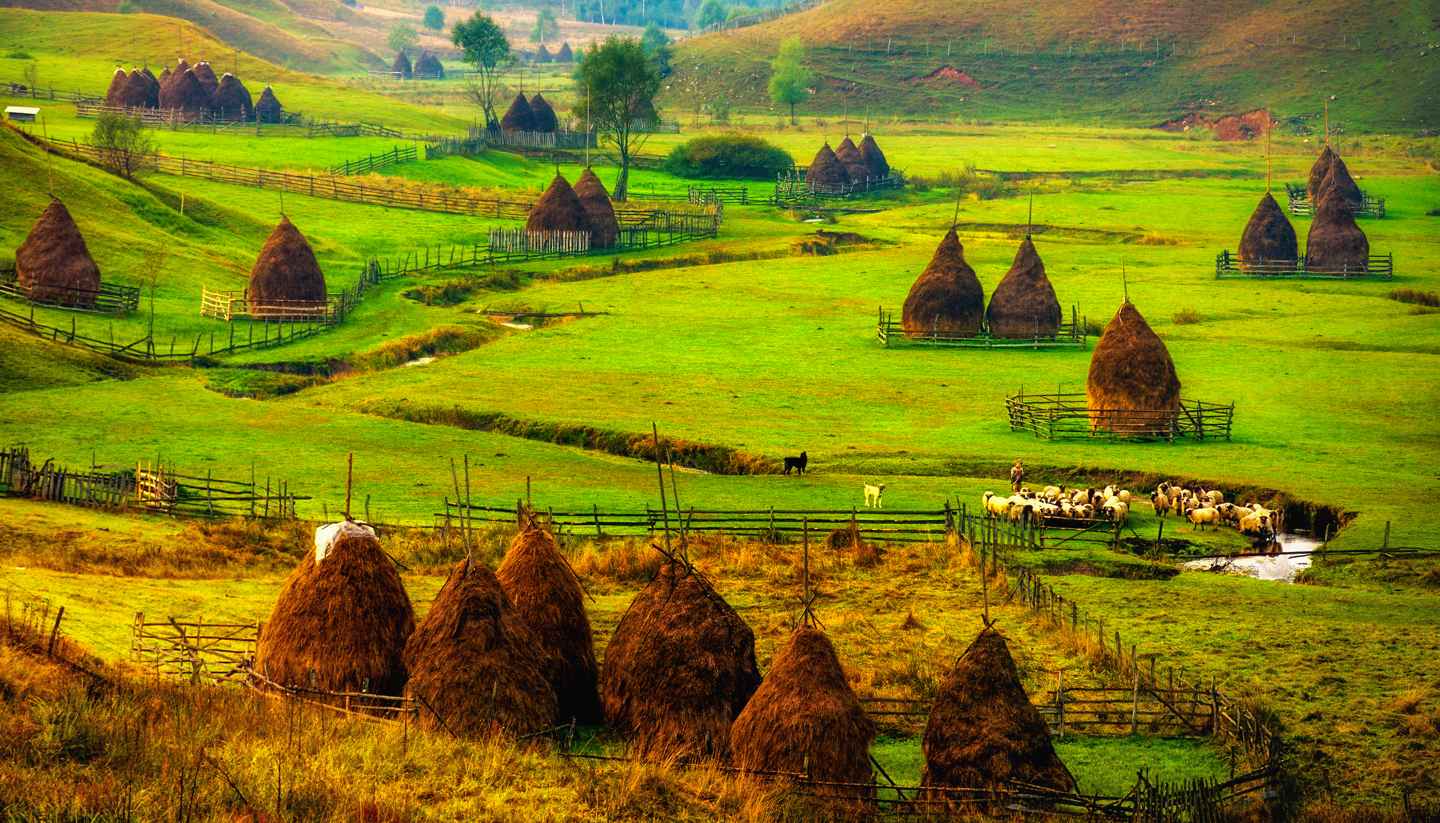
Beyond the capital, Romania's regional diversity becomes far more apparent. Transylvania, perhaps the country's best-known region internationally, is famous for its medieval towns, fortified churches and associations with Dracula folklore. Cities such as Brașov, Sibiu and Sighișoara preserve strong Saxon and Austro-Hungarian influences, while Bran Castle and the surrounding mountains attract large numbers of visitors each year. In the north, Maramureș is known for wooden churches, rural traditions and landscapes where horse carts and haystacks still form part of daily life.
The Carpathian Mountains curve through the centre of the country, creating opportunities for hiking, skiing and wildlife tourism. Romania contains some of Europe's largest remaining areas of virgin forest and significant populations of brown bears, wolves and lynx. In the southeast, the Danube Delta forms one of Europe's most important wetland ecosystems, with channels, reed beds and birdlife attracting nature enthusiasts from around the world.
Romania's history has often been shaped by larger empires and competing regional powers. The territories that now form Romania were influenced by the Romans, Ottomans, Austro-Hungarians and Russians before eventually unifying during the 19th century. Following the Second World War, Romania became a communist state under Soviet influence, culminating in the harsh dictatorship of Nicolae Ceaușescu. The violent revolution of 1989 brought an end to communist rule, and modern Romania has since become a member of both NATO and the European Union.
Food in Romania reflects the country's regional variety and rural traditions. Hearty soups, grilled meats, smoked sausages, cabbage dishes and pastries are common, while local wines and plum brandy remain important parts of social life. Hospitality is highly valued, especially in rural regions where guests are often welcomed with homemade food and drinks.
Romania remains one of Europe's more underrated destinations. Visitors often arrive expecting Dracula legends and communist history but leave remembering colourful old towns, dramatic mountain scenery, wildlife, lively cities and a country that feels considerably more diverse and dynamic than many first imagine.
Key facts
238,397 sq km (92,046 sq miles).
19.04 million (2025).
83 per sq km.
Bucharest.
Republic.
President Nicușor Dan since 2025.
Prime Minister Ilie Bolojan since 2025.
Travel Advice
Before you travel
No travel can be guaranteed safe. Read all the advice in this guide. You may also find it helpful to:
- see general advice for women travellers
- read our guide on disability and travel abroad
- see general advice for LGBT+ travellers
- read about safety for solo and independent travel
- see advice on volunteering and adventure travel abroad
Travel insurance
If you choose to travel, research your destinations and get appropriate travel insurance. Insurance should cover your itinerary, planned activities and expenses in an emergency.
About FCDO travel advice
The Foreign, Commonwealth & Development Office (FCDO) provides advice about risks of travel to help you make informed decisions. Find out more about FCDO travel advice.
Get travel advice updates
Sign up to get email notifications when this travel advice is updated.
Follow FCDO:
This information is for people travelling on a full ‘British citizen’ passport from the UK. It is based on the UK government’s understanding of the current rules for the most common types of travel.
The authorities in Romania set and enforce entry rules. If you’re not sure how these requirements apply to you, contact the Romanian Embassy in the UK.
Passport validity requirements
Romania follows Schengen area rules. Your passport must have:
-
have a ‘date of issue’ less than 10 years before the date you arrive – if you renewed your passport before 1 October 2018, it might have a date of issue that is more than 10 years ago, making it invalid for entry to the Schengen area
-
an ‘expiry date’ at least 3 months after the date you plan to leave the Schengen area (the expiry date does not need to be within 10 years of the date of issue)
Check with your travel provider that your passport and other travel documents meet requirements. Renew your passport if you need to.
You will be denied entry if you do not have a valid travel document or try to use a passport that has been reported lost or stolen.
Carry your passport if you travel from Romania to other Schengen area countries. Border guards will check it if you cross land or river borders into Bulgaria or Hungary, both are in the Schengen area.
There are no routine checks when travelling by air or sea within the Schengen area, but carry your passport in case you’re asked for it.
Dual nationals
When returning to the UK, British citizens must carry a valid British passport or certificate of entitlement. See Dual citizenship.
Visa requirements
You can travel without a visa to the Schengen area, which includes Romania, for up to 90 days in any 180-day period. This applies if you travel:
- as a tourist
- to visit family or friends
- to attend business meetings, cultural or sports events
- for short-term studies or training
The requirements for working in Romania are different.
If you’re travelling to other Schengen countries as well, make sure your whole visit is within the 90-day limit. Visits to Schengen countries in the 180 days before you travel count towards your 90 days. If you overstay the 90-day visa-free limit, you may be banned from entering Schengen countries for up to 3 years.
You may also need to:
- show a return or onward ticket
- prove that you have enough money for your stay
Staying longer than 90 days in a 180-day period
To stay longer, check which type of visa or work permit you need with the Romanian Embassy in the UK.
If you’re in Romania with a residence permit or long-stay visa, this does not count towards your 90-day visa-free limit.
Read about entry processes if you live in Romania.
New Schengen entry requirements
The European Union’s (EU) new Entry/Exit System (EES) is now being implemented across the Schengen area.
This means that when you travel into the Schengen area for short stays, you may need to register your biometric details, such as fingerprints and a photo. There is no cost for EES registration.
On your first visit into a Schengen country, you may be asked to register your details at a special booth before proceeding to the immigration desk. Follow directions from your travel operator or the staff at your port of entry. You may also need to provide either your fingerprint or photo when you leave the Schengen area. Children aged 11 or younger will not have their fingerprints scanned but can be required to have their photo taken.
You do not need to take any action before you arrive at the border on entry to the Schengen area, but EES may take each passenger extra time to complete so be prepared to wait longer than usual at the border and to allow more time for immigration controls when you depart the Schengen area. If you are departing the Schengen area by plane, allow extra time to reach your departure gate as EES checks may take place before boarding.
EES is replacing the previous system of manually stamping passports when visitors arrive in the Schengen area for short stays. You may be asked to input biometric details every time you enter or exit.
If you enter the Schengen area through the Port of Dover, Eurotunnel at Folkestone or Eurostar at St Pancras International, any information will be taken at the border before you leave the UK.
Your digital EES record is valid for 3 years.
Read more information on the EU Entry/Exit System and to understand which countries are in the Schengen area.
If you are long-term resident in a Schengen country, you are exempt from EES in all Schengen countries. The full list of EES exemptions is on the EU’s official Travel Europe website.
If you believe you have been incorrectly entered into EES or your record of time spent in the Schengen area is incorrect, approach border officials when you next cross the Schengen border and request a correction. If you are exempt, carry documentation confirming your status. If you believe your time spent in the Schengen area has been recorded incorrectly, raise this with border officials and be prepared to provide supporting evidence if requested.
Vaccine requirements
For details about medical entry requirements and recommended vaccinations, see TravelHealthPro’s Romania guide.
Customs rules
There are strict rules about goods you can take into or out of Romania (in Romanian). You must declare anything that may be prohibited or subject to tax or duty.
Taking food into Romania
You cannot take meat, milk or products containing them into EU countries. There are some exceptions such as powdered baby milk, baby food and special foods or pet feed required for medical reasons.
Taking money into Romania
Declare cash or travellers cheques if the value is 10,000 euros or more. You will get a certified declaration to show you brought it in with you. If you do not, your money could be seized when you leave.
Leaving Romania with children aged 17 and under
To leave Romania with a child aged 17 and under who holds Romanian citizenship, you may need to show notarised parental consent if:
- you are not the child’s parent
- you are a parent but the other parent is not travelling with you
For more information, contact the Romanian Embassy in the UK.
For a list of the public notaries, see the National Union of Public Notaries from Romania website.
Terrorism
There is a high threat of terrorist attack globally affecting UK interests and British nationals, including from groups and individuals who view the UK and British nationals as targets. Stay aware of your surroundings at all times.
UK Counter Terrorism Policing has information and advice on staying safe abroad and what to do in the event of a terrorist attack. Find out how to reduce your risk from terrorism while abroad.
Terrorism in Romania
Although there’s no recent history of terrorism in Romania, attacks cannot be ruled out.
Attacks could be indiscriminate, including in places visited by foreign nationals.
Political situation and demonstrations
There is widespread military activity in neighbouring Ukraine. See Ukraine travel advice.
There have been cases of drones crossing into Romanian airspace and territorial waters, and occasionally, drones carrying explosives have landed or washed ashore in Romania. If you encounter drone activity follow guidance from local authorities, including the RO-Alert mobile phone alert system, and do not approach any military debris.
Crime
Protecting your belongings
Be alert to petty theft in large towns, especially Bucharest. Thieves use distraction techniques and can carry out organised attacks in groups. Take care of your passport, money and personal belongings, particularly:
- near money exchanges and hotels
- on public transport, especially to the airport
- in main railway stations
- inside airport terminals
Criminals have copied credit or debit cards in some bars and restaurants.
Use a hotel safe for valuables where possible and carry a copy of your passport.
Drink spiking
There is a risk of drink spiking in bars and clubs. Be careful not to take drinks from strangers or leave your drinks unattended.
Laws and cultural differences
Illegal drugs
Illegal drugs, including cannabis, carry severe penalties. You should expect a long jail sentence and heavy fines for possessing, using or smuggling illegal drugs, including when transiting through the airport.
Airports in Romania have excellent technology and security for detecting illegal items. This is also used to scan the baggage of transiting passengers.
Increasing numbers of people, including foreign visitors, have been arrested and received lengthy sentences for drug offences at music festivals in Romania.
Using cameras in secure areas
Most airports and military bases have signs banning photography. If you’re not sure if photography is allowed, ask permission.
LGBT+ travellers
Same-sex relationships are legal in Romania. There are active LGBT+ communities and events in Romania, though the majority of LGBT+ people are not open. Find information on LGBT+ issues in Romania and read more advice for LGBT+ travellers.
Transport risks
Road travel
If you are planning to drive in Romania, see information on driving abroad and check the rules of the road in the RAC’s Romania guide. The guide lists driving regulations and other legal requirements you need to be aware of, such as:
- carrying a first aid kit, fire extinguisher, red warning triangle and a fluorescent jacket
- using winter tyres (or snow chains for certain vehicles) whenever snow, ice or sleet is on the road – common practice is for this to be between November and March
You can use a UK photocard driving licence to drive in Romania. If you still have a paper driving licence, you may need to update it to a photocard licence or get the correct version of the international driving permit (IDP) as well.
Hire car companies often have stricter requirements for their customers, such as a year of driving experience, minimum age and holding an IDP.
Check if you need a UK sticker to drive your car outside the UK.
Drink-driving is a serious offence in Romania. If you are tested and found to have any alcohol in your system, you may get a fine and possible imprisonment.
There is also guidance on driving if you’re living in Romania.
Driving conditions
Road conditions are variable and roads can be in a bad state of repair. Driving standards can be poor. Look out for:
- double-parked cars
- people suddenly braking or swerving to avoid potholes
- horse-drawn carts, livestock and stray dogs in rural areas
Accidents and vehicle damage
You must get a report at the scene of an accident in Romania. If your vehicle is damaged before you arrive in the country, ask a Romanian customs officer or police officer to write a report on the damage. Doing this will help you avoid problems when you leave Romania.
Toll roads
You must pay a road toll ‘rovinieta’ to use the national roads. Buy a vignette at border points and at most petrol stations. If you do not purchase the vignette, you may get a heavy fine.
Taxis
Most taxis in Bucharest should list prices on the side of the vehicle and display a company name. Taxi drivers sometimes overcharge foreign visitors. Taxi apps such as Uber and Bolt are generally reliable.
Extreme weather and natural disasters
Find out what you can do to prepare for and respond to extreme weather and natural hazards.
You may receive alerts on your mobile phone from the Romanian government in the event of extreme weather, a natural disaster or other emergency. These are in Romanian and English, and you should follow the authorities’ instructions.
Earthquakes
Romania is in a seismically active area and tremors happen regularly. The last major earthquake was in 1977. The US Federal Emergency Management Agency website has advice about what to do before, during and after an earthquake.
Before you travel check that:
- your destination can provide the healthcare you may need
- you have appropriate travel insurance for local treatment or unexpected medical evacuation
This is particularly important if you have a health condition or are pregnant.
Emergency medical number
Dial 112 and ask for an ambulance.
Contact your insurance or medical assistance company quickly if you’re referred to a medical facility for treatment.
Vaccinations and health risks
At least 8 weeks before your trip:
- check latest vaccine recommendations for Romania
- see where to get vaccines and whether you have to pay on the NHS travel vaccinations page
See what health risks you’ll face in Romania.
Altitude sickness is a risk in parts of Romania. Read more about altitude sickness on TravelHealthPro.
Medication
The legal status and regulation of some medicines prescribed or bought in the UK can be different in other countries.
Read best practice when travelling with medicines on TravelHealthPro.
Healthcare in Romania
FCDO has a list of medical providers in Romania where some staff will speak English.
Health insurance cards
To get medically necessary state healthcare in Romania, you need a Global Health Insurance Card (GHIC) or a European Health Insurance Card (EHIC).
The NHS’s getting healthcare abroad webpage has details about:
- how to apply for a GHIC
- how to get temporary cover if you lose your card or it does not arrive in time
- who qualifies for a new EHIC instead of a GHIC
- what treatment counts as medically necessary
A GHIC or EHIC is not an alternative to travel insurance. You may have costs your GHIC or EHIC does not cover, including:
- changes to travel and accommodation bookings
- additional standard costs for treatment
- medical repatriation to the UK
- treatment that is ruled non-urgent
- private healthcare
- private clinics
There is also guidance on healthcare if you’re living in Romania.
Travel and mental health
Read FCDO guidance on travel and mental health. There is also mental health guidance on TravelHealthPro.
The Foreign, Commonwealth & Development Office (FCDO) cannot provide tailored advice for individual trips. Read this travel advice and carry out your own research before deciding whether to travel.
Emergency services in Romania
Telephone: 112 (ambulance, fire, police)
Contact your travel provider and insurer
Contact your travel provider and your insurer if you are involved in a serious incident or emergency abroad. They will tell you if they can help and what you need to do.
Refunds and changes to travel
For refunds or changes to travel, contact your travel provider. You may also be able to make a claim through insurance. However, insurers usually require you to talk to your travel provider first.
Find out more about changing or cancelling travel plans, including:
- where to get advice if you are in a dispute with a provider
- how to access previous versions of travel advice to support a claim
Support from FCDO
FCDO has guidance on staying safe and what to do if you need help or support abroad, including:
- finding English-speaking lawyers, funeral directors and translators and interpreters in Romania
- dealing with a death in Romania
- being arrested in Romania
- getting help if you’re a victim of crime
- what to do if you’re in hospital
- if you’re affected by a crisis, such as a terrorist attack
Contacting FCDO
Help abroad
See how to get help from the UK government abroad including in an emergency.
Help in the UK
You can call FCDO in London if you need urgent help because something has happened to a friend or relative abroad.
Telephone: 020 7008 5000 (24 hours)
Get travel advice updates
Sign up to get email notifications when this travel advice is updated.
Follow FCDO:
Risk information for British companies
The Overseas Business Risk service offers information and advice for British companies operating in Romania on how to manage political, economic, and business security-related risks.