
Egypt travel guide
About Egypt
Egypt, officially the Arab Republic of Egypt, is a country where history feels less like a subject and more like a companion. Stretching from the Mediterranean coast to the edge of the Sahara, Egypt is shaped by the Nile River, whose steady flow has sustained civilisation here for more than five millennia. Few destinations offer such a continuous human story, where ancient temples, medieval mosques and modern city life exist side by side.
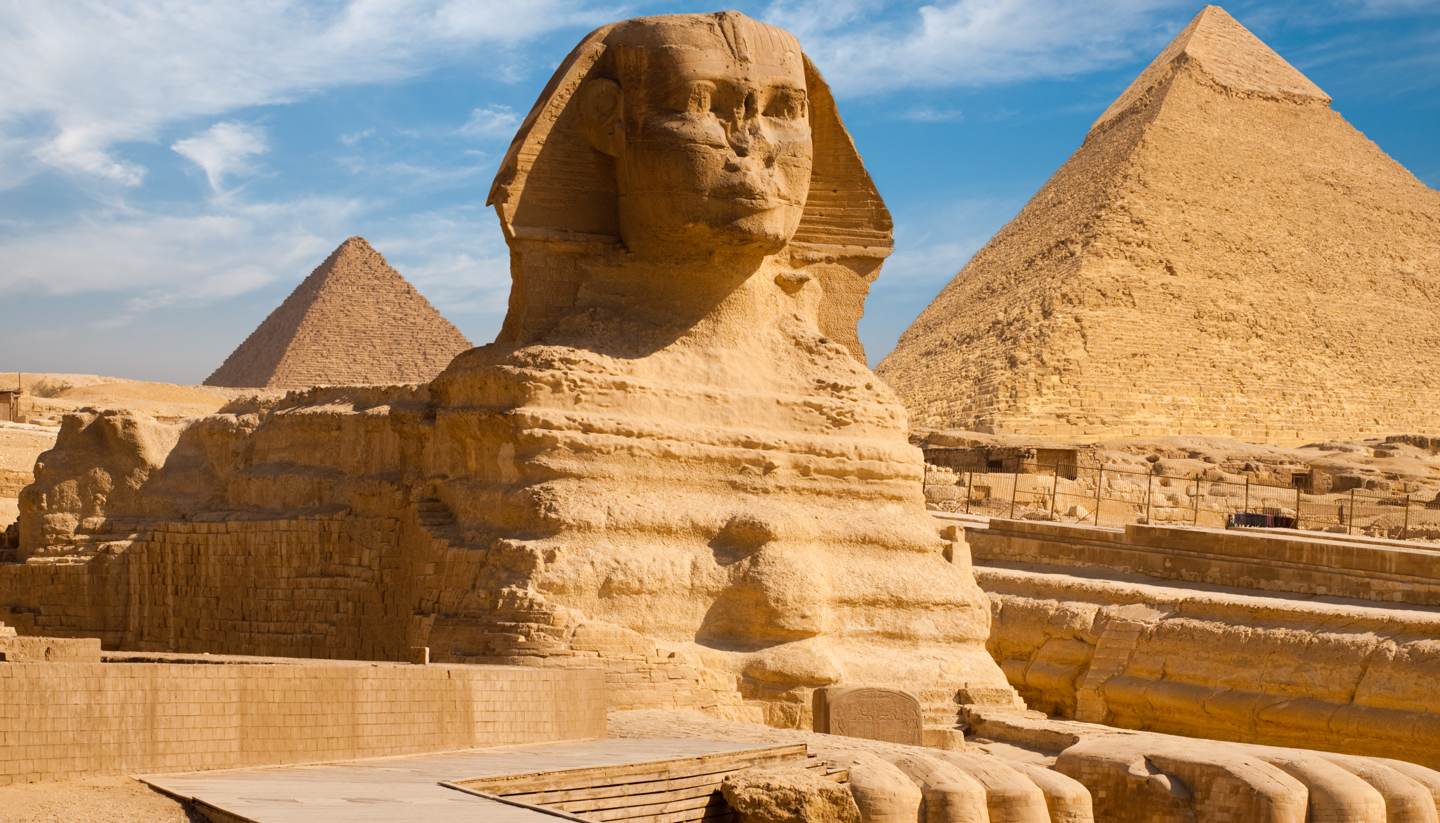
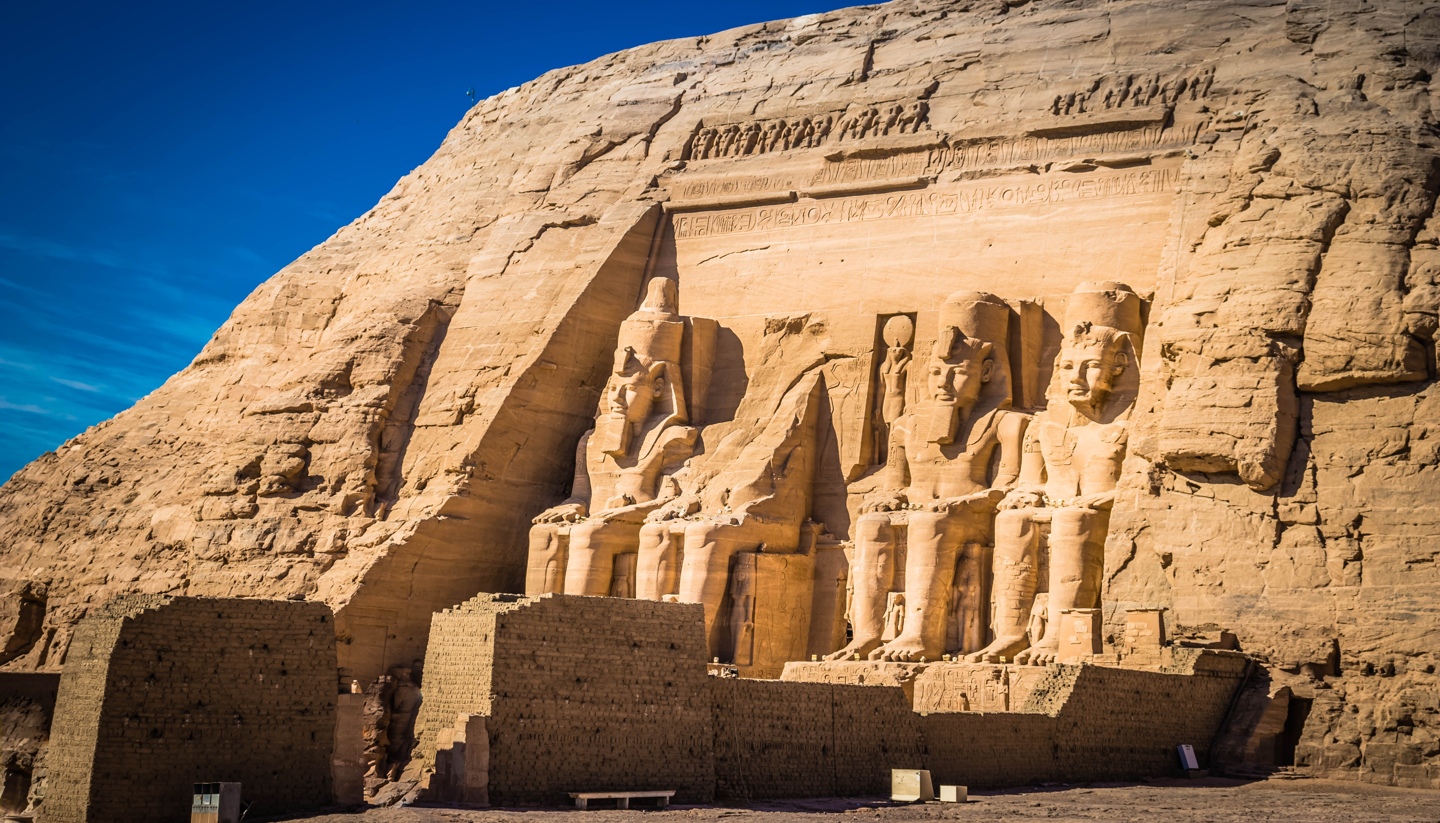
Cairo, the capital, is a city of immense scale and energy, where traffic, call to prayer and daily life unfold against the backdrop of some of the world's most famous monuments. Just beyond the city rise the Pyramids of Giza, reminders of a time when Egypt stood at the centre of the ancient world. Further south, the Nile Valley reveals a procession of temples, tombs and river towns, culminating in Aswan, where Egypt slows and the river widens into a landscape of islands and granite outcrops.
Beyond its antiquities, Egypt offers striking contrasts. The Red Sea coast is known for coral reefs and clear waters, the Western Desert for vast oases and silence, and Alexandria for its Mediterranean character and layered history. Whether exploring tombs in Luxor, sipping tea on a felucca or diving offshore reefs, Egypt delivers experiences that feel both monumental and deeply human.
Travel here rewards curiosity and patience. Distances can be long, bureaucracy occasionally slow, and daily life noisy and chaotic. Yet Egypt's warmth, humour and sense of continuity leave a strong impression. This is not a country you simply visit; it is one you absorb.
Key facts
1,001,450 sq km (386,662 sq miles).
116.5 million (2024).
119 per sq km.
Cairo.
Democratic Republic.
President Abdel Fattah al-Sisi since 2014.
Prime Minister Mostafa Madbouli since June 2018.