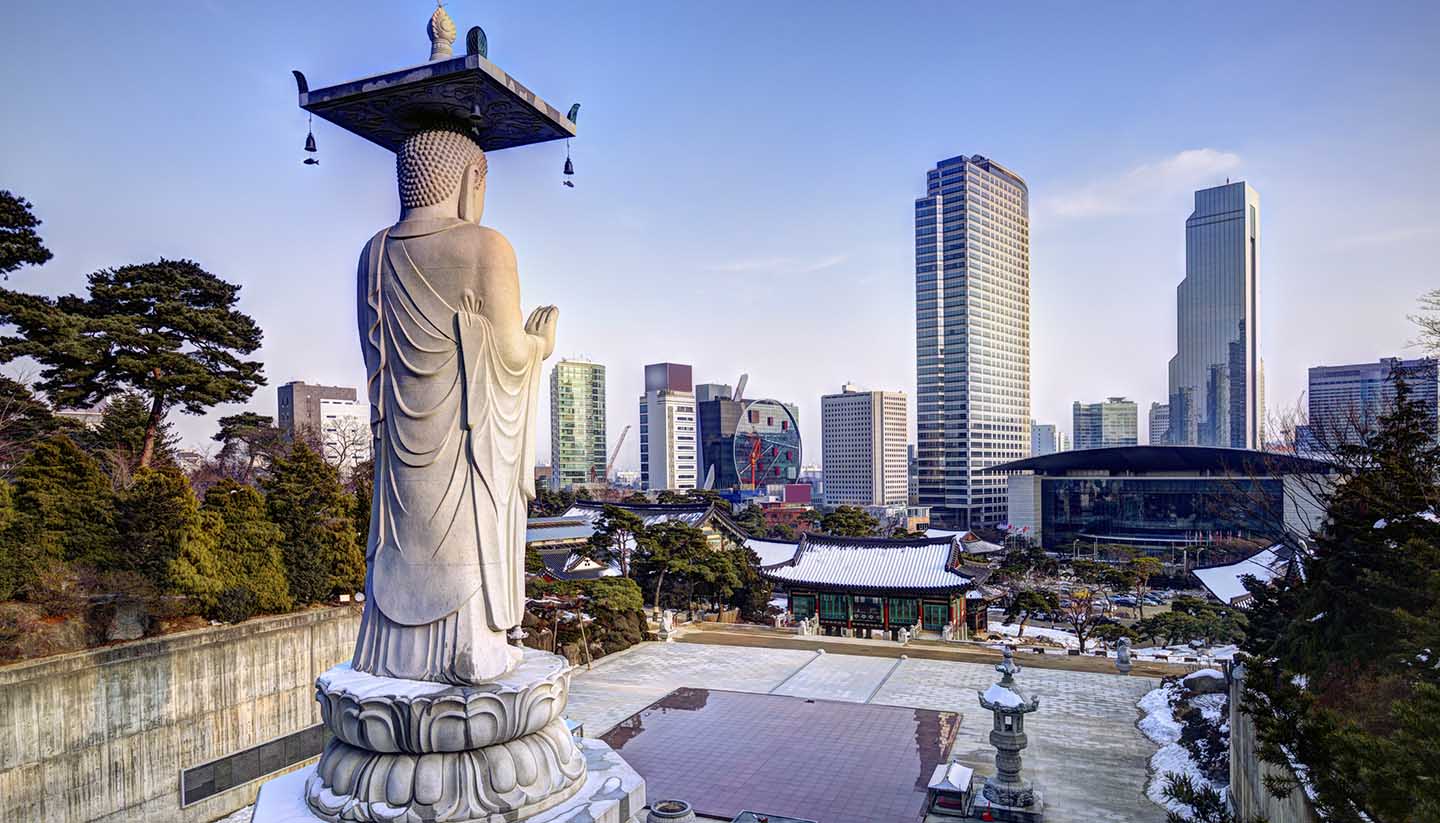

South Korea History, Language and Culture
History of South Korea
Korea's early identity began with the Silla kingdom, which unified most of the peninsula and fostered a flourishing culture. It was followed by the Koryo dynasty, famed for its scholarship, artistry and early printing innovations, and later by the long-lasting Choson (Joseon) dynasty, which shaped much of Korea's Confucian heritage. The peninsula endured invasions by Mongol, Japanese and Manchu forces, yet preserved a distinct language and culture throughout these turbulent centuries.
In the early 20th century, Korea was annexed by Japan, a period remembered for harsh rule and cultural suppression. At the end of the Second World War, the peninsula was divided along the 38th parallel, with the Soviet Union influencing the north and the United States the south. This split hardened into the Korean War (1950–53), a devastating conflict that ended in an armistice rather than a peace treaty — meaning the two Koreas remain technically at war today.
Post-war South Korea transformed rapidly. After decades of military-backed governments, the country embraced democracy in the late 1980s and went on to build one of Asia's most dynamic economies. Relations with the North continue to ebb and flow, alternating between tense standoffs and occasional diplomatic outreach.
The region's complex past remains deeply felt in modern South Korea, from its national museums to casual late-night conversations over soju, where history often arises with surprising passion.
Did you know?
• Traditionally, Koreans counted newborns as one year old at birth, with everyone ageing together at New Year.
• Until 2015, adultery was legally punishable.
• The surnames Kim, Lee, Park, Choi and Chung account for more than half the population.
• Although the fighting stopped in 1953, the Korean War has never officially ended.
South Korea Culture
Religion in South Korea
No religion (51 %), Christian (31 %), Buddhist (17 %), Other religions (1 %).
Social Conventions in South Korea
In South Korea it is polite to greet others with a handshake or a small nod; when meeting someone older or in a formal setting, a slight bow is appreciated. Use titles (such as Mr or Ms) or the person's surname rather than jumping straight to first names unless invited to do so.
Shoes must be removed before entering a Korean home, and bringing a small gift for the host is considered polite. When giving or receiving something, use your right hand — ideally supported by the left — and remember that seniority plays an important role in social interactions; for example, you should not begin eating until the eldest person at the table has started. Koreans may ask your age or marital status early in conversation as this helps them determine appropriate forms of address. Physical contact with strangers is uncommon, and people may appear reserved until they get to know you.
Certain gestures carry cultural meaning. Never leave chopsticks standing upright in a bowl of rice, as this resembles funeral practices, and avoid beckoning someone with the palm facing up and a single finger. Writing a person's name in red ink is traditionally associated with death, and the number four is considered unlucky. Hanbok, the traditional costume, is worn mainly on holidays and special occasions: men wear loose trousers called baji and a short jacket, while women wear a wrap-around skirt (chima) with a short jacket (jeogori).
Tipping is not customary. In most restaurants, cafés and taxis you are not expected to tip; some businesses that follow international models may accept it, but insistence or expecting a tip can cause discomfort.
For photography, always ask permission before photographing people, especially in more rural or traditional settings. In temples or religious sites, stay respectful: avoid using flash or photographing rituals without asking. Be mindful of signs that restrict photography and follow staff instructions.
Language in South Korea
Korean (Hangul), with English widely taught in school and generally understood in major centres.