
Moldova Weather, climate and geography
Weather and climate
Best time to visit
Moldova has a temperate continental climate with four distinct seasons, making weather an important consideration when planning a visit. Spring runs from March to May and is generally mild, though changeable. Early spring can still feel cool, while late spring brings warmer days and a blossoming countryside. Temperatures typically range from about 10°C to 20°C (50°F to 68°F).
Summer lasts from June to August and is warm to hot, particularly in July and August. Daytime temperatures often reach 25°C to 30°C (77°F to 86°F), with occasional heatwaves pushing higher. Summer is also the main rainy season, with short but sometimes heavy thunderstorms, especially in June and July.
Autumn, from September to November, is one of the most pleasant times to visit. Days are warm and sunny in early autumn, with temperatures around 15°C to 25°C (59°F to 77°F), gradually cooling towards November. This season coincides with the grape harvest and wine festivals, making it especially appealing for visitors.
Winter runs from December to February and can be cold, particularly in January. Temperatures commonly fall below freezing, averaging around -5°C to 5°C (23°F to 41°F), and snowfall is possible, though usually moderate. Travel is still possible in winter, but shorter daylight hours and occasional icy conditions can affect plans.
Required clothing
Clothing requirements in Moldova vary significantly by season. In spring and autumn, layers are ideal to cope with changing temperatures between day and night. Summer visitors should be prepared for hot weather as well as sudden rain showers, so lightweight clothing and a compact rain jacket or umbrella are useful.
During winter, warm clothing is essential, including a heavy coat, sweaters and accessories such as gloves and a hat. Comfortable footwear with good grip is advisable in colder months, particularly if snow or ice is present. Regardless of the season, visitors planning to explore rural areas or walk on uneven ground should bring sturdy, comfortable shoes.
Geography
Moldova is a small, landlocked country in eastern Europe, bordered by Romania to the west and Ukraine to the north, east and south. Its compact size makes it easy to explore, with no point in the country far from a main road or settlement, and landscapes changing gently rather than dramatically as you travel.
The terrain is dominated by rolling hills, fertile plains and river valleys rather than mountains. Much of the countryside is covered by vineyards, farmland and orchards, giving Moldova a soft, pastoral feel. Forests are scattered mainly through the central region, particularly in the Codrii area, which is known for its wooded hills and nature reserves.
Moldova's highest point is Dealul Balanesti, which rises to about 430 metres above sea level, while its lowest point lies along the Dniester River at around 2 metres above sea level. The modest elevation differences mean there are no extreme landscapes, but this also makes Moldova well-suited to relaxed travel, gentle hiking and scenic drives through rural areas.
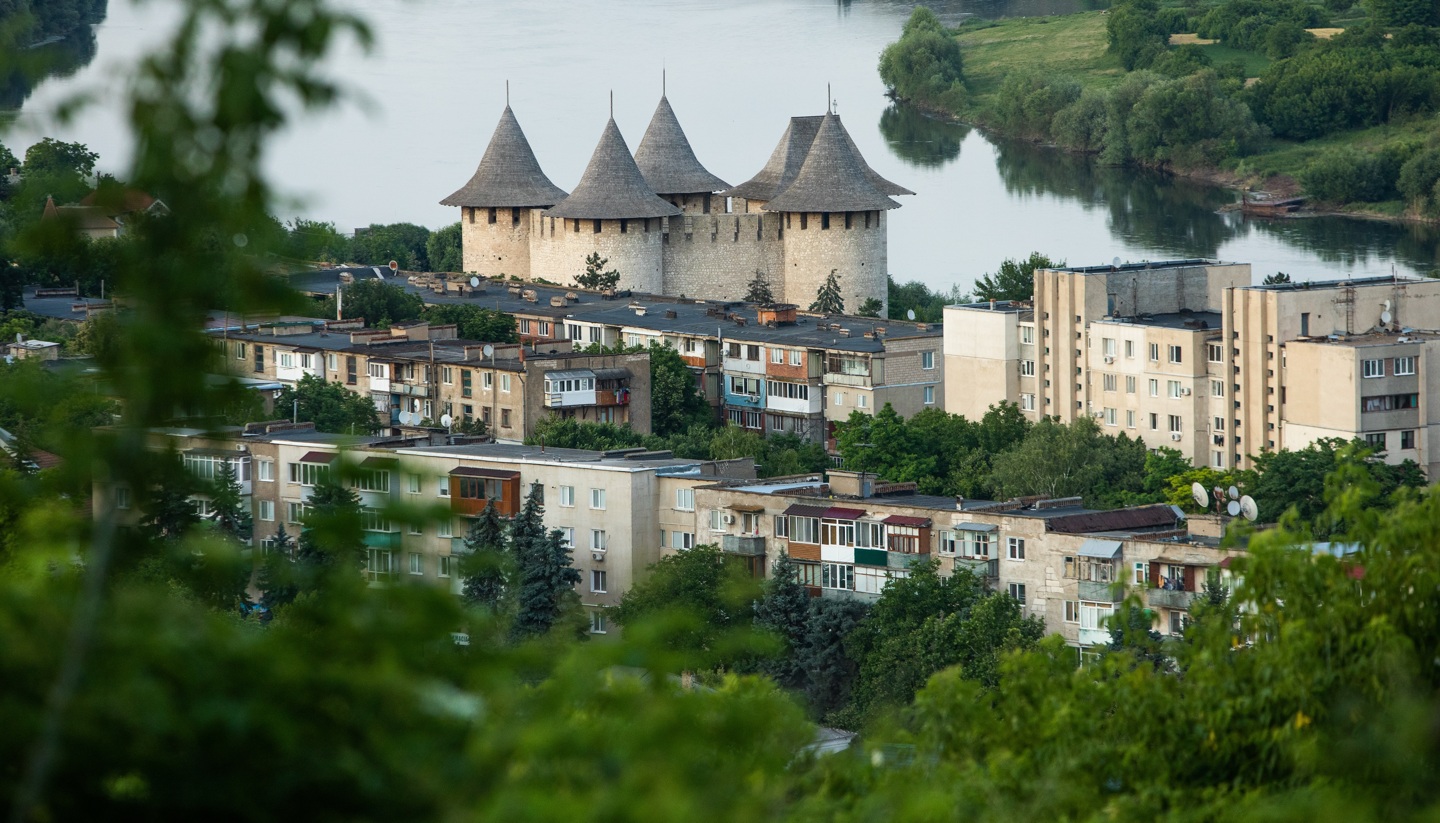
Two major rivers shape the country's geography. The Dniester flows along much of the eastern border and plays an important role in agriculture and settlement, while the Prut River forms the western boundary with Romania. Together with a temperate continental climate, these river systems contribute to the rich soils that underpin Moldova's long tradition of farming and winemaking, which visitors encounter throughout the country.