
Zimbabwe History, Language and Culture
History of Zimbabwe
Zimbabwe's history is shaped by powerful early civilisations, colonial rule and a complex journey to independence. Between the 11th and 15th centuries, the region was home to the Kingdom of Zimbabwe, centred on the stone city now known as Great Zimbabwe. This advanced society controlled regional trade routes and left behind monumental dry-stone architecture, evidence of political authority and economic strength long before European contact.
In the late 19th century, the area came under British control and became known as Southern Rhodesia. Colonial rule brought infrastructure development but also widespread land dispossession and inequality. After years of political struggle and armed conflict, Zimbabwe gained independence in 1980, marking a major turning point in the country’s modern history.
Since independence, Zimbabwe has experienced periods of growth as well as significant political and economic challenges. Despite these difficulties, the country has retained a strong sense of cultural identity, and its historical legacy remains deeply visible in archaeological sites, traditions and national consciousness.
Did you know?
• Great Zimbabwe is the largest ancient stone structure in sub-Saharan Africa and gave the country its modern name.
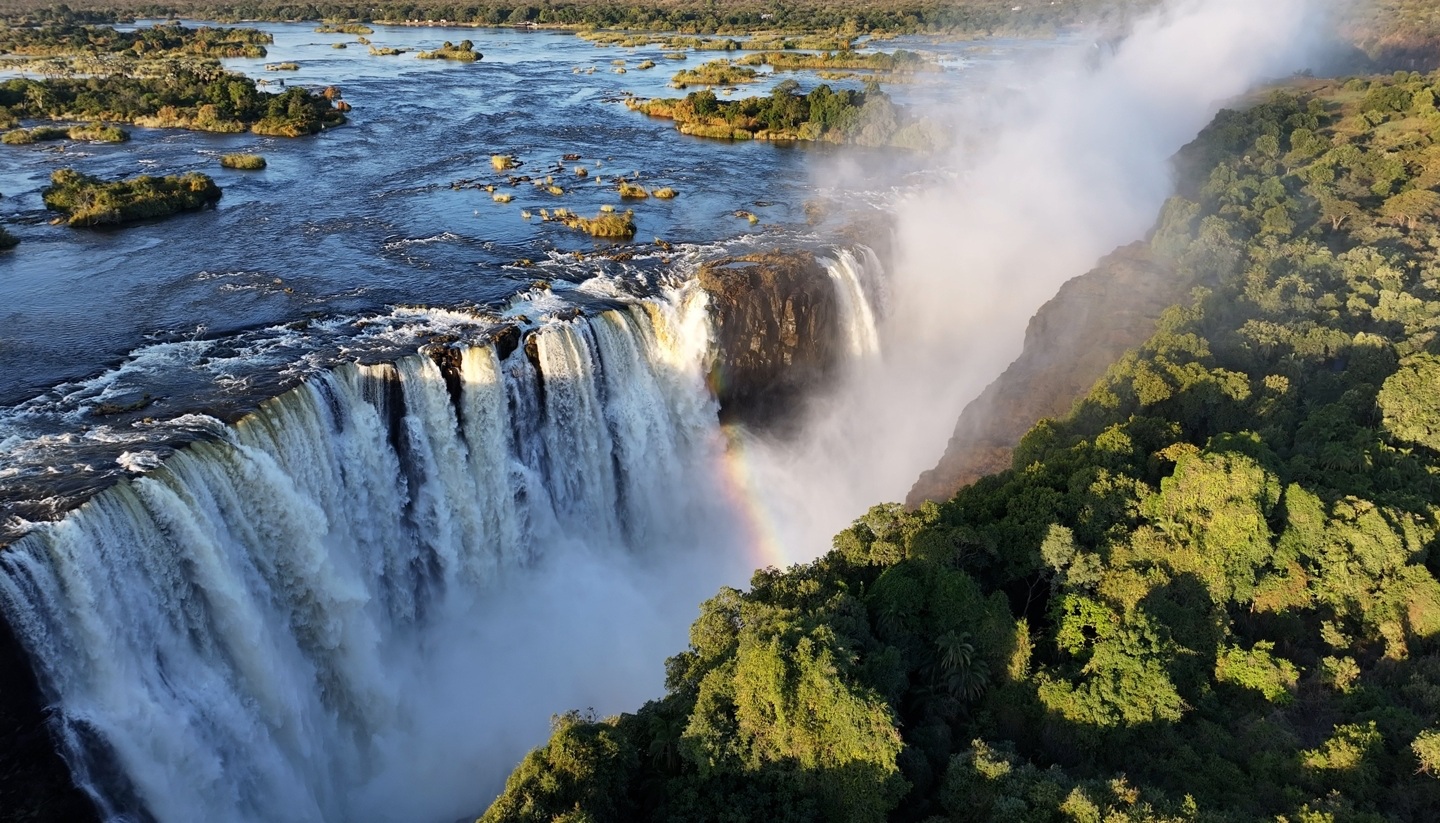
• Victoria Falls creates one of the world's largest curtains of falling water during peak flood season, stretching over 1.7 km wide.
• Zimbabwe has one of the highest literacy rates in Africa, a legacy of strong investment in education after independence.
Zimbabwe Culture
Religion in Zimbabwe
Christian (approximately 84%), Traditional beliefs (around 10%), Muslim (around 1%), Other religions including Hindu and Jewish communities (around 1%), Unaffiliated or unspecified (around 4%).
Social Conventions in Zimbabwe
Zimbabwean society places strong emphasis on politeness, respect and personal courtesy. Greetings are important and usually involve a handshake, often accompanied by a friendly exchange of pleasantries before moving on to business or requests. Respect for elders and authority figures is valued, and public displays of anger or confrontation are generally frowned upon. Modest dress is appreciated, particularly in rural areas and at religious sites.
Tipping is not obligatory but is appreciated, especially in the tourism sector. In restaurants, a tip of around 10% is customary for good service if a service charge is not included. Safari guides, drivers and lodge staff often receive tips, particularly for guided activities or longer stays. In everyday situations such as taxis, tipping is discretionary.
Photography is generally permitted, but visitors should always ask permission before photographing people, especially in rural areas. Photography may be restricted at government buildings, military sites and border posts, and signs should be observed. Sensitivity is advised when photographing religious sites, ceremonies or local communities.
Language in Zimbabwe
Zimbabwe has 16 officially recognised languages, reflecting the country's cultural diversity. English is the main language of government, education and business, and it is widely spoken, particularly in cities, towns and tourist areas. Visitors generally find communication in English straightforward throughout the country.
Shona and Ndebele are the most widely spoken indigenous languages and are commonly used in everyday conversation, especially outside formal settings. Other languages are spoken by smaller communities in different regions of the country.