
Nepal History, Language and Culture
History of Nepal
Nepal's history is shaped by ancient kingdoms, trade routes and its strategic position between India and China. The Kathmandu Valley was home to powerful Newar city-states long before the modern nation took shape. In the 18th century, King Prithvi Narayan Shah unified these fragmented kingdoms, laying the foundations of contemporary Nepal. The country later served as a buffer between British India and Qing China, managing to retain its sovereignty while limiting foreign influence.
In the 20th century, Nepal moved from absolute monarchy to constitutional monarchy, and after a decade-long civil conflict, became a federal democratic republic in 2008. Today, Nepal is known for its religious harmony, living cultural traditions and strong sense of identity. For visitors, this history is visible everywhere, from ancient royal squares and temples to festivals and traditions that continue to thrive across the country.
Did you know?
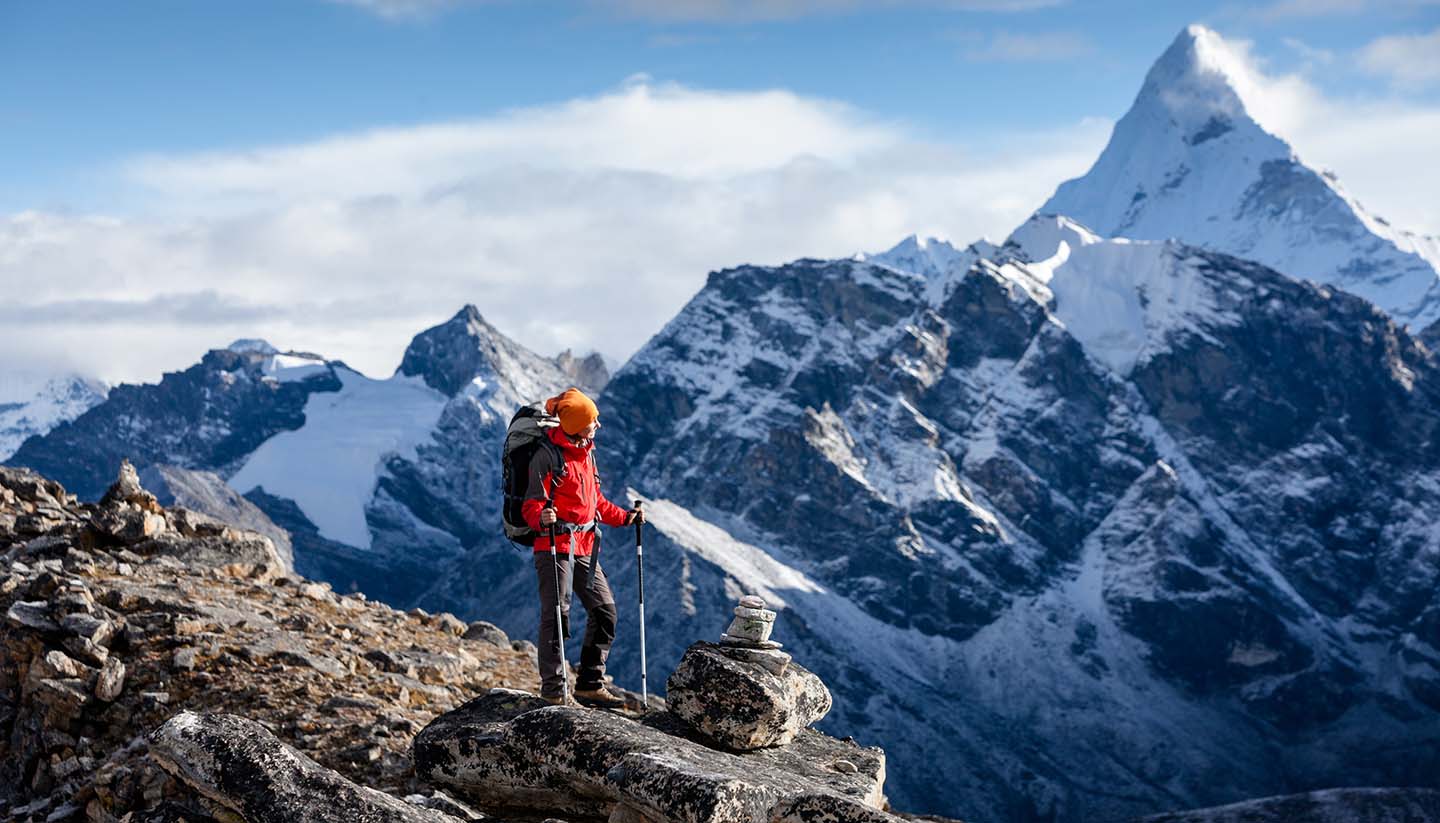
• Nepal is home to eight of the world's fourteen highest mountains, including Mount Everest, yet its lowest point sits at just 59m above sea level, one of the greatest elevation ranges on Earth.
• The Nepalese calendar, known as Bikram Sambat, is approximately 56 years ahead of the Gregorian calendar. Festivals and official dates in Nepal often follow this local system.
• The Nepalese flag is the world's only non-rectangular national flag, made of two stacked triangular pennants symbolising the Himalayas and the country's Hindu–Buddhist heritage.
Nepal Culture
Religion in Nepal
Hindu (81.3%), Buddhist (9.0%), Muslim (4.4%), Kirat (3.1%), Christian (1.4%), Others (0.8%).
Social Conventions in Nepal
Nepalese society is generally polite and reserved, and greetings are warm but modest. The traditional greeting is namaste, made with palms pressed together at chest level, though handshakes are common in urban areas. Visitors should dress modestly, especially when visiting temples, monasteries or rural communities. Shoes must be removed before entering homes and most religious sites. Public displays of affection are uncommon and may attract unwanted attention.
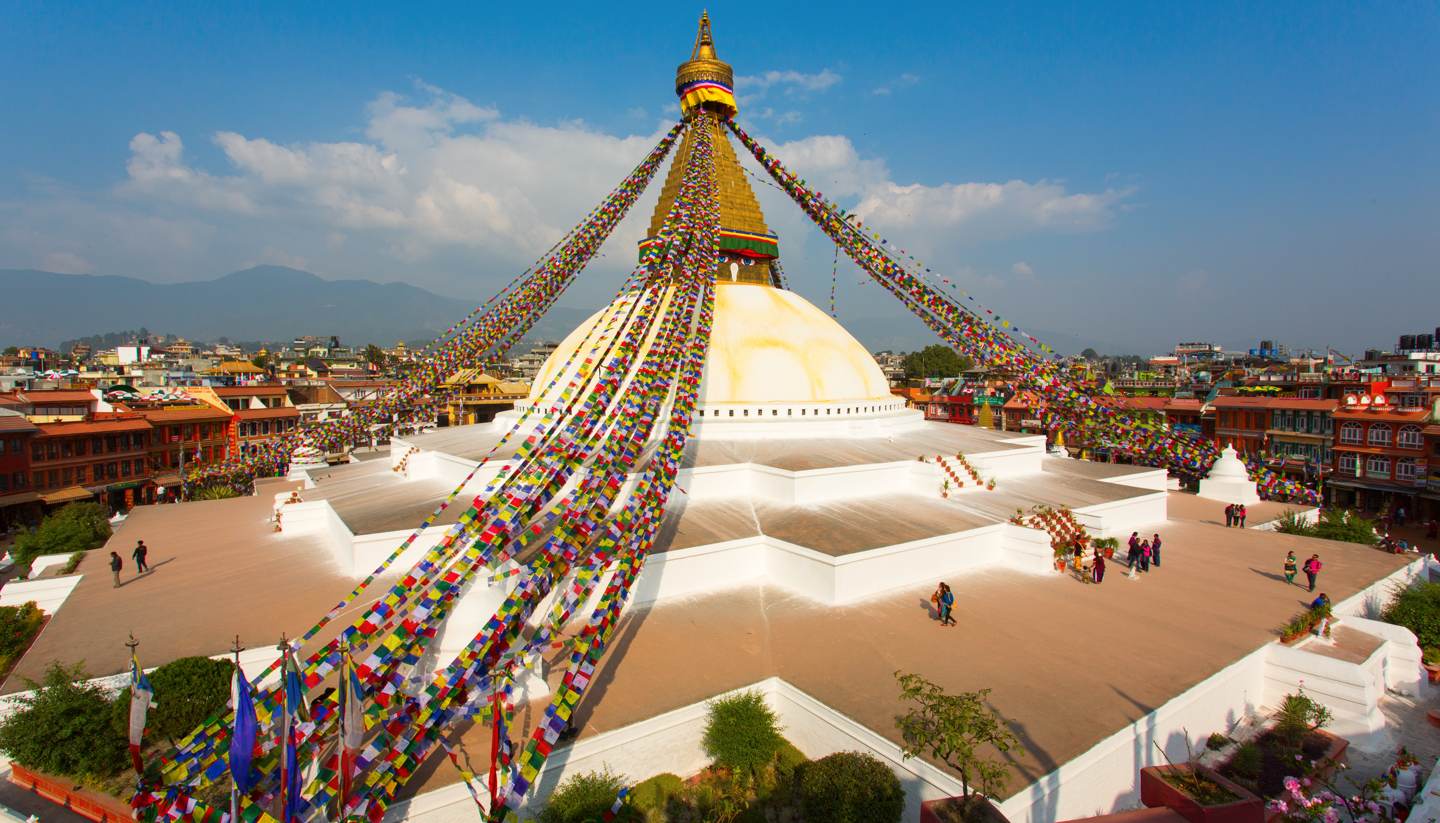
As a predominantly Hindu and Buddhist country, respect for religious practices is important. Always walk clockwise around stupas and shrines, and avoid touching statues or stepping over offerings. When photographing people, especially monks, elderly residents or those in rural areas, it is courteous to ask permission first. Some religious sites restrict photography entirely, so visitors should look for posted signs or ask a guide.
Tipping is not compulsory but is widely appreciated. In restaurants, a service charge may be included; if not, a tip of around 10% is customary. Trekking guides, porters and drivers generally expect tips, which form a significant part of their income, and hotels may be tipped for good service. For taxis, rounding up the fare is an acceptable practice.
Language in Nepal
The official language of Nepal is Nepali, spoken as a first language by about 45% of the population. Other widely spoken languages include Maithili, Bhojpuri, Tharu and Tamang, reflecting the country's diverse ethnic landscape. English is commonly used in business, tourism and by those working in the travel industry.