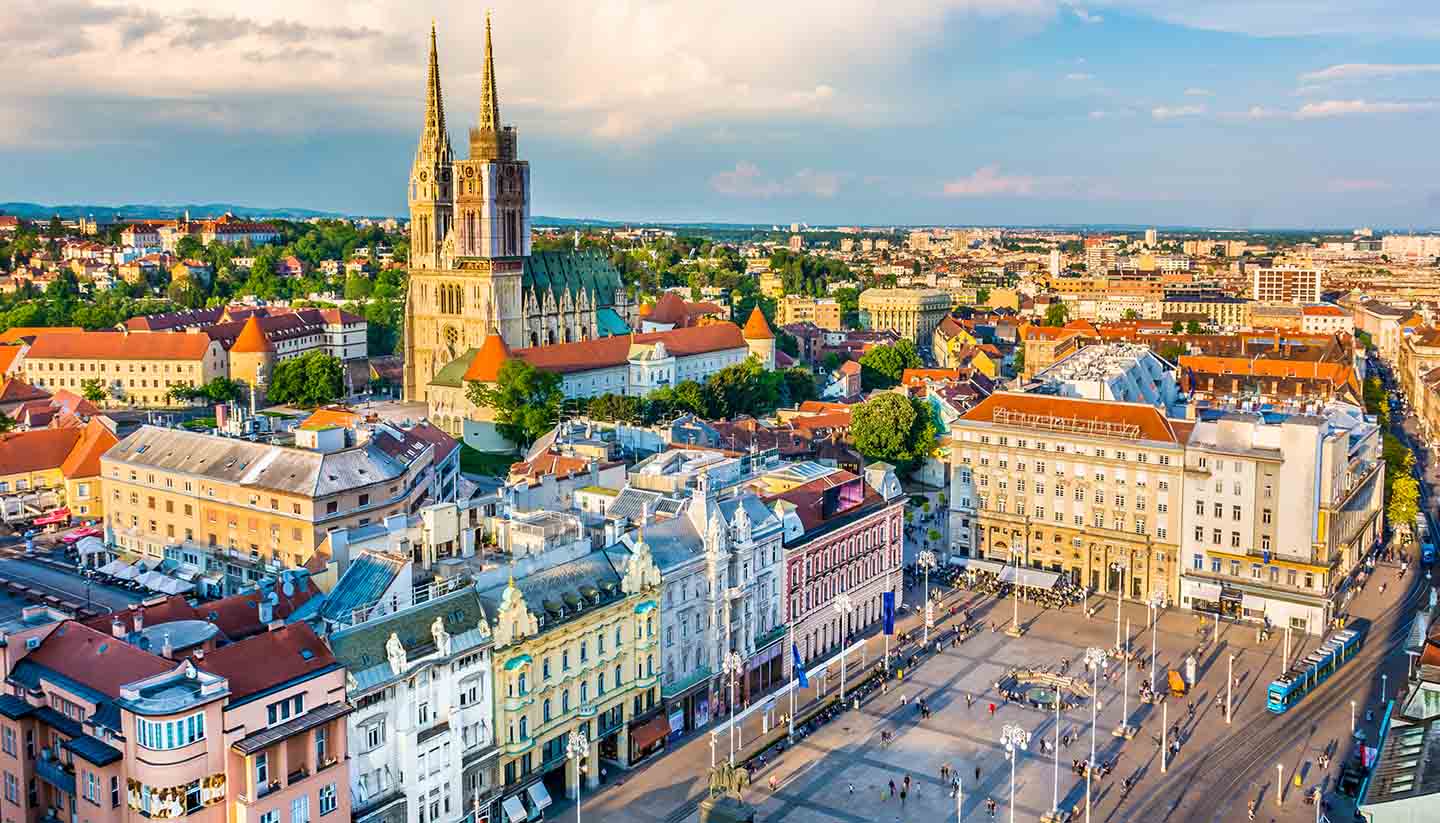

Travel to Croatia
Flying to Croatia
Zagreb Airport (ZAG) is Croatia's principal international gateway, with connections to cities across Europe and several destinations farther afield. Split Airport (SPU) and Dubrovnik Airport (DBV) handle extensive international traffic, particularly during the summer season.
Zadar (ZAD), Pula (PUY), Rijeka (RJK) and Osijek (OSI) also receive international flights, with many routes operating seasonally. The range of direct flights to the Adriatic coast increases considerably between spring and autumn.
Flight times
From London to Zagreb: approximately 2 hours 20 minutes (direct).
Travelling to Croatia by Rail
International passenger trains connect Zagreb with cities including Ljubljana, Vienna, Budapest, Munich, Stuttgart and Zürich. Night trains provide direct connections from Zagreb towards Germany and Switzerland, while other services connect through Slovenia and Austria.
Additional international trains operate seasonally. These include services linking Split with Vienna and Budapest, while some coastal and cross-border routes operate only during part of the year. Zagreb Central Station (Zagreb Glavni kolodvor) is the country's principal international rail hub.
Engineering works can result in replacement buses, altered routes and timetable changes on international services, so travellers should check current schedules before departure.
Rail passes
Interrail and Eurail passes are valid on participating Croatian Railways (HŽPP) services. Reservations and supplements may be required for sleeping cars, couchettes and some international trains.
Driving to Croatia
Croatia shares land borders with Slovenia, Hungary, Serbia, Bosnia and Herzegovina, and Montenegro. Motorways provide good connections from Zagreb towards Central Europe and the Adriatic coast, while international coaches link Croatian cities with destinations throughout neighbouring countries and elsewhere in Europe.
Croatia, Slovenia and Hungary are part of the Schengen Area, so travellers normally cross the Slovenian and Hungarian borders without routine immigration checks. The borders with Serbia, Bosnia and Herzegovina, and Montenegro are external Schengen borders and passport controls apply. However, travellers should carry valid travel documents even when crossing internal Schengen borders.
Croatian motorways are generally subject to tolls, with charges based on the route and vehicle category. Traffic can be heavy on roads towards the Adriatic coast and at external border crossings during the main summer holiday period.
Getting to Croatia by boat
International passenger ferries cross the Adriatic between Croatia and Italy. The principal routes connect Split with Ancona and Bari and Dubrovnik with Bari, while a seasonal high-speed service links Zadar with Ancona. Services and frequencies vary considerably by season.
Split and Dubrovnik are the main departure points for international ferry travel, with Zadar also serving international passengers. Vehicle transport is available on the conventional ferry routes, while the high-speed Zadar-Ancona service carries passengers rather than cars.
Cruise ships
Croatia is a major Mediterranean cruise destination. Dubrovnik and Split receive large numbers of international cruise ships, while Zadar, Rijeka and several other Adriatic ports also feature on cruise itineraries. Smaller vessels and luxury cruises frequently visit Croatian islands and historic coastal towns.