
South Africa travel guide
About South Africa
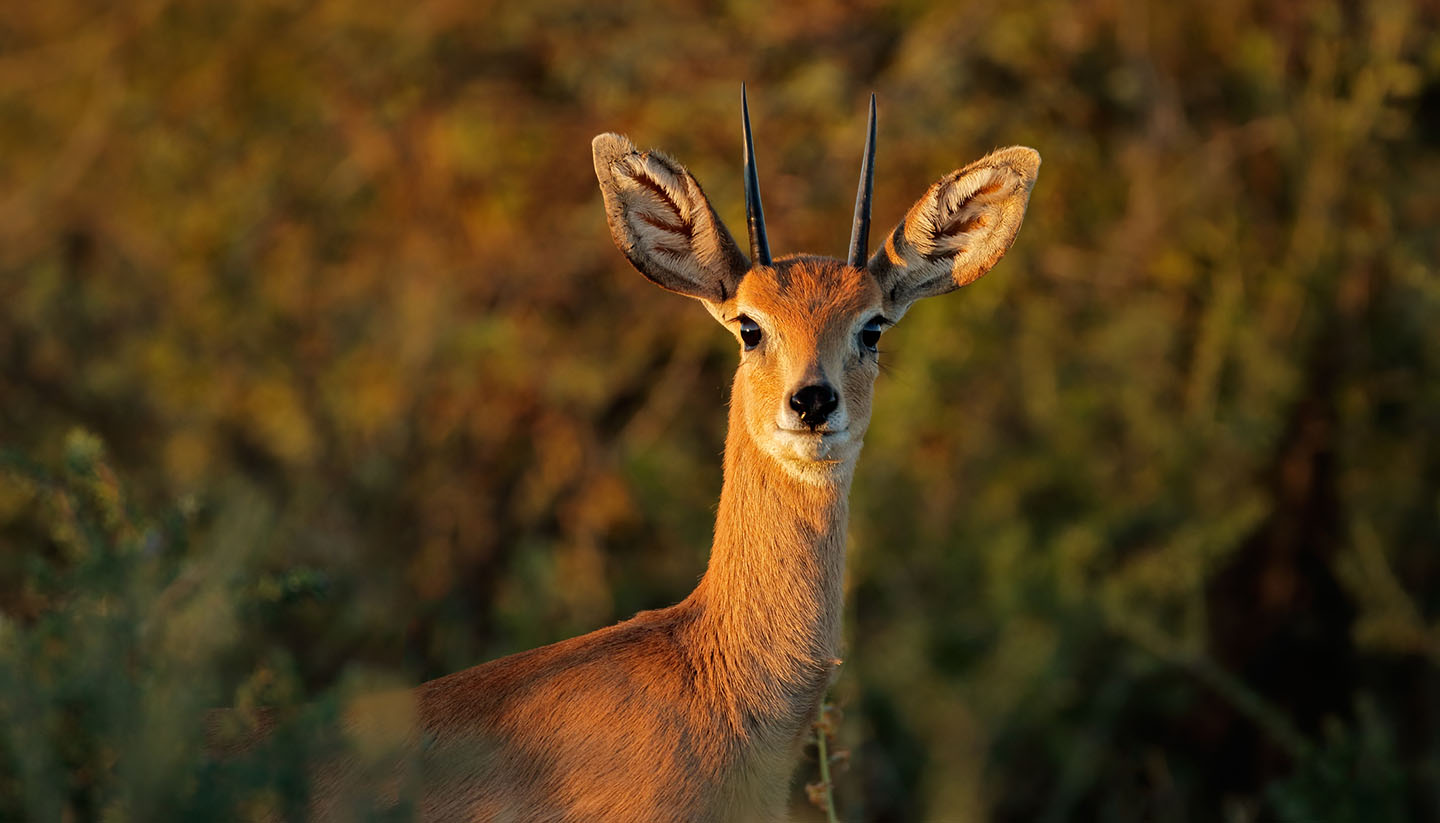
South Africa is a country of striking contrasts, where dramatic landscapes meet vibrant cities and a rich, layered history. From rugged coastlines and sweeping savannahs to mountain ranges and vineyards, it offers an extraordinary range of scenery within a single destination. Wildlife roams freely in vast national parks, while cosmopolitan hubs pulse with energy, making South Africa one of the most diverse and compelling countries on the African continent.
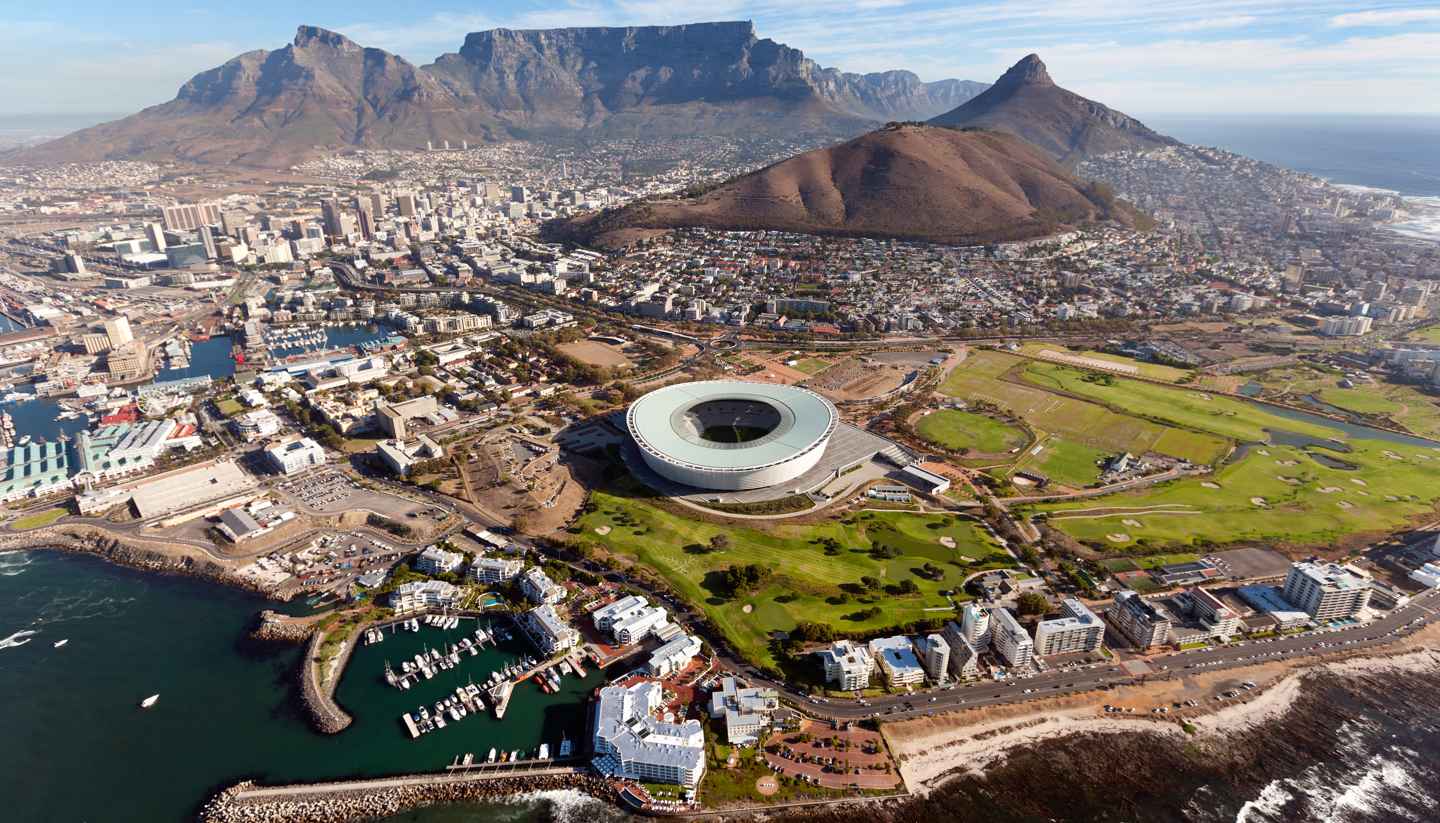
The country has three capitals: Pretoria serves as the administrative capital, Cape Town as the legislative capital and Bloemfontein as the judicial capital. Cape Town, set between Table Mountain and the Atlantic Ocean, is often the first stop for visitors, known for its natural beauty and cultural attractions. Johannesburg, the largest city, is the economic heart of the country and a gateway to the interior, while Durban on the Indian Ocean coast offers a subtropical climate and a distinct cultural flavour.
South Africa is home to several UNESCO World Heritage Sites that showcase both natural and cultural significance. The iSimangaliso Wetland Park stretches along the east coast with lakes, wetlands and beaches teeming with wildlife. The Cradle of Humankind, near Johannesburg, has yielded some of the world's oldest hominid fossils, offering insight into human origins. Robben Island, off the coast of Cape Town, stands as a powerful symbol of the country's struggle for freedom.
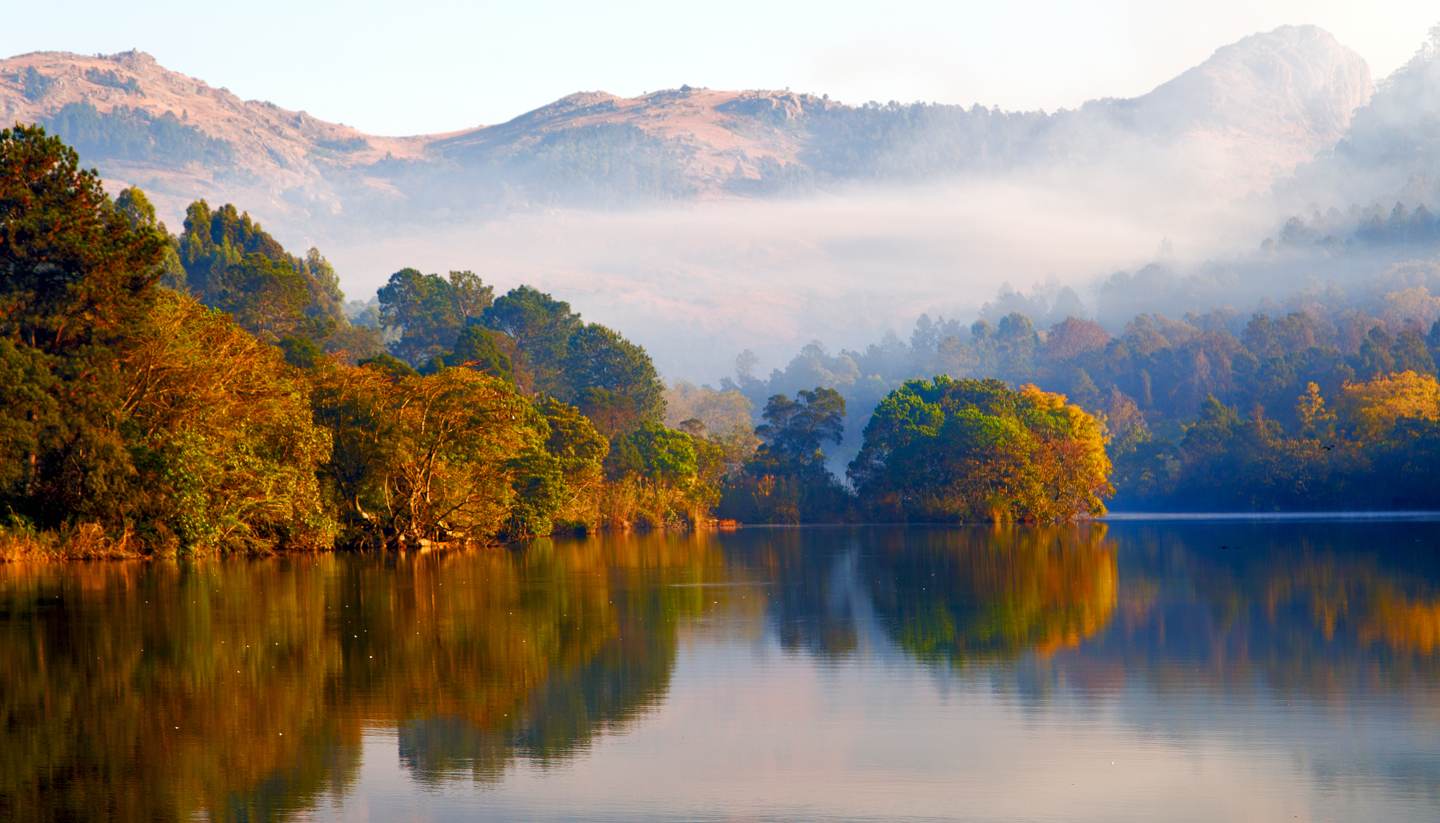
The country's landscapes are as varied as its history. The Garden Route winds along the southern coast, offering forests, lagoons and coastal cliffs, while Kruger National Park in the northeast ranks among Africa's premier safari destinations. The Drakensberg Mountains provide dramatic highland scenery, and the semi-arid Karoo reveals a quieter, more remote side of the country.
South Africa is often referred to as the "Rainbow Nation", a reflection of its rich cultural diversity and the coexistence of many ethnic groups and traditions. The country has 11 official languages, including Zulu, Xhosa, Afrikaans and English, and this diversity is evident in everyday life. It is reflected in architecture, music, languages and the nation's cuisine, where influences from African, European and Asian cultures come together in distinctive and evolving ways.
Key facts
1,221,037 sq km (471,445 sq miles).
63.1 million (2025).
53 per sq km.
Pretoria (administrative), Cape Town (legislative) and Bloemfontein (judicial).
Parliamentary republic.
President Cyril Ramaphosa since 2018.
President Cyril Ramaphosa since 2018.