
South Africa Weather, climate and geography
Weather and climate
Best time to visit
South Africa has a generally temperate climate, with seasonal patterns that are broadly the opposite of those in the northern hemisphere. Summer runs from November to March, while winter runs from June to August. Weather conditions vary significantly by region, with coastal areas, inland plateaus and mountainous regions each experiencing different climates.
Summer (November to March)
Summers are warm to hot across most of the country. In inland areas such as Johannesburg and Pretoria, daytime temperatures typically range from 25–32°C (77–90°F), often accompanied by afternoon thunderstorms. Coastal regions such as Durban are hotter and more humid, with temperatures around 28–34°C (82–93°F), while Cape Town tends to be slightly cooler and drier.
Autumn (April to May)
Autumn is generally mild and pleasant, with temperatures ranging from 18–28°C (64–82°F). Rainfall decreases in most regions, and conditions are stable, making it a good time for travel. The Western Cape begins to see the start of its wetter season.
Winter (June to August)
Winter is typically dry and mild in much of the country, particularly in the interior, where daytime temperatures are around 15–22°C (59–72°F), though nights can be cold. In the Western Cape, including Cape Town, this is the rainy season, with cooler temperatures of around 12–20°C (54–68°F). Snow can occur in the Drakensberg Mountains.
Spring (September to October)
Spring brings warming temperatures and increasing sunshine, with daytime highs generally between 20–28°C (68–82°F). Rainfall begins to increase in some regions, particularly in the interior, while landscapes become greener following winter.
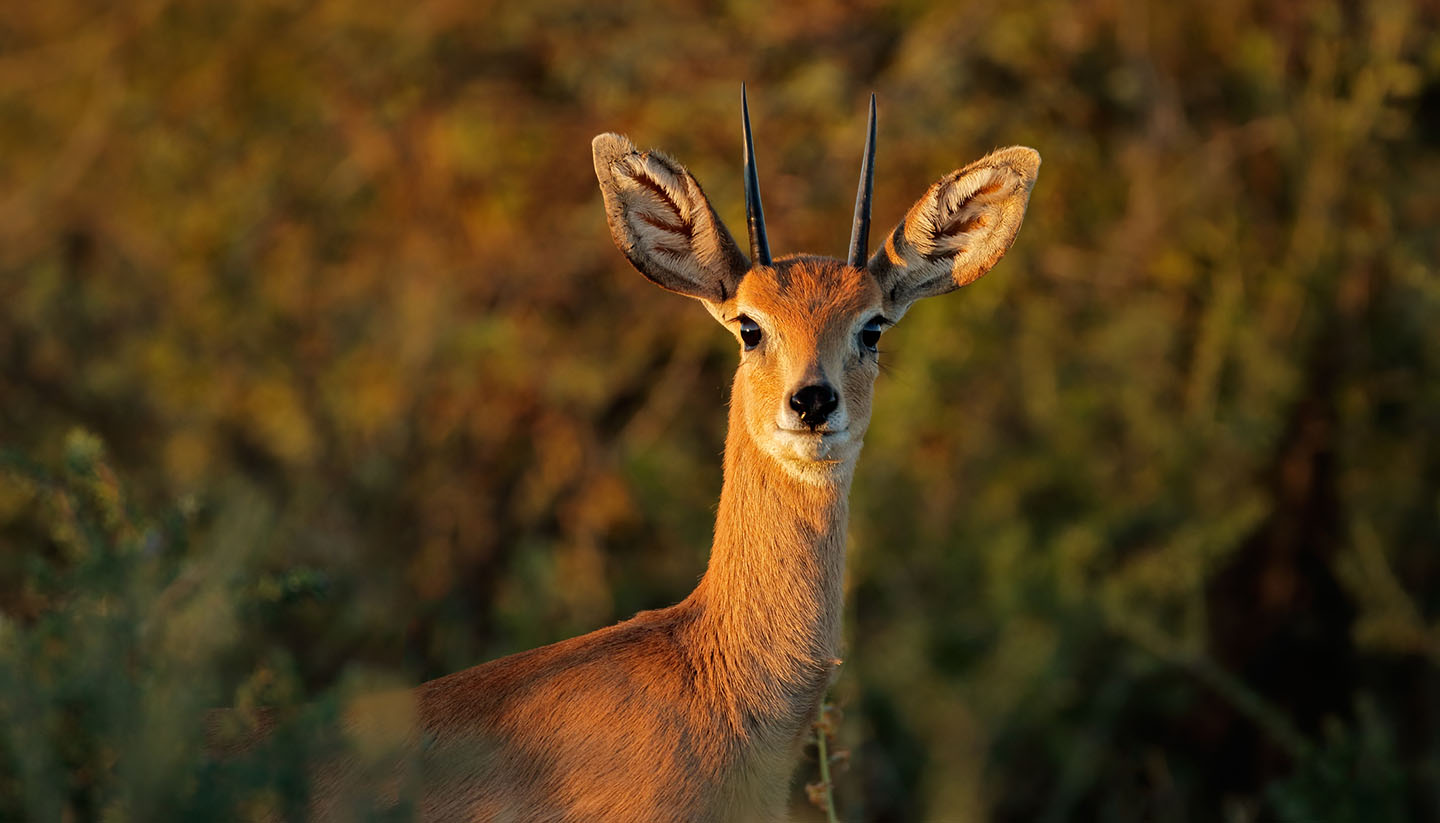
The best time to visit Kruger National Park for wildlife viewing is during the dry season from May to October, when animals gather around water sources and vegetation is thinner, making them easier to spot. The wetter months from November to April offer greener landscapes and excellent birdwatching, though wildlife can be harder to see. For the Cape Winelands, the harvest season from February to April is particularly rewarding, with vineyards at their most active and tastings often accompanied by seasonal events.
Required clothing
Clothing in South Africa should be chosen with the country's varied climate and regional differences in mind. Lightweight, breathable fabrics such as cotton and linen are suitable for most of the year, particularly in warmer regions and during the summer months. Sun protection is important, so a hat, sunglasses and sunscreen are recommended.
During the summer months (November to March), light clothing is ideal, though a light rain jacket or umbrella is useful in inland areas where afternoon thunderstorms are common. In contrast, the Western Cape experiences most of its rainfall in winter (June to August), so waterproof clothing is advisable if visiting Cape Town and the surrounding areas during this period.
Winter temperatures can vary significantly. Inland areas such as Johannesburg and Pretoria can have warm days but cold mornings and evenings, so layering is recommended. In coastal areas, winters are generally milder but can still be cool, especially when the wind is blowing. A jacket or sweater is advisable, especially at night.
For safari trips, neutral-coloured clothing is recommended, along with comfortable walking shoes. Long sleeves and trousers are useful for protection against the sun and insects, particularly in malaria-risk areas. If visiting higher-altitude regions such as the Drakensberg, warmer clothing may be needed, as temperatures can drop significantly.
Geography
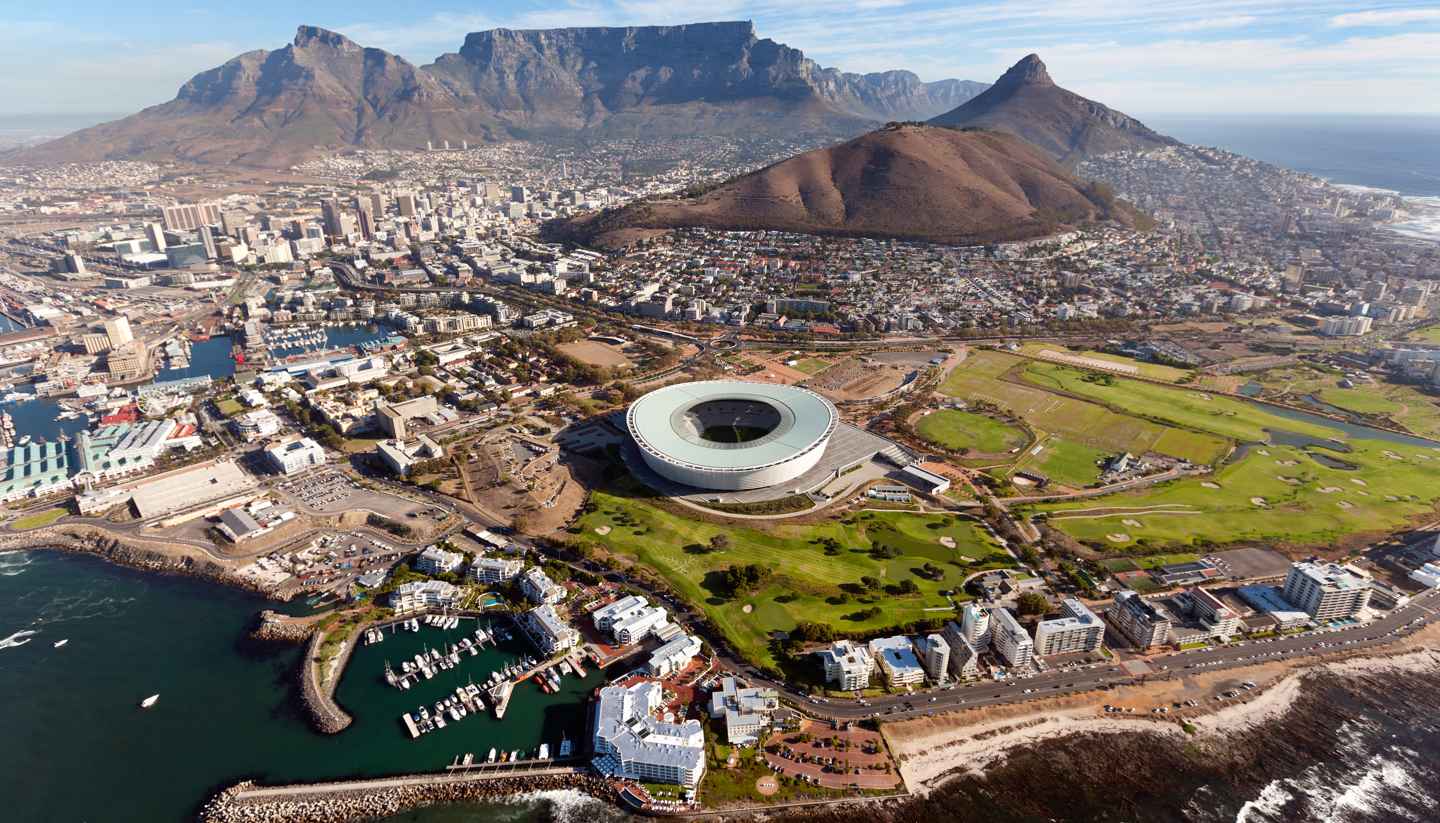
South Africa is located at the southern tip of the African continent, bordered by Namibia, Botswana and Zimbabwe to the north, Mozambique and Eswatini to the northeast, and surrounding the enclave of Lesotho. It has an extensive coastline stretching along both the Atlantic Ocean in the west and the Indian Ocean in the east, meeting near the southernmost point at Cape Agulhas.
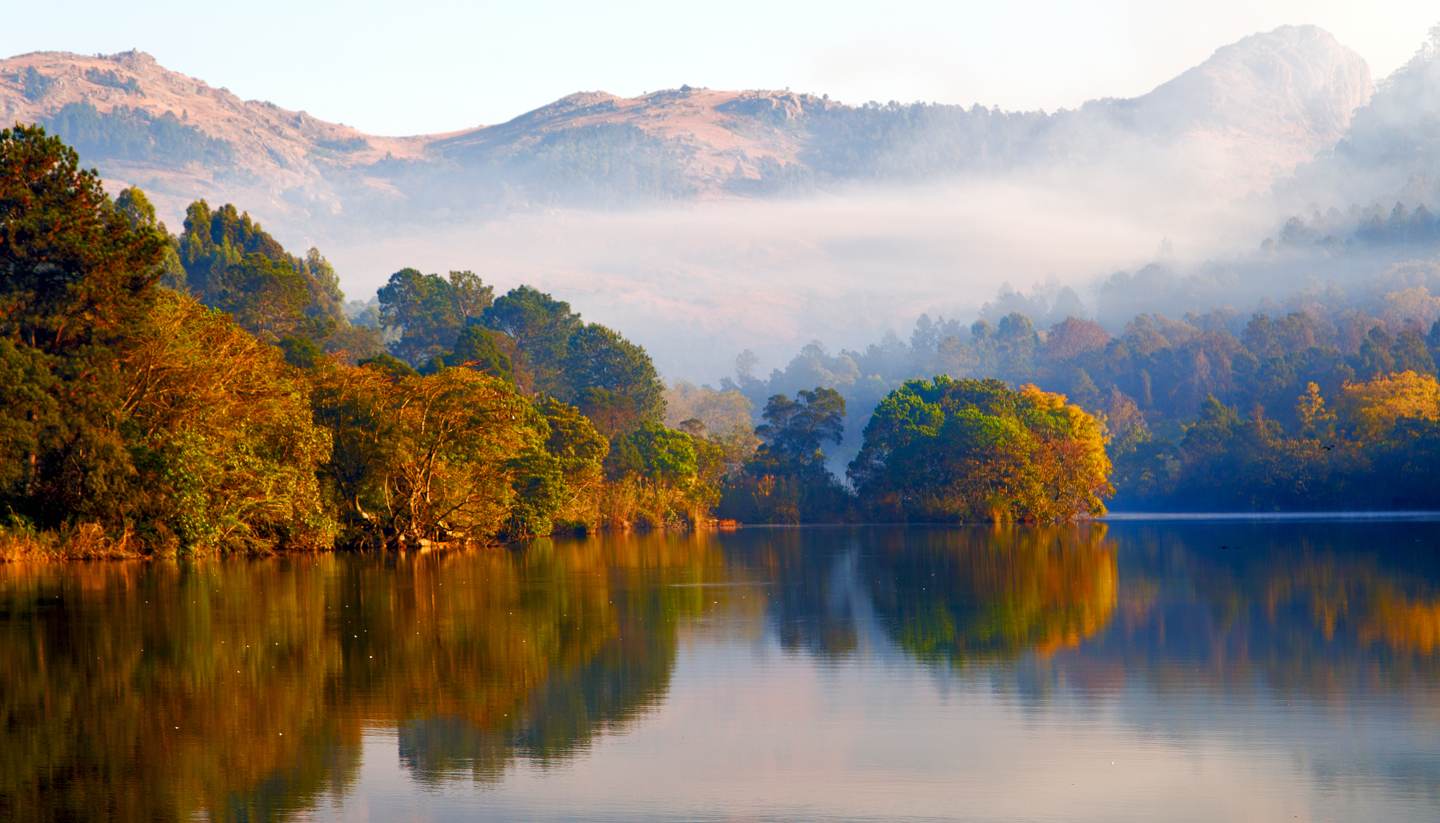
The country's landscapes are highly varied, offering a wide range of scenery for visitors. Much of the interior consists of a high plateau known as the Highveld, while the Great Escarpment forms a dramatic edge separating the plateau from coastal lowlands. The Drakensberg Mountains, in the east, provide some of the most striking highland scenery in the country.
South Africa's highest point is Mafadi in the Drakensberg Mountains, which rises to 3,450m (11,319 ft) above sea level. The lowest point is at sea level along its long coastline. The terrain ranges from savannah and grasslands in the northeast, home to major wildlife reserves, to semi-arid regions such as the Karoo in the interior, and Mediterranean-style landscapes in the Western Cape.